DRS: Draft registration statement submitted by Emerging Growth Company under Securities Act Section 6(e) or by Foreign Private Issuer under Division of Corporation Finance policy
Published on February 13, 2024
Confidential Treatment Requested by Seaport Entertainment Group Inc.
Pursuant to 17 C.F.R. § 200.83
As confidentially submitted to the Securities and Exchange Commission on February 13, 2024
Registration No.
SECURITIES AND EXCHANGE COMMISSION
WASHINGTON, D.C. 20549
FORM S-1
FOR REGISTRATION UNDER THE SECURITIES ACT OF 1933
SEAPORT ENTERTAINMENT GROUP INC.
(Exact name of registrant as specified in governing instruments)
| Delaware | 6510 | 93-1869991 | ||||||
|
(State or other jurisdiction of
incorporation or organization)
|
(Primary Standard Industrial
Classification Code Number)
|
(I.R.S. Employer
Identification Number)
|
||||||
199 Water Street, 28th Floor
New York, NY 10038
(212) 732-8257
(Address, Including Zip Code, and Telephone Number, Including Area Code, of Registrant’s Principal Executive Offices)
Anton D. Nikodemus
Chief Executive Officer
Seaport Entertainment Group Inc.
199 Water Street, 28th Floor
New York, NY 10038
(212) 732-8257
(Name, Address, Including Zip Code, and Telephone Number, Including Area Code, of Agent For Service)
Copies to:
Michael Haas, Esq.
Julian Kleindorfer, Esq.
Abigail Smith, Esq.
Alexa Berlin, Esq.
Latham & Watkins LLP
1271 Avenue of the Americas
New York, NY 10020
(212) 906-1200
Approximate date of commencement of proposed sale to the public: As soon as practicable after the effective date of this Registration Statement.
If any of the securities being registered on this Form are to be offered on a delayed or continuous basis pursuant to Rule 415 under the Securities Act of 1933, as amended (the “Securities Act”), check the following box. x
If this Form is filed to register additional securities for an offering pursuant to Rule 462(b) under the Securities Act, check the following box and list the Securities Act registration statement number of the earlier effective registration statement for the same offering. o
If this Form is a post-effective amendment filed pursuant to Rule 462(c) under the Securities Act, check the following box and list the Securities Act registration statement number of the earlier effective registration statement for the same offering. o
If this Form is a post-effective amendment filed pursuant to Rule 462(d) under the Securities Act, check the following box and list the Securities Act registration statement number of the earlier effective registration statement for the same offering. o
Indicate by check mark whether the registrant is a large accelerated filer, an accelerated filer, a non-accelerated filer, a smaller reporting company or an emerging growth company. See the definitions of “accelerated filer,” “large accelerated filer,” “smaller reporting company” and “emerging growth company” in Rule 12b-2 of the Exchange Act.
Large accelerated filer o
|
Accelerated filer o
|
Non-accelerated filer x
|
||||||||||||
Smaller reporting company o
|
Emerging growth company x
|
|||||||||||||
If an emerging growth company, indicate by check mark if the registrant has elected not to use the extended transition period for complying with any new or revised financial accounting standards provided pursuant to Section 7(a)(2)(B) of the Securities Act. x
The registrant hereby amends this Registration Statement on such date or dates as may be necessary to delay its effective date until the registrant shall file a further amendment which specifically states that this Registration Statement shall thereafter become effective in accordance with Section 8(a) of the Securities Act of 1933 or until the Registration Statement shall become effective on such date as the Securities and Exchange Commission, acting pursuant to said Section 8(a), may determine.
SUBJECT TO COMPLETION, DATED , 2024
The information in this prospectus is not complete and may be changed. These securities may not be distributed until the registration statement filed with the Securities and Exchange Commission is effective. This prospectus is not an offer to sell these securities and it is not an offer to buy these securities in any state where the offer or sale is not permitted.
PRELIMINARY PROSPECTUS
SEAPORT ENTERTAINMENT GROUP INC.
Subscription Rights to purchase up to
Shares of Common Stock
Seaport Entertainment Group Inc. (“Seaport Entertainment” or the “Company”) is distributing at no charge to the holders of our common stock transferable subscription rights to purchase up to an aggregate of shares of our common stock at a cash subscription price of $ per whole share. We refer to this offering as the “rights offering.” We are offering to each of our stockholders one subscription right for each full share of common stock owned by that stockholder as of the close of business on , 2024, the record date. Each subscription right will entitle its holder to purchase shares of our common stock. Additionally, stockholders may over-subscribe for additional shares of our common stock, although we cannot assure you that we will fill any over-subscriptions.
The total purchase price of shares of common stock offered in this rights offering will be $ . To the extent you properly exercise your over-subscription privilege for an amount of shares of common stock that exceeds the number of the unsubscribed shares of common stock available to you, the subscription agent will return to you any excess subscription payments, without interest or penalty, as soon as practicable following the expiration of the rights offering. We are not requiring a minimum individual or overall subscription to complete the rights offering. The subscription agent will hold in escrow the funds we receive from subscribing stockholders until we complete or terminate the rights offering. Fractional shares of common stock or cash in lieu of fractional shares of common stock will not be issued in the rights offering. Instead, fractional shares of common stock resulting from the exercise of the basic subscription right will be eliminated by rounding down to the nearest whole share of common stock.
The rights offering will commence on , 2024. The subscription rights will expire if they are not exercised by 5:00 p.m., New York City time, on , 2024, the expiration date of this rights offering. We may, in our sole discretion, extend the period for exercising the subscription rights. We will extend the duration of the rights offering as required by applicable law, and we may choose to extend it if we decide that changes in the market price of our common stock warrant an extension or if we decide to give investors more time to exercise their subscription rights in this rights offering. Once you have exercised your subscription right your exercise may not be revoked. Subscription rights that are not exercised by the expiration date of this rights offering will expire and will have no value. You should carefully consider whether or not to exercise your subscription rights before the expiration date.
The rights are transferable subject to the conditions of the rights offering, as described herein. Rights not exercised before the expiration date will be void and of no value. See “The Rights Offering.”
Pershing Square Capital Management, L.P., PS Management GP, LLC and William Ackman and all their affiliates (together, “Pershing Square”) beneficially own approximately % of our common stock before giving effect to the rights offering. We expect to enter into a backstop agreement with Pershing Square, pursuant to which Pershing Square is expected to commit to purchase from us, subject to the terms and conditions thereof, at the rights offering subscription price of $ per share of common stock, all of the unsubscribed shares of our common stock such that the gross proceeds to us of the rights offering will be $ . As a stockholder of Seaport Entertainment on the record date and pursuant to the backstop agreement, Pershing Square is also expected to agree to subscribe for and purchase shares of our common stock under the basic subscription right.
Prior to the distribution of our common stock in a spin-off transaction (the “spin-off”) by Howard Hughes Holdings Inc. (“HHH”) on , 2024, there was no public market for our common stock. Following the spin-off, our common stock began trading on the New York Stock Exchange (“NYSE”) under the symbol “SEG.” On , 2024, the last reported sales price of our common stock on the NYSE was $ . As the rights are transferable, we expect the rights to trade on the NYSE under the symbol “ .” Prior to the rights offering, there has been no public market for the subscription rights and holders may not be able to resell rights offered under this prospectus. This may affect the pricing of the rights in the secondary market, the transparency and availability of trading prices and the liquidity of the rights.
| Per Share of Common Stock |
Aggregate | ||||||||||
| Subscription Price | $ |
$ |
|||||||||
| Estimated Expenses | $ |
$ |
|||||||||
| Net Proceeds to Seaport Entertainment | $ |
$ |
|||||||||
An investment in our common stock involves significant risks. See “Risk Factors” beginning on page 19.
Neither the Securities and Exchange Commission (the “SEC”) nor any state securities commission has approved or disapproved of these securities or passed upon the adequacy or accuracy of this prospectus. Any representation to the contrary is a criminal offense.
In connection with this offering, Wells Fargo Securities, LLC, the dealer manager for this offering, will receive a fee for its marketing and soliciting services. See “Plan of Distribution.”
The dealer manager for the rights offering:
Wells Fargo Securities
The date of this prospectus is , 2024.
TABLE OF CONTENTS
| Page | |||||
UNAUDITED PRO FORMA COMBINED FINANCIAL STATEMENTS |
|||||
i
ABOUT THIS PROSPECTUS
This prospectus is part of a registration statement that we have filed with the SEC. The exhibits to the registration statement contain the full text of certain contracts and other important documents we have summarized in this prospectus. Since these summaries may not contain all the information that you may find important in deciding whether to purchase our common stock, you should review the full text of these documents. The registration statement and the exhibits can be obtained from the SEC as indicated under the section entitled “Where You Can Find Additional Information.”
We and our dealer manager, Wells Fargo Securities LLC (the “Dealer Manager”), have not authorized anyone to provide any information other than that contained in this prospectus or in any free writing prospectus prepared by or on behalf of us or to which we have referred you. We take no responsibility for, and can provide no assurance as to the reliability of, any other information that others may give you. You should assume that the information appearing in this prospectus is accurate only as of the date on its cover page. Our business, financial condition, results of operations and prospects may have changed since those dates.
ii
QUESTIONS AND ANSWERS ABOUT THE RIGHTS OFFERING
Q.What is the rights offering?
A.The rights offering is a distribution at no charge to holders of our common stock of transferable subscription rights to purchase up to an aggregate of shares of our common stock at a cash subscription price of $ per whole share. We are offering to each of our stockholders one subscription right for each full share of common stock owned by that stockholder as of the close of business on , 2024, the record date. Each subscription right will entitle its holder to purchase shares of our common stock. Each subscription right entitles the holder to a basic subscription right and an over-subscription privilege, as described below. Pershing Square beneficially owns approximately % of our common stock before giving effect to the rights offering. We expect to enter into a backstop agreement with Pershing Square, pursuant to which Pershing Square will agree to purchase all shares of common stock not subscribed for by other stockholders at the rights offering price of $ per share. As a stockholder of Seaport Entertainment on the record date, Pershing Square is also expected to agree to subscribe for and purchase shares of our common stock under its basic subscription right. We expect to sell shares of common stock and receive gross proceeds of $ in the rights offering. See “—How will the rights offering affect Pershing Square’s ownership of our common stock?”
Q.What is the basic subscription right?
A.The basic subscription right gives our stockholders the opportunity to purchase shares of common stock at a subscription price of $ per whole share. We have granted to you, as a stockholder of record on the record date, one subscription right for every share of our common stock you owned at that time. Fractional shares of common stock or cash in lieu of fractional shares of common stock will not be issued in the rights offering. Instead, fractional shares of common stock resulting from the exercise of the basic subscription right will be eliminated by rounding down to the nearest whole share of common stock.
We determined the ratio of rights required to purchase one share of common stock by dividing $ by the subscription price of $ to determine the number of shares of common stock to be issued in the rights offering and then dividing the number of shares of common stock to be issued in the rights offering by the shares of our common stock outstanding on the record date. Accordingly, each subscription right allows the holder thereof to subscribe for shares of common stock at the cash price of $ per whole share. As an example, if you owned shares of our common stock on the record date, you would receive subscription rights pursuant to your basic subscription right that would entitle you to purchase shares of common stock ( rounded down to the nearest whole share) at a subscription price of $ per whole share.
You may exercise all or a portion of your basic subscription right or you may choose not to exercise any subscription rights at all. However, if you exercise less than your full basic subscription right, you will not be entitled to purchase shares of common stock under your over-subscription privilege.
Q.What is the over-subscription privilege?
A.The over-subscription privilege of each subscription right entitles you, if you fully exercise your basic subscription right and subject to certain limitations, to subscribe for additional shares of our common stock at the same subscription price per share if any shares are not purchased by other holders of subscription rights under their basic subscription rights as of the expiration date.
Q.What if there are an insufficient number of shares of common stock to satisfy the over-subscription requests?
A.If there are an insufficient number of shares of our common stock available to fully satisfy the over-subscription requests of rights holders, subscription rights holders who exercised their over-subscription privilege will receive the available shares of common stock pro rata based on the number of shares of common stock each subscription rights holder subscribed for under the basic subscription right. “Pro rata”
iii
means in proportion to the number of shares of our common stock that you and the other subscription rights holders have purchased by exercising your basic subscription rights on your common stock holdings. Any excess subscription payments will be returned, in the manner in which made, without interest or deduction, promptly after the expiration of the rights offering.
Q.Why are you engaging in the rights offering?
A.The rights offering is being made to raise capital to provide us with additional liquidity. See “Use of Proceeds.” We believe raising capital through this rights offering as compared to other methods, such as an underwritten public offering of our common stock, has the advantage of providing our stockholders the opportunity to participate in this transaction on a pro rata basis and, if all stockholders exercise their rights, avoid dilution of their ownership interest in our company.
Q.What happens if I choose not to exercise my subscription rights?
A.You will retain your current number of shares of our common stock even if you do not exercise your basic subscription rights. However, if you do not exercise your basic subscription rights, the percentage of our common stock that you own will decrease, and your voting and other rights will be diluted.
Q.Can the board of directors terminate the rights offering?
A.Yes. Our board of directors may decide to terminate the rights offering at any time prior to the expiration of the rights offering for any reason. If the rights offering is terminated, any money received from subscribing stockholders will be refunded promptly, in the manner in which made, without interest or deduction.
Q.When will the rights offering expire?
A.The subscription rights will expire, if not exercised, at 5:00 p.m., New York City time, on , 2024, unless we decide to extend the rights offering until some later time. See “The Rights Offering—Expiration of the Rights Offering and Extensions, Amendments and Termination.” The subscription agent must actually receive all required documents and payments before that time and date in order for you to properly exercise your subscription rights. Although we will make reasonable attempts to provide this prospectus to our stockholders, the rights offering and all subscription rights will expire on the expiration date, whether or not we have been able to locate each person entitled to subscription rights.
Q.How do I exercise my subscription rights?
A.You may exercise your subscription rights by properly completing and signing your subscription rights certificate if you are a record holder of our common stock, or by properly completing the subscription documents received from your bank or broker-dealer if your shares of common stock are held in street name. Your subscription rights certificate, or properly completed subscription documents, as the case may be, together with full payment of the subscription price, must be received by Computershare Trust Company, N.A., the subscription agent for this rights offering and registrar for our common stock (“Computershare”), by 5:00 p.m., New York City time, on or prior to the expiration date of the rights offering, unless delivery of the subscription rights certificate is effected pursuant to the guaranteed delivery procedures described below. All funds received by the subscription agent from the exercise of subscription rights that are not fulfilled will be returned to investors, without interest, as soon as practicable after the rights offering has expired and all prorating calculations and reductions contemplated by the terms of the rights offering have been effected.
If you use the mail, we recommend that you use insured, registered mail, return receipt requested. We will not be obligated to honor your exercise of subscription rights if the subscription agent receives the documents relating to your exercise after the rights offering expires, regardless of when you transmitted the documents.
iv
Q.May I transfer or sell my subscription rights if I do not want to purchase any shares of common stock?
A.Yes. As the rights are transferable, we expect the rights to trade on the NYSE under the symbol “ .”
Q.What should I do if I want to participate in the rights offering but my shares of common stock are held in the name of my broker, custodian bank or other nominee?
A.If you hold shares of our common stock through a broker, custodian bank or other nominee, we will ask your broker, custodian bank or other nominee to notify you of the rights offering. If you wish to exercise your subscription rights, you will need to have your broker, custodian bank or other nominee act for you. To indicate your decision, you should complete and return to your broker, custodian bank or other nominee the form entitled “Beneficial Owner Election Form.” You should receive this form from your broker, custodian bank or other nominee with the other rights offering materials. You should contact your broker, custodian bank or other nominee if you do not receive this form, but you believe you are entitled to participate in the rights offering.
Q.Will I be charged a sales commission or a fee if I exercise my subscription rights?
A.We will not charge a brokerage commission or a fee to subscription rights holders for exercising their subscription rights. However, if you exercise your subscription rights through a broker, custodian bank or nominee, you will be responsible for any fees charged by your broker, custodian bank or nominee.
Q.Are there any conditions to my right to exercise my subscription rights?
A.Yes. The rights offering is subject to certain limited conditions. See “The Rights Offering—Conditions, Amendment, Withdrawal and Termination.”
Q.What is the recommendation of the board of directors regarding the rights offering?
A.Although the rights offering has been approved by , and the terms of the backstop agreement with Pershing Square were approved by , neither we nor HHH, nor our or HHH’s board of directors are making any recommendation as to whether or not you should exercise your subscription rights. You are urged to make your decision based on your own assessment of your best interests and the rights offering and after considering all of the information herein, including the “Risk Factors” section of this prospectus. You should not view approval of the rights offering, or Pershing Square’s expected agreement to exercise all of its subscription rights and to provide a backstop for the rights offering, as a recommendation or other indication that the exercise or sale of your subscription rights is in your best interests.
Q.How was the $ per whole share of common stock subscription price established?
A.The method for establishing the subscription price per share of common stock for the rights offering will be described in a subsequent amendment.
Q.Is it risky to exercise my subscription rights?
A.The exercise of your subscription rights involves risks. Exercising your subscription rights means buying additional shares of our common stock and should be considered as carefully as you would consider any other equity investment. You should carefully consider the information under the heading “Risk Factors” and all other information included herein before deciding to exercise or sell your subscription rights.
Q.Am I required to subscribe in the rights offering?
A.No. If you do not exercise any subscription rights, the number of shares of our common stock you own will not change. However, if you choose not to exercise your subscription rights, your ownership interest in us will be diluted by other stockholder purchases. In addition, if you do not exercise your basic subscription right in full, you will not be entitled to participate in the over-subscription privilege. See “Risk Factors—Stockholders who do not fully exercise their rights will have their interests diluted.”
v
Q.After I exercise my subscription rights, can I change my mind and cancel my purchase?
A.No. Once you send in your subscription rights certificate and payment you cannot revoke the exercise of your subscription rights, even if the market price of our common stock is below the $ per whole share of common stock subscription price. You should not exercise your subscription rights unless you are certain that you wish to purchase additional shares of our common stock at a price of $ per whole share. Subscription rights not exercised prior to the expiration of the rights offering will expire and will have no value.
Q.What are the U.S. federal income tax consequences of receiving or exercising my subscription rights?
A.Although the authorities governing transactions such as the rights offering are complex and unclear in certain respects (including with respect to the effects of the over-subscription privilege), we believe and intend to take the position that a holder’s receipt or exercise of rights should generally be nontaxable for U.S. federal income tax purposes. This position regarding the non-taxable treatment of the rights offering is, however, not binding on the U.S. Internal Revenue Service (the “IRS”) or the courts. You should consult your tax advisor as to the particular tax consequences to you of the receipt of rights in the rights offering and the exercise, sale or lapse of the rights, including the applicability of any state, local or non-U.S. tax laws in light of your particular circumstances. For a more detailed discussion, see “Material U.S. Federal Income Tax Consequences.”
Q.If the rights offering is not completed, will my subscription payment be refunded to me?
A.Yes. The subscription agent will hold all funds it receives in a segregated bank account until completion of the rights offering. If the rights offering is not completed, all subscription payments that the subscription agent receives will be returned, in the manner in which made, without interest or deduction, as soon as practicable after the rights offering has expired and all prorating calculations and reductions contemplated by the terms of the rights offering have been effected. If you own shares of common stock in “street name,” it may take longer for you to receive payment because the subscription agent will return payments to the record holder of your shares of common stock.
Q.How does the backstop commitment work?
A.Pershing Square is expected to commit to purchase from us, subject to the terms and conditions in the backstop agreement, at the rights offering subscription price, unsubscribed shares of common stock such that gross proceeds of the rights offering will be $ . See “The Rights Offering—The Backstop Commitment.” Pershing Square is expected to commit to purchase any shares of common stock that remain after stockholders have exercised their basic subscription rights and their over-subscription privilege (in addition to its pro rata portion of the basic subscription right and any shares of common stock it purchases pursuant to the over-subscription privilege).
Q.Why is there a backstop purchaser?
A.We expect to obtain the commitment of Pershing Square to act as the backstop purchaser under the backstop agreement to ensure that we would receive a minimum level of gross proceeds from the rights offering of $ less expenses of the rights offering. Pershing Square’s obligations to purchase shares of common stock under the backstop agreement will be subject to the satisfaction or waiver of specified conditions. See “—Are there any conditions on the backstop purchaser’s obligations to purchase shares of common stock?”
Q.Will Pershing Square receive a fee for providing the backstop commitment?
A.Yes. Pursuant to the backstop agreement, we expect to agree to pay Pershing Square a fee of $ as consideration for providing the backstop commitment. We also expect to agree to reimburse Pershing Square’s third party out of pocket expenses in an amount up to $ .
vi
Q.Are there any conditions to Pershing Square’s obligations to purchase shares of common stock?
A.Yes. Pershing Square’s obligations under the backstop commitment will be subject to the satisfaction or waiver of specified conditions, including, but not limited to, our compliance with the covenants in the backstop agreement, each of our representations and warranties being true and correct in all material respects, and no material adverse change with respect to our business and operations having occurred.
Q.When do the obligations of the backstop purchaser expire?
A.We expect that Pershing Square’s commitment to the backstop the rights offering will expire on , 2024.
Q.How many shares of common stock will be outstanding after the rights offering?
A.We expect approximately shares of our common stock will be outstanding immediately after the completion of the rights offering.
Q.How will the rights offering affect Pershing Square’s ownership of our common stock?
A.Pershing Square beneficially owns approximately % of our common stock before giving effect to the rights offering. As a stockholder of Seaport Entertainment as of the record date, Pershing Square will have the right to subscribe for and purchase shares of our common stock under the basic subscription right and the over-subscription privilege. If all subscription rights holders fully exercise their basic subscription rights in the rights offering, Pershing Square is expected to own the same percentage of our common stock as it owned immediately prior to the rights offering. If Pershing Square is the only holder of rights who exercises its rights in the rights offering and no other subscription rights holders exercise their subscription rights in the rights offering, Pershing Square would own approximately % of our common stock immediately following the rights offering and Pershing Square’s fulfillment of its backstop commitment. Any shares of our common stock purchased by Pershing Square pursuant to the expected backstop agreement will be issued in a private placement transaction, exempt from the registration requirements of the Securities Act of 1933, as amended (the “Securities Act”) and, accordingly, will be restricted securities. We expect to enter into a registration rights agreement with Pershing Square with respect to all registrable securities to be held by it.
If Pershing Square’s ownership of our common stock increases to more than 50%, we may be eligible to be treated as a “controlled company” for NYSE purposes, which would allow us to opt out of certain NYSE corporate governance requirements, including requirements that: (1) a majority of the board of directors consist of independent directors; (2) compensation of officers be determined or recommended to the board of directors by a majority of its independent directors or by a compensation committee that is composed entirely of independent directors; and (3) director nominees be selected or recommended by a majority of the independent directors or by a nominating committee composed solely of independent directors. In addition, Pershing Square would be able to control virtually all matters requiring stockholder approval, including the election of our directors. See “The Rights Offering—The Backstop Commitment” and “The Rights Offering—Effects of Rights Offering on Pershing Square’s Stock and Ownership.”
Q.If I exercise my subscription rights, when will I receive shares of common stock purchased in the rights offering?
A.We will deliver to the record holders who purchase shares of our common stock in the rights offering certificates representing the shares of common stock purchased as soon as practicable after the expiration date of the rights offering and after all pro rata allocations and adjustments have been completed. We will not be able to calculate the number of shares of common stock to be issued to each exercising holder until 5:00 p.m., New York City time, on the second business day after the expiration date of the rights offering, which is the latest time by which subscription rights certificates may be delivered to the subscription agent under the guaranteed delivery procedures described under “The Rights Offering—Guaranteed Delivery Procedures.”
vii
Q.Will the rights be listed on a stock exchange or national market?
A.The subscription rights are transferable during the course of the subscription period. As the rights are transferable, we expect the rights to trade on the NYSE under the symbol “ ”. We expect that any such trading will continue until the close of business on the last trading day before the expiration of the rights offering. As a result, you may transfer or sell your subscription rights if you do not want to purchase any shares of our common stock. However, the subscription rights are a new issue of securities with no prior trading market, and we cannot provide you with any assurances as to the liquidity of any trading market for the subscription rights or the market value of the subscription rights.
Q.Who is the subscription agent for the rights offering?
A.The subscription agent is Computershare. If your shares of common stock are held in the name of a broker, dealer or other nominee, then you should send your applicable subscription documents to your broker, dealer or other nominee. If you are a record holder, then you should send your applicable subscription documents, by overnight delivery, first class mail or courier service to:
Computershare Trust Company, N.A.
Attn:
We will pay the fees and expenses of the subscription agent and have agreed to indemnify the subscription agent against certain liabilities that it may incur in connection with the rights offering.
You are solely responsible for timely completing delivery to the subscription agent of your subscription documents, subscription rights certificate and payment. We urge you to allow sufficient time for delivery of your subscription materials.
Q.What should I do if I have other questions?
A.If you have questions or need assistance, please contact Computershare, the subscription agent for the rights offering, at: .
viii
SUMMARY
This summary highlights information included elsewhere in this information statement and does not contain all of the information that may be important to you. You should read this entire information statement carefully, including “Risk Factors,” “Cautionary Statement Regarding Forward-Looking Statements,” “Unaudited Pro Forma Combined Financial Statements,” “Management’s Discussion and Analysis of Financial Condition and Results of Operations” and our combined financial statements and the notes thereto (the “Combined Financial Statements”).
Our Company
Seaport Entertainment was formed to own, operate and develop a unique collection of assets positioned at the intersection of entertainment and real estate. Our objective is to integrate our one-of-a-kind real estate assets with a variety of restaurant, retail and leisure offerings to form vibrant mixed-use destinations where our customers can work, play and socialize all in one cohesive setting. To achieve this objective, we are focused on delivering best-in-class experiences for our surrounding residents, customers and tenants across the three operating segments of our business: (1) Landlord Operations, (2) Hospitality and (3) Sponsorships, Events and Entertainment. Our assets, which are primarily concentrated in New York City and Las Vegas, include the Seaport in Lower Manhattan (“Seaport”), a 25% minority interest in Jean-Georges Restaurants (“JG”) as well as other partnerships, the Las Vegas Aviators Triple-A baseball team (the “Aviators”)and the Las Vegas Ballpark and an 80% interest in the air rights above the Fashion Show mall in Las Vegas (the “Fashion Show Mall Air Rights”). We believe the uniqueness of our assets, the customer-centric focus of our business and the ability to replicate our destinations in other locations collectively present an attractive investment opportunity in thematically similar but differentiated businesses, all of which are positioned to grow over time.
The Seaport is a historic district in Lower Manhattan on the banks of the East River and within walking distance of the Brooklyn Bridge. With roots dating back to the 1600s and a strategic location in Lower Manhattan, the Seaport attracts millions of visitors every year. It spans over 470,000 square feet, approximately 62% of which is dedicated to entertainment, retail and restaurant space, while the remaining 38% is positioned as highly differentiated office space. Among the highlights of the Seaport are The Rooftop at Pier 17®, a 3,500-person concert venue; the Tin Building, a 54,000-square-foot culinary marketplace; the Lawn Club, an immersive indoor/outdoor lawn game entertainment venue; a historic cobblestone retail district; and seven additional retail and food and beverages concepts, five of which are unique to the Seaport. In addition, the Company owns 250 Water Street, a one-acre development site directly adjacent to the Seaport, approved for 547,000 zoning square feet of market rate and affordable housing, office, retail and community-oriented gathering space. We are in the process of further transforming the Seaport from a collection of unique assets into a vibrant neighborhood that caters to the social needs of its residents and visitors. By continuing this integration, we believe we can drive further consumer penetration across all our restaurant, retail and event offerings, and make the Seaport our model for potential future mixed-use development opportunities.
Jean-Georges Restaurants is a world-renowned hospitality company operated by Michelin-star chef Jean-Georges Vongerichten. JG was formed in 1997 and has grown from 17 locations in 2013 to over 43 high-end restaurants concepts across five continents, 13 countries, and 24 markets, including the Tin Building by Jean-Georges, located in the heart of the Seaport. JG’s expertise and versatility allows it to serve the culinary needs of its customers. With an asset-light platform and highly regarded brand recognition, JG is able to enter new markets and provide customers with a range of culinary options, from high-end restaurants to fast casual concepts to high-quality wholesale products. We expect JG’s food and beverage offerings to anchor the destinations we are seeking to create and help differentiate our business from the typical asset mix found among traditional real estate development companies.
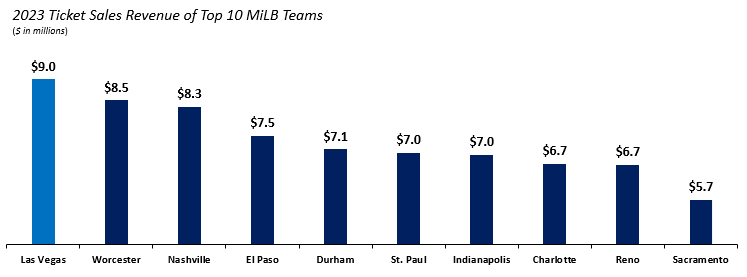
The Las Vegas Aviators are a Minor League Baseball (“MiLB”) team and the current Triple-A affiliate of the Oakland Athletics Major League Baseball (“MLB”) team. As the highest-grossing MiLB team, and a critical component of the Summerlin, Nevada community, we believe the Aviators are a particularly unique aspect of our portfolio. Seaport Entertainment wholly owns the Aviators, which generate cash flows from ticket sales, concessions, merchandise and sponsorships. In addition to the team, Seaport Entertainment owns the Aviators’
1
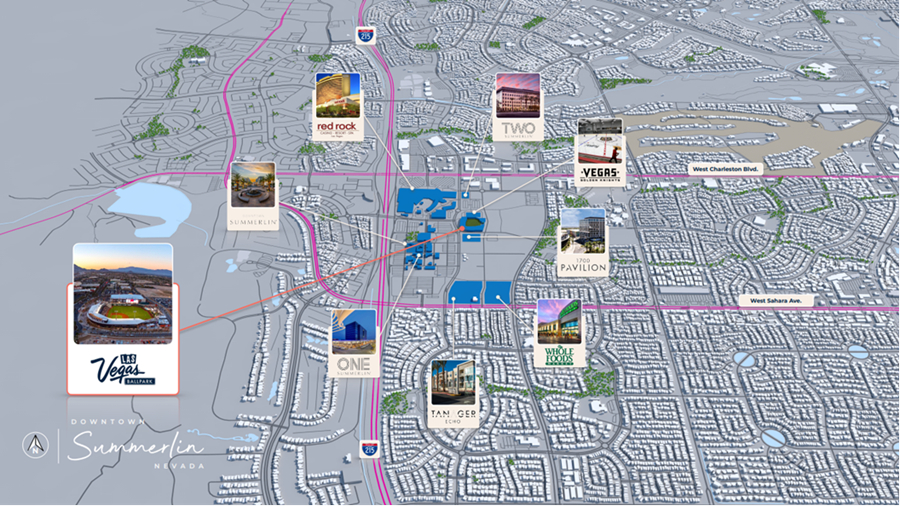
10,000-seat ballpark, which is located in the heart of Downtown Summerlin. Completed in 2019, the ballpark is one of the newest stadiums in the minor league system and was named the “Triple-A Best of the Ballparks” by Ballpark Digest in 2019, 2021 and 2022. This renowned ballpark regularly has upwards of 7,000 fans a game and was chosen to host the Triple-A National Championship Game in 2022 and 2023. In addition to approximately 70 baseball games each year, the ballpark hosts at least 30 other special events, which provide incremental cash flow primarily during the offseason. These events, which include festive holiday attractions, ballpark tours, movie nights, concerts and more have also integrated the ballpark into the life and culture of Summerlin. As a result, we believe we are uniquely positioned to serve the entertainment needs of this community as it expands in the coming years.
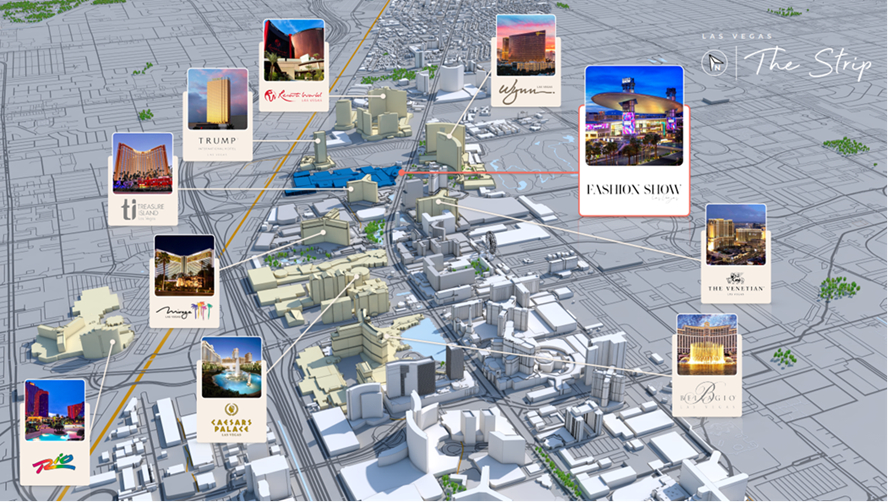
We also have an 80% interest in the developmental air rights above the Fashion Show mall in Las Vegas, the 25th largest mall in the country, with over 1.8 million square feet and approximately 250 retailers. The Fashion Show mall is located just south of the Wynn West project and the new Resorts World Las Vegas and directly across the street from the Wynn Las Vegas hotel, casino and golf course. The Fashion Show Mall Air Rights represent a unique opportunity to vertically develop a high-quality, well-located real estate asset, which may include a new casino and hotel.
Seaport Entertainment expects to conduct a million rights offering of equity to our stockholders (the “rights offering”) following the distribution. In connection with the rights offering and prior to the distribution, the Company expects to enter into a backstop agreement with Pershing Square, HHH’s largest shareholder, pursuant to which Pershing Square is expected to agree to (i) exercise its pro rata subscription right with respect to the rights offering at a price of $ per share of our common stock to our stockholders that we expect to commence following the distribution and (ii) agree to purchase any shares not purchased upon the expiration of the rights offering at the rights offering price. The capital raised through the rights offering will further strengthen our Company’s balance sheet. With over $ million of liquidity, including expected proceeds from the anticipated rights offering, we expect to have ample capital to invest in and drive internal and external growth opportunities in the leisure, tourism, hospitality, gaming, food and beverage and live entertainment spaces.
Our Strategy
Seaport Entertainment’s business plan is to focus on realizing value for its shareholders primarily through dedicated management of its existing assets, expansion of existing and creation of new partnerships, strategic acquisitions and completion of development projects. The Company’s existing portfolio encompasses a wide range of leisure and recreational activities, including live concerts, fine dining, professional sports and high-end and experiential retail. As a result, Seaport Entertainment is well-positioned to capitalize on trends across the travel, tourism and leisure industries and appeal to today’s consumer who often values experiences over goods.
Create Unique Entertainment Destinations Within Sought-After Mixed-Use Commercial Hubs. Seaport Entertainment’s portfolio of premier, non-commoditized and destination-focused properties caters to a wide range of consumers. We intend to drive this high-quality product offering by focusing on best-in-class experience-based tenants and partnerships, in addition to integrating sought-after events to drive foot traffic throughout our portfolio. By continuing to offer high quality food and entertainment options across our portfolio, we seek to create unique cohesive environments that serve the various needs of our customers and offer more than just a single product or experience. By developing destinations that have multiple touchpoints with our visitors, we believe Seaport Entertainment is well-positioned to grow its revenue base over time by driving increased penetration.
Lease-Up Existing Assets at the Seaport. The portfolio of assets within Landlord Operations at the Seaport is 69% leased and 66% occupied as of December 31, 2023. Our dedicated management team is focused on leasing up the Seaport and improving occupancy levels, which we believe will drive foot traffic to the area and improve performance at our entertainment assets. As of December 31, 2023, 50% of our existing office space is leased in the Seaport. We are actively engaged in leasing our available office space at Pier 17 on the third and fourth floors and we are evaluating use of this vacant office space for a variety of hospitality offerings. We are also focused on leasing other available retail space at the Seaport, of which 61% is currently leased as of the same period-end.
Improve Efficiencies in our Operating Businesses. There are numerous opportunities to drive efficiencies and increase margins in our operating businesses. Through our dedicated management team, which has significant
2
experience operating entertainment-related assets, we are focused on maximizing our revenues and rightsizing costs. The Fulton—one of the Seaport’s full-service restaurants—is representative of the opportunities in our JG investment and illustrative of a path to profitability for similar JG concepts. The Fulton opened in 2019, generating $1.5 million in operating income in 2021, up from a $278,000 loss in 2019. It surpassed $2 million in operating income in 2023, and we see it as a model for other dining concepts in or added to our portfolio, such as the Tin Building, which debuted in 2022.
Opportunistically Acquire Attractive Entertainment-Related Assets and Utilize Strategic Partnerships. Leveraging our balance sheet and liquidity position, we intend to evaluate and ultimately acquire additional entertainment-related real estate and operating assets. These assets may include but are not limited to stadiums, sports and gaming attractions, concert and entertainment venues, food halls and other restaurant concepts. In addition to acquisitions, we plan to utilize strategic partnerships to accelerate our long-term growth. To execute on this strategy, we intend to leverage our unique experience at the Seaport where we already successfully work with an array of top tier partners in the entertainment space.
Expand the Jean-Georges Partnership. Our JG investment has multiple avenues for core growth that could propel this segment of the business, including the opening of new restaurants and luxury marketplaces; introducing a franchise model for certain Jean-Georges concepts; launching fast-casual and quick service restaurant concepts that allow for significant scale; and leveraging the Jean-Georges brand via private label wholesale product distribution.
Develop Owned Land Parcels and the Fashion Show Mall Air Rights. Seaport Entertainment currently has two sizeable development opportunities: 250 Water Street and the Fashion Show Mall Air Rights. Each opportunity, if transacted on, could represent a significant driver of long-term growth.
Leverage Events and Sponsorships to Create a Flywheel Effect at the Seaport. The Seaport’s events, particularly its Rooftop Summer Concert Series, drive foot traffic to the entire district, which in turn creates opportunities for our restaurant and retail tenants as well as our sponsorship business. We are focused on creating a flywheel effect, where visitors who are drawn to the Seaport for an event receive targeted benefits from our sponsors and are engaged by our retail and dining options before and after that event. Since 2018, revenue attributable to the Summer Concert Series has increased from $6.3 million to $18.5 million in 2023, and the venue has gained a significant social media presence that rivals other, comparable event spaces. Our in-house marketing team is also leveraging the success of our Summer Concert Series to advertise all of the offerings at the Seaport to a growing social media following.
Improve and Increase Special Event Offerings at the Las Vegas Ballpark. The Las Vegas Ballpark is a key feature of Summerlin, Nevada, a thriving community outside of Las Vegas. By improving and increasing the special events offerings at the ballpark, we plan to further integrate the venue into the daily lives of Summerlin’s residents. The ballpark currently hosts approximately 70 baseball games each year and at least 30 special events, which leaves significant room for growth. In 2023, the ballpark held 153 events, including 75 Aviators games. We are actively looking to improve our existing events and are evaluating new offerings to host, engage, and entertain the community.
Competitive Strengths
Unique Focus on the Intersection of Entertainment and Real Estate to Create Inclusive, Consumer-Centric Destinations. Seaport Entertainment will be one of the few publicly traded companies focused on the intersection of entertainment and real estate. Unlike real estate investment trusts, which have limitations on their ability to invest in non-real estate assets, Seaport Entertainment will have complete flexibility to invest in both real estate as well as entertainment-focused operating assets. We intend to develop communities as opposed to standalone assets. As a result, our focus on the social needs of our customers and providing an array of food, entertainment and leisure options to keep them engaged distinguishes our business from traditional real estate development and landlord operations.
High-Quality Portfolio in High Barrier to Entry, Top-Tier Destinations. Seaport Entertainment’s portfolio consists of unique, high-quality assets that were acquired and developed over many years to create a one-of-a-kind portfolio. As a result, there is a high barrier to replicating Seaport Entertainment’s business. The quality of the assets
3
is complimented by the desirability of their locations: primarily Lower Manhattan and Las Vegas, where there are substantial barriers to entry. New York City has over 8.5 million residents and a thriving tourism industry, with 68 million tourists anticipated to visit in 2024. Las Vegas is the largest city in Nevada, with over 650,000 residents and a growing professional sports industry. In 2022, nearly 40 million people visited Las Vegas, spending $44.9 billion.
Embedded Potential Upside Within Landlord Operations Assets. Our focus on filling the vacancies in our Landlord Operations portfolio is expected to drive incremental upside. For example, at the Seaport, Pier 17 is 54% leased as of December 31, 2023, with available space across its third and fourth floors. Driven by a dedicated management team primarily focused on performance at this and other assets, we believe the Company has substantial internal growth prospects.
Thematically-Focused, Diversified Assets. While the focus of the Company is on entertainment, the assets encompass a wide range of leisure and recreational activities, including live concerts, fine dining, professional sport, and high-end and experiential retail. Seaport Entertainment is not limited to a particular type of entertainment asset, and as a result, it should be able to meet the needs of different customers with the flexibility to adapt to changes in consumer trends, which today favors experiences over products. Unlike traditional landlords and real estate developers, which are focused on building and leasing space, we are a customer-centric business that is responsible for filling the space that we develop, own and lease with offerings that entice and engage our visitors.
Balance Sheet Positioned to Support Growth. The Company expects to conduct a $ million rights offering of equity following the distribution. In connection with the rights offering and prior to the distribution, the Company expects to enter into a backstop agreement with Pershing Square pursuant to which Pershing Square is expected to agree to (i) exercise its pro rata subscription right with respect to the rights offering at a price of $ per share of our common stock and (ii) purchase any shares not purchased upon the expiration of the rights offering at the rights offering price. The Company’s limited amount of debt outstanding, existing cash balance and the capital raised from the rights offering is expected to give us significant liquidity and financial flexibility to both support the existing business and facilitate the Company’s growth.
Scalable Platform. Embedded in Seaport Entertainment’s assets are multiple avenues to grow the Company, including through the expansion of existing partnerships and development of existing sites. More broadly, the Company’s focus on the intersection of entertainment and real estate is readily scalable, given the ability to pursue opportunities in leisure, tourism, hospitality, gaming, food and beverage and live entertainment spaces. We view these avenues of growth holistically, as components and levers to create broader communities that engage our visitors and provide reasons to spend more time at our locations.
•Live Events Opportunity. The demand for live music is strong and accelerating worldwide. According to Live Nation, the largest live entertainment company in the world, by mid-October 2023, 140 million tickets had been sold through their platform, up 17% year-over-year and surpassing the 2022 total of 121 million tickets sold. Live Nation’s internal research shows that 92% of fans plan to go to more or the same amount of shows in 2024 as they did in 2023. Based on these strong growth metrics, Seaport Entertainment views the live event/concert space to be an attractive opportunity for strong growth.
•Food and Dining Opportunity. Seaport Entertainment plans to leverage the growing consumer appetite for unique restaurant experiences as a catalyst to further expand its culinary footprint. According to the U.S. Department of Agriculture, consumers spent more on food in 2022 than ever before, even after adjusting for inflation. Of the total amount spent on food, consumer purchases for food away from home (i.e., restaurants), have only accelerated since the onset of the COVID-19 pandemic. As of 2022, expenditures on food away from home accounted for 54% of total food spending, marking a stark rise from its 47% market share in 2020, according to the U.S. Department of Agriculture.
•Sports and Gaming Opportunity. Consumer spending toward sporting events has demonstrated tremendous strength over the last few years. According to StubHub’s 2023 Year in Live Experiences Report:
◦NFL sales heading into the 2023 season were double from 2022.
◦College football sales were up almost 50% at season start.
4
◦NHL sales were trending nearly double last season’s start.
◦NBA sales on StubHub at season start were up nearly 60%.
◦MLS sales are up over 2.5x compared to 2022.
Similarly, admission prices for sporting events rose significantly in 2023. According to the Bureau of Labor Statistics, in October 2023, admission prices for sporting events increased by 25.1% year-over-year, which was the highest annualized growth rate measured by the CPI inflation gauge. Due to the robust demand that exists for live sports and gaming events, Seaport Entertainment will look to further capitalize on new and existing opportunities within this segment of the market.
Experienced Management Team With a Proven Track Record. Seaport Entertainment’s senior management team has decades of hospitality and entertainment industry expertise coupled with long-standing business relationships and extensive experience implementing strategies to create world-class brands. Management’s vast operating experience with complex and multi-faceted hospitality assets will enable the Company to achieve a streamlined model while pursuing innovative opportunities.
•Anton D. Nikodemus is the Chief Executive Officer of Seaport Entertainment. Mr. Nikodemus has spent over 30 years in entertainment and hospitality leading the development and operations of industry premier destination brands. Prior to joining Seaport Entertainment, he served as President and Chief Operating Officer of CityCenter for MGM Resorts International where he oversaw operations for The Cosmopolitan of Las Vegas, Vdara Hotel & Spa and ARIA Resort & Casino. Mr. Nikodemus notably led the creation and development of the MGM National Harbor Hotel & Casino in Maryland and the MGM Springfield in Massachusetts.
Our Portfolio
We primarily analyze our portfolio of assets through the lens of our three operating segments: (1) Landlord Operations, (2) Hospitality and (3) Sponsorships, Events and Entertainment. Each segment contains various homogenous operational efficiencies where we intend to drive value creation over time.
Landlord Operations. Landlord Operations represent our ownership interests in and operation of physical real estate assets. Today, all Landlord Operations are located in the Seaport. The Seaport encompasses over 470,000 square feet of restaurant, retail, office and entertainment properties, as well as 21 multi-family units. It is one of the few multi-block districts in New York City largely under private management and was previously owned and operated by Howard Hughes since 2010. Over 13 years, Howard Hughes invested over $1 billion in the neighborhood, helping to revitalize the area and positioning it to become one of the premier tourist attractions in the
5
city. Today, we own 11 physical real estate assets in the Seaport that comprise 100% of our current Landlord Operations. These assets include:
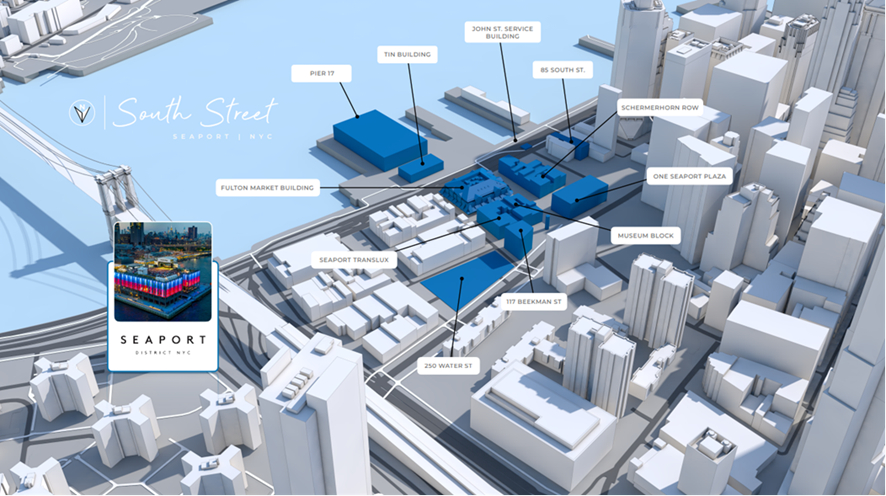
•Pier 17 – Pier 17 is a 213,000 square foot mixed-use building containing restaurants, office space, and an outdoor concert venue. The Rooftop at Pier 17 is a 3,500-person concert venue, which was voted the #1 outdoor music venue in New York City in 2022 by Red Bull and ranked by Pollstar as the fifth top club worldwide in 2023. In 2023, the Rooftop’s Summer Concert Series had a record year, selling 204,000 tickets over 63 shows, representing 93% of available ticket inventory. In addition to the concert venue, the building has five restaurants with renowned chefs including Jean-Georges and Andrew Carmellini, and three floors of top-tier office space.
•Tin Building – Across from Pier 17 is the Tin Building, a 54,000-square-foot culinary destination located on the site of the original Fulton Fish Market. The property opened in September 2022 after undergoing over a $200 million, five-year renovation to reconstruct the building in collaboration with Jean-Georges, and is leased to an unconsolidated joint venture between us and a subsidiary of Jean-Georges. The building has three levels, offering over 20 culinary experiences, including restaurants, bars, grocery markets, retail, and private dining.
•Fulton Market Building – The Fulton Market Building is a three-story, 115,000-square-foot mixed-use building. It is 100% leased to tenants like IPIC Theaters, which occupies 46,000 square feet and has a lease through 2035. In July 2022, high-end fashion brand Alexander Wang leased the entire third floor for its global fashion headquarters. The Lawn Club, an experiential retail concept focused on “classic lawn games” and superb cocktails, is one of our unconsolidated joint ventures and the most recent tenant, having opened in November 2023.
•Historic District Retail & Other – Seaport Entertainment is also the landlord for the following Historic District retail and other locations: Museum Block, Schermerhorn Row, Seaport Translux, 117 Beekman Street (ground floor only), One Seaport Plaza (ground floor only), Titanic Park and the John Street Service Building, which collectively make up approximately 91,000 square feet.
•250 Water Street – 250 Water Street is a full block, one-acre development site approved for 547,000 zoning square feet of market rate and affordable housing, office, retail and community-oriented gathering space.
6
250 Water Street is a unique opportunity at the Seaport to redevelop this site into a vibrant mixed-use asset, provide long-term viability to the South Street Seaport Museum and deliver economic stimulus to the area. Howard Hughes has received all of the necessary approvals for its plans and permits to build the foundation, which began in the second quarter of 2022. Final remediation work on the site is complete, and we can commence construction of the new development at our discretion.
•85 South Street – 85 South Street is an eight-story residential building with 21 apartments and 13,000 square feet of ground floor retail.
The following table shows information about our Seaport assets as of December 31, 2023:
| Asset |
Asset
Type
|
Rentable Square Feet | Rentable Units | Occupancy | Ownership | ||||||||||||
| Pier 17 | Mixed-Use | 213 | - | 47% | 100% | ||||||||||||
| Tin Building | Mixed-Use | 54 | - | 100% | 100% | ||||||||||||
| Fulton Market Building | Retail | 115 | - | 100% | 100% | ||||||||||||
| Schermerhorn Row | Retail | 29 | - | 80% | 100% | ||||||||||||
| One Seaport Plaza | Retail | 25 | - | 12% | 100% | ||||||||||||
| Museum Block | Retail | 24 | - | 71% | 100% | ||||||||||||
| Seaport Translux | Retail | 10 | - | 0% | 100% | ||||||||||||
| 117 Beekman Street | Retail | 4 | - | 0% | 100% | ||||||||||||
| John Street Service Building | Retail | 1 | - | 0% | 100% | ||||||||||||
| 85 South Street | Multi-Family | — | 21 | 100% | 100% | ||||||||||||
| 250 Water Street | Development Site | — | - | - | 100% | ||||||||||||
| Total | 475 | 21 | 66% | 100% | |||||||||||||
Our Seaport assets primarily sit under a long-term ground lease from the City of New York that was recently extended from 2072 to 2120. In 2023, we paid $2.1 million in rent and fees under the ground lease on our Seaport assets.
Hospitality. Hospitality represents our ownership interests in various food and beverage operating businesses. Today, we own, either wholly or through partnerships with third parties, and operate, including license and management agreements, seven fine dining and casual dining restaurants, cocktail bars and entertainment venues (The Fulton, Mister Dips, Carne Mare, Malibu Farm, Pearl Alley, Cobble & Co. and The Lawn Club), as well as our unconsolidated venture, the Tin Building by Jean-Georges, which offers over 20 culinary experiences, including restaurants, bars, grocery markets, retail, and private dining. These businesses are all our tenants and pay rent to our Landlord Operations. We also have a 25% interest in Jean-Georges Restaurants.
Jean-Georges Restaurants was founded by renowned Michelin-star chef Jean-Georges Vongerichten and operates over 40 hospitality offerings across the world. In March 2022, Howard Hughes acquired a 25% interest in Jean-Georges Restaurants for $45 million. The Tin Building by Jean-Georges was the first project completed by Howard Hughes and Jean-Georges since the minority stake acquisition, and it now plays an integral part in the Seaport’s overall performance. Creative Culinary Management Company, LLC (“CCMC”), a wholly owned subsidiary of Jean-Georges Restaurants, provides management services for certain retail and food and beverage businesses within the Seaport.
Sponsorships, Events, and Entertainment. Our Sponsorships, Events and Entertainment segment includes the Las Vegas Aviators, the Las Vegas Ballpark, our interest in the Fashion Show Mall Air Rights, Seaport events and concerts and all of our sponsorship agreements across both the Seaport and the Las Vegas Ballpark.
The Aviators and Las Vegas Ballpark. The Las Vegas Aviators are a Minor League Baseball team and the Triple-A affiliate of the Oakland Athletics (the “Oakland A’s”). The team was acquired by the Summerlin Las Vegas Baseball Club, a subsidiary of Howard Hughes, and Play Ball Owners Group in May 2013. In 2017, Howard
7
Hughes acquired Play Ball’s 50% ownership stake. In addition to the team, included in Seaport Entertainment is the Aviator’s 10,000-seat ballpark, which is located in the heart of Downtown Summerlin, approximately nine miles west of the Las Vegas Strip. The area draws approximately 20 million visitors a year. The Aviators averaged approximately 6,800 ticket sales per game in 2023 and consistently generate the most ticket sales revenue in the minor leagues, according to MiLB. Since its grand opening in 2019, the Las Vegas Ballpark has been voted the best ballpark in Triple-A baseball in three out of the last five years by Ballpark Digest. In addition to hosting baseball games, the ballpark holds various special events throughout the year. On November 16, 2023, the Athletics received unanimous approval from Major League Baseball to relocate their team from Oakland to Las Vegas, where a new stadium is expected to be built. There are ongoing discussions regarding the Athletics playing a portion of their home games at the Las Vegas Ballpark until completion of the new stadium.
__________
(1)Source: based on information collected and distributed by MLB for the 2023 MiLB season
The Rooftop at Pier 17. The Rooftop at Pier 17 has evolved into one of the premier concert venues in New York City. The venue has capacity of 3,500 seats and in 2022 and 2023 hosted 60 and 63 concerts, respectively. Located
8
two blocks south of the Brooklyn Bridge, the unique outdoor venue was voted the #1 outdoor music venue in New York City in 2022 by Red Bull and ranked by Pollstar as the fifth top club worldwide in 2023. The venue provides an unmatched outdoor entertainment opportunity for both emerging and established musicians. In addition, given the venue’s destination-like location, it has proven to be successful at hosting events year round and drives incremental revenue outside of the Summer Concert Series.
The demand for live music at The Rooftop at Pier 17 is evident based on the success of our Summer Concert Series, which as recently as 2018 hosted 24 shows and sold 63,396 tickets. In 2023, our Summer Concert Series sold out 47 of 63 shows and sold over 204,000 tickets, which represented 93% of all available tickets, generating over $12 million in gross ticket sales. The venue’s success is also demonstrated by its social media following, which is the largest for any NYC area arena or concert venue, despite only having a 3,500-seat capacity.
The Fashion Show Mall Air Rights. The Fashion Show mall is the 25th largest mall in the country. It has a prime Las Vegas Strip location, adjacent to the Wynn and Treasure Island. The mall is owned by Brookfield Properties and features more than 250 retailers and over 30 restaurants spread across 2 million square feet. Seaport Entertainment has an 80% interest in the air rights above the mall, with Brookfield Properties owning the remaining 20% stake. These air rights may be used to develop a new casino and hotel on the Las Vegas Strip. For more information on the development plans at the Fashion Show mall in Las Vegas, see “—Our Strategy—Develop Owned Land Parcels and the Fashion Show Mall Air Rights.”
The Separation and Distribution
The Separation and Distribution
On October 5, 2023, HHH announced its intention to separate its Seaport Entertainment division from the remainder of its businesses (the “separation”).
It is expected that the HHH Board, or a duly authorized committee thereof, will approve the pro rata distribution of 100% of the issued and outstanding shares of our common stock, on the basis of share(s) of our common stock for every share(s) of common stock of HHH held (the “distribution”) as of the close of business on , 2024 (the record date for the distribution).
9
Our Post-Separation Relationship with HHH
Prior to the completion of the distribution, we will be a wholly-owned subsidiary of HHH, and all of our outstanding shares of common stock will be owned by HHH. Following the separation and distribution, we and HHH will operate as separate publicly traded companies.
Also prior to the completion of the distribution, we will enter into a separation agreement with HHH (the “Separation Agreement”). We will also enter into various other agreements to provide a framework for our relationship with HHH after the separation, including a transition services agreement, an employee matters agreement and a tax matters agreement. These agreements will provide for the allocation between us and HHH of the assets, employees, services, liabilities and obligations (including their respective investments, property and employee benefits and tax-related assets and liabilities) of HHH and its subsidiaries attributable to periods prior to, at and after the separation and will govern certain relationships between us and HHH after the separation. For additional information regarding the Separation Agreement and such other agreements, please refer to sections entitled “—The Separation and Distribution,” “Certain Relationships and Related Party Transactions” and “Risk Factors—Risks Related to the Separation and Our Relationship with HHH.”
Risk Factors Summary
An investment in shares of our common stock is subject to a number of risks, including risks relating to the separation, the successful implementation of our strategy and the ability to grow our business. The following list of risk factors is not exhaustive. See “Risk Factors” for a more thorough description of these and other risks.
Risks Related to Our Business and Our Industry
•Our business is dependent on discretionary consumer spending patterns and, as a result, could be materially, adversely impacted by an economic downturn, recession, financial instability, inflation or changes in consumer tastes and preferences.
•Downturn in tenants’ businesses may reduce our revenues and cash flows.
•We may be unable to renew leases, lease vacant space or re-lease space as leases expire.
•The operational results of some of our assets may be volatile, especially the Seaport, which could have an adverse effect on our financial condition and results of operations.
•Significant competition could have an adverse effect on our business.
•The concentration of our properties in Manhattan and Las Vegas exposes our revenues and the value of our assets to adverse changes in local economic conditions.
•Some of our properties are subject to potential natural or other disasters, including those and other adverse effects resulting from climate change. Water and electricity shortages could also have an adverse effect on our business.
•If we are unable to make strategic acquisitions, develop and maintain strategic partnerships or enter into joint venture arrangements with strategic partners, our growth may be adversely affected, and we may not realize the expected benefit from such endeavors.
•We are exposed to risks associated with the development, redevelopment or construction of our properties.
•Cybersecurity risks and incidents, such as a breach of the Company’s privacy or information security systems, or those of our vendors or other third parties, could compromise our information and expose us to liability, which would cause our business and reputation to suffer.
10
Risks Related to Our Sports Assets
•Our sports assets face intense and wide-ranging competition, which may have a material negative effect on our business and results of operations.
•Our business is substantially dependent on the continued popularity and/or competitive success of the Aviators, which cannot be assured.
Financial Risks
•We may be unable to develop and expand our properties without sufficient capital or financing.
•Our current and future indebtedness and changing interest rates could adversely affect our business, prospects, financial condition or results of operations and prevent us from fulfilling our financial obligations.
Regulatory, Legal and Environmental Risks
•Government regulations and legal challenges may delay the start or completion of the development of our properties, increase our expenses or limit our building or other activities.
•We may be subject to increased compliance costs to comply with new and contemplated government regulations relating to energy standards and climate change.
•We may be subject to potential costs to comply with environmental laws.
Risks Related to the Separation and Our Relationship with HHH
•We have no history of operating as a separate, publicly traded company, and our historical and pro forma financial information is not necessarily representative of the results that we would have achieved as a separate, publicly traded company and may not be a reliable indicator of our future results.
•Future sales of our common stock, or the perception that such sales may occur, could depress our common stock price.
•We may not achieve some or all of the expected benefits of the separation, and the separation may adversely affect our business.
Risks Related to the Rights Offering
•The subscription price determined for this offering is not necessarily an indication of the fair value of our common stock.
•Stockholders who do not fully exercise their rights will have their interests diluted.
•You may not revoke your subscription exercise and could be committed to buying shares of common stock above the prevailing market price.
•We may terminate the rights offering at any time prior to the expiration of the offer period, and neither we nor the subscription agent will have any obligation to you except to return your exercise payments.
Emerging Growth Company Status
We are an “emerging growth company,” as defined by the Jumpstart Our Business Startups Act of 2012. We will continue to be an emerging growth company until the earliest to occur of the following:
•the last day of the fiscal year in which our total annual gross revenues first meet or exceed $1.235 billion (as adjusted for inflation);
11
•the date on which we have, during the prior three-year period, issued more than $1.0 billion in non-convertible debt;
•the last day of the fiscal year in which we (i) have an aggregate worldwide market value of common stock held by non-affiliates of $700 million or more (measured at the end of each fiscal year) as of the last business day of our most recently completed second fiscal quarter and (ii) have been a reporting company under the Securities Exchange Act of 1934 (the “Exchange Act”) for at least one year (and have filed at least one annual report under the Exchange Act); and
•the last day of the fiscal year following the fifth anniversary of the date of our separation from HHH.
For as long as we are an emerging growth company, we may take advantage of certain exemptions from various reporting requirements that are applicable to other public companies that are not emerging growth companies, including, but not limited to, not being required to comply with the auditor attestation requirements in the assessment of our internal control over financial reporting under Section 404(b) of the Sarbanes-Oxley Act of 2002 (the “Sarbanes-Oxley Act”), exemption from new or revised financial accounting standards applicable to public companies until such standards are also applicable to private companies, reduced disclosure obligations regarding executive compensation in our periodic reports, proxy statements and registration statements, and exemptions from the requirement of holding a nonbinding advisory vote on executive compensation and stockholder approval on golden parachute compensation not previously approved. We may choose to take advantage of some or all of these reduced burdens. For example, we have taken advantage of the reduced disclosure obligations regarding executive compensation in this information statement. For as long as we take advantage of the reduced reporting obligations, the information we provide stockholders may be different from information provided by other public companies. In addition, it is possible that some investors will find our common stock less attractive as a result of these elections, which may result in a less active trading market for our common stock and higher volatility in the price of our common stock.
We have elected to not take advantage of the extended transition period that allows an emerging growth company to delay the adoption of certain accounting standards until those standards would otherwise apply to private companies, which means that the financial statements included in this information statement, as well as financial statements we file in the future, will be subject to all new or revised accounting standards generally applicable to public companies. Our election not to take advantage of the extended transition period is irrevocable.
Corporate Information
We were incorporated in Delaware on January 24, 2024 for the purpose of holding HHH’s Seaport Entertainment business in connection with the separation and the distribution. Prior to the separation, which is expected to occur immediately prior to completion of the distribution, we had no operations. The address of our principal executive offices is 199 Water Street, 28th Floor, New York, New York 10038. Our telephone number is (212) 732-8257.
We maintain an internet website at . Our website, and the information contained on or accessible through our website, is not incorporated by reference in this information statement.
Reason for Furnishing this Information Statement
This information statement is being furnished solely to provide information to HHH stockholders who will receive shares of our common stock in the distribution. This information statement is not, and should not be construed as, an inducement or encouragement to buy or sell any securities. The information in this information statement is believed by us to be accurate as of the date set forth on its cover. Changes may occur after that date, and neither we nor HHH will update the information except in the normal course of our and HHH’s respective disclosure obligations and practices.
12
THE RIGHTS OFFERING SUMMARY
The following summary describes the principal terms of the rights offering, but it is not intended to be a complete description of the offering. See the information under the heading “The Rights Offering” in this prospectus for a more detailed description of the terms and conditions of the rights offering.
| Subscription Rights | We will distribute to each stockholder of record as of close of business on , 2024, at no charge, one transferable subscription right for each share of our common stock then owned. Each right will entitle its holder to purchase shares of our common stock. The rights will be evidenced by a transferable rights certificate. As a result of the expected backstop commitment described below, we expect to sell all of the shares of common stock and receive gross proceeds of $ million in the rights offering. |
|||||||
| Basic Subscription Right | Each right will entitle the holder to purchase shares of our common stock at a subscription price of $ per whole share and fractional shares resulting from the exercise of the basic subscription right will be eliminated by rounding down to the nearest whole share. The subscription agent will return any excess payments, in the manner in which made, without interest or deduction promptly after the expiration of the rights offering. |
|||||||
| Over-subscription Privilege | Each rights holder who elects to exercise its basic subscription right in full may also subscribe for additional shares of our common stock at the same subscription price per share. If an insufficient number of shares of our common stock is available to fully satisfy the over-subscription privilege requests, the available shares of common stock will be distributed proportionately among rights holders who exercised their over-subscription privilege based on the number of shares of common stock each rights holder subscribed for under the basic subscription right, subject to certain limitations. The subscription agent will return any excess payments, in the manner in which made, without interest or deduction promptly after the expiration of the rights offering. | |||||||
| Subscription Price | $ per whole share of common stock, payable in cash. To be effective, any payment related to the exercise of a subscription right must clear before the rights offering expires. The subscription price does not necessarily bear any relationship to the book value of our assets or our past operations, cash flows, losses, financial condition, net worth or any other established criteria used to value securities. |
|||||||
| Record Date | , 2024 (close of business). |
|||||||
| Expiration Date | 5:00 p.m., New York City time, on , 2024, unless we extend the rights offering period. Rights not exercised before the expiration date will be void and of no value and will cease to be exercisable for Seaport Entertainment common stock. |
|||||||
13
| Backstop Commitment | We expect to enter into a backstop agreement with Pershing Square, pursuant to which Pershing Square is expected to agree to purchase from us, subject to the terms and conditions thereof, at the rights offering subscription price, unsubscribed shares of our common stock such that the gross proceeds of the rights offering will be $ million. If Pershing Square were the only holder of rights who exercises its rights in the rights offering and the conditions to Pershing Square’s obligation to act as backstop purchaser under the expected backstop agreement were satisfied, we would expect to issue an aggregate of shares of common stock to Pershing Square. Under such circumstances, Pershing Square’s ownership percentage of our outstanding common stock would increase to approximately % after giving effect to this rights offering. Except as a result of any increase in its ownership of common stock, Pershing Square is not expected to obtain any additional governance or control rights as a result of the rights offering or the backstop commitment. See “The Rights Offering—The Backstop Commitment.” |
|||||||
| Listing and Trading |
The rights will be in fully transferable form.
Prior to the completion of the spin-off on , 2024, there was no public market for our common stock. Following the spin-off, our common stock is listed on the NYSE under the symbol “SEG.”
Prior to the rights offering, there has been no public market for the subscription rights. As the rights are transferable, we expect the rights to trade on the NYSE under the symbol “ ”. We cannot provide you with any assurances as to the liquidity of any trading market for the subscription rights or the market value of the subscription rights.
|
|||||||
14
| Procedure for Exercising Rights |
To exercise your subscription rights, you must take the following steps:
•If you are a registered holder of our common stock, the subscription agent must receive your payment for each share of common stock subscribed for pursuant to your subscription right at the initial subscription price of $ per whole share and properly completed subscription rights certificate before 5:00 p.m., New York City time, on , 2024. You may deliver the documents and payments by mail or commercial carrier. If regular mail is used for this purpose, we recommend using registered mail, properly insured, with return receipt requested.
•If you are a beneficial owner of shares of common stock that are registered in the name of a broker, dealer, custodian bank, or other nominee, or if you would prefer that an institution conduct the transaction on your behalf, you should instruct your broker, dealer, custodian bank or other nominee to exercise your subscription rights on your behalf and deliver all documents and payments to the subscription agent before 5:00 p.m., New York City time, on , 2024.
•If you wish to purchase shares of our common stock through the rights offering, please promptly contact any broker, dealer, custodian bank, or other nominee who is the record holder of your shares of common stock. We will ask your record holder to notify you of the rights offering. You should complete and return to your record holder the appropriate subscription documentation you receive from your record holder.
•If you cannot deliver your subscription rights certificate to the subscription agent prior to the expiration of the rights offering, you may follow the guaranteed delivery procedures described under “The Rights Offering—Guaranteed Delivery Procedures.”
|
|||||||
| No Revocation | All exercises of subscription rights are irrevocable, even if you later learn of information that you consider to be unfavorable to the exercise of your subscription rights. You should not exercise your subscription rights unless you are certain that you wish to purchase shares of common stock at a subscription price of $ per whole share. |
|||||||
| U.S. Federal Income Tax Consequences | Although the authorities governing transactions such as the rights offering are complex and unclear in certain respects (including with respect to the effects of the over-subscription privilege), we believe and intend to take the position that a holder’s receipt or exercise of rights should generally be nontaxable for U.S. federal income tax purposes. This position regarding the non-taxable treatment of the rights offering is, however, not binding on the IRS or the courts. You should consult your tax advisor as to the particular tax consequences to you of the receipt of rights in the rights offering and the exercise, sale or lapse of the rights, including the applicability of any state, local or non-U.S. tax laws in light of your particular circumstances. For a more detailed discussion, see “Material U.S. Federal Income Tax Consequences.” |
|||||||
15
| Issuance of Our Common Stock | DRS Statements representing the shares of common stock purchased in the rights offering will be issued as soon as practicable after the expiration of the rights offering. | |||||||
| Use of Proceeds | The rights offering is being made to raise capital to provide us with additional liquidity. See “Use of Proceeds.” | |||||||
| Subscription Agent | Computershare Trust Company, N.A. | |||||||
| Shares of Common Stock Outstanding Before the Rights Offering | shares of our common stock were outstanding as of the record date. |
|||||||
| Shares of Common Stock Outstanding After Completion of the Rights Offering | We expect shares of our common stock will be outstanding immediately after completion of the rights offering. |
|||||||
| Risk Factors |
Before you exercise your subscription rights to purchase our common stock, you should carefully consider the risks described in the section entitled “Risk Factors,” beginning on page 19 of this prospectus.
|
|||||||
Interests of Our Officers, Directors and Principal Stockholders in the Rights Offering
Pershing Square is expected to own approximately % of our common stock immediately following the spin-off. We expect to obtain the commitment of Pershing Square to act as the backstop purchaser for this offering. Pursuant to the backstop agreement, Pershing Square is expected to agree to purchase from us, at the subscription price, unsubscribed shares of common stock such that gross proceeds of the rights offering will be $ million. As consideration for providing the backstop commitment, we expect to pay Pershing Square a fee in the amount of $ and to reimburse Pershing Square’s third party out of pocket expenses in an amount up to $ . See “The Rights Offering—The Backstop Commitment.”
If Pershing Square is the only holder of rights who exercises its rights in the rights offering and the conditions to Pershing Square’s obligation to act as backstop purchaser under the backstop agreement are satisfied, Pershing Square’s ownership percentage of our outstanding common stock would increase to approximately % after giving effect to this rights offering. See “The Rights Offering—The Backstop Commitment” and “The Rights Offering—Effects of Rights Offering on Pershing Square’s Stock and Ownership.”
16
Summary Historical and Unaudited Pro Forma Combined Financial Data
The following summary historical and unaudited pro forma combined financial data reflects the combined financial statements of the Seaport Entertainment division of HHH. We derived the summary historical combined statement of operations data for the years ended December 31, 2023, and December 31, 2022, and the summary historical combined balance sheet data as of December 31, 2023 and December 31, 2022, as set forth below, from our historical combined financial statements, which are included elsewhere in this information statement. We derived the summary unaudited pro forma combined statement of operations data for the fiscal year ended December 31, 2023, and the summary unaudited pro forma combined balance sheet data as of December 31, 2023, as set forth below, from our unaudited pro forma combined financial information included in the “Unaudited Pro Forma Combined Financial Statements” section of this information statement.
We have historically operated as part of HHH and not as a separate, publicly traded company. Our combined financial statements have been derived from HHH’s historical accounting records and are presented on a carve-out basis. All revenues, expenses, assets, and liabilities directly associated with our business activity are included as a component of the pro forma combined financial statements. The pro forma combined financial statements also include expense allocations for certain support functions that are provided on a centralized basis within HHH. While these allocations have been determined on a reasonable basis, the amounts are not necessarily representative of the amounts that would have been reflected in the combined financial statements had we been an entity that operated separately from HHH during the periods presented.
The summary unaudited pro forma combined financial data presented has been prepared to reflect the transactions described in the section entitled “Unaudited Pro Forma Combined Financial Statements” (the “Transactions”). The summary unaudited pro forma combined financial data has been derived from our unaudited pro forma combined financial statements included elsewhere in this information statement. The unaudited pro forma combined statement of operations data for the year ended December 31, 2023, gives effect to the Transactions as if they had occurred on January 1, 2023, the first day of fiscal 2023. The unaudited pro forma combined balance sheet data reflects our financial condition as if the Transactions had occurred on December 31, 2023, our latest balance sheet date. The assumptions used and pro forma adjustments derived from such assumptions are based on currently available information.
The summary unaudited pro forma combined financial statements are not necessarily indicative of our results of operations or financial condition had the Transactions been completed on the dates assumed. Also, they may not reflect the results of operations or financial condition that would have resulted had we been operating as a separate, publicly traded company during such periods. In addition, they are not necessarily indicative of our future results of operations, financial condition or cash flows.
This summary historical and pro forma combined financial data should be reviewed in combination with the sections entitled “Unaudited Pro Forma Combined Financial Statements,” “Capitalization” and “Management’s Discussion and Analysis of Financial Condition and Results of Operations” and the combined financial statements and accompanying notes included elsewhere in this information statement. The unaudited pro forma combined financial information constitutes forward-looking information and is subject to certain risks and uncertainties that
17
could cause actual results to differ materially from those anticipated. See “Cautionary Statement Regarding Forward-Looking Statements” included elsewhere in this information statement.
| Pro Forma | Historical | ||||||||||||||||
| For the year ended December 31, 2023 (Unaudited) |
For the year ended December 31, | ||||||||||||||||
| (in thousands) | 2023 | 2022 | |||||||||||||||
| Selected Statements of Operations Data: | |||||||||||||||||
| Sponsorships, Events, and Entertainment revenue | $ | $ | $ | 55,724 | |||||||||||||
| Hospitality revenue | 42,565 | ||||||||||||||||
| Rental revenue | 19,810 | ||||||||||||||||
| Other revenue | 947 | ||||||||||||||||
Total revenues
|
119,046 | ||||||||||||||||
Operating expenses(1)
|
120,849 | ||||||||||||||||
| General and administrative | 16,977 | ||||||||||||||||
| Depreciation and amortization | 47,356 | ||||||||||||||||
| Provision for impairment | — | ||||||||||||||||
Operating loss
|
(66,671) | ||||||||||||||||
| Equity in (losses) from unconsolidated ventures | (37,124) | ||||||||||||||||
Net loss
|
$ | $ | $ | (111,277) | |||||||||||||
__________________
(1)Operating expenses as presented in the table above includes (1) Sponsorships, Events and Entertainment costs, (2) Hospitality costs and (3) Operating costs.
| Pro Forma | Historical | ||||||||||||||||
|
As of December 31, 2023
(Unaudited)
|
As of December 31, | ||||||||||||||||
| (in thousands) | 2023 | 2022 | |||||||||||||||
| Balance Sheet Data: | |||||||||||||||||
| Cash and cash equivalents | $ | $ | $ | 66,713 | |||||||||||||
| Total assets | 1,314,515 | ||||||||||||||||
| Total liabilities | 218,329 | ||||||||||||||||
| Total equity | 1,096,186 | ||||||||||||||||
| Total liabilities and equity | $ | 1,314,515 | |||||||||||||||
18
RISK FACTORS
You should carefully consider the risks and uncertainties described below, together with the information included elsewhere in this information statement. The risks and uncertainties described below are those that we deem currently to be material, and do not represent all of the risks that we face. Additional risks and uncertainties not presently known to us or that we currently do not consider material may in the future become material and impair our business operations. If any of the following risks actually occur, our business could be materially harmed, and our financial condition and results of operations could be materially and adversely affected. Our business, prospects, financial condition or results of operations could be materially and adversely affected by the following:
Risks Related to Our Business and Our Industry
Our business is dependent on discretionary consumer spending patterns and, as a result, could be materially, adversely impacted by an economic downturn, recession, financial instability, inflation or changes in consumer tastes and preferences.
Our business depends in part on consumers spending discretionary dollars at our assets. Consumer spending has in the past declined, and may in the future decline at any time, for reasons beyond our control, including as a result of economic downturns or recessions, unemployment and consumer income levels, financial market volatility, credit conditions and availability, inflation, rising interest rates, increases in theft or other crime, pandemics or other public health concerns and changes in consumer preferences. The risks associated with our businesses and described herein may become more acute in periods of a slowing economy or recession. In addition, instability and weakness in the U.S. and global economies, including due to the effects caused by disruptions to financial markets, high inflation, recession, high unemployment, geopolitical events and the negative effects on consumer confidence and consumers’ discretionary spending, have in the past negatively affected, and may in the future materially negatively affect, our business and operations. For example, the restaurant and hospitality industry is highly dependent on consumer confidence and discretionary spending. Economic, political or social conditions or events that adversely impact consumers’ ability or willingness to dine out could, in turn, adversely impact our revenues related to JG and the Seaport. If such conditions or events were to persist for an extended period of time or worsen, our overall business and results of operations may be adversely affected.
Downturn in tenants’ businesses may reduce our revenues and cash flows.
A tenant may experience a downturn in its business, due to a variety of factors including rising inflation or supply chain issues, which may weaken its financial condition and result in its failure to make timely rental payments or result in defaults under our leases. The rate of defaults may increase from historical levels due to tenants’ businesses being negatively impacted by higher interest rates. In the event of default by a tenant, we may experience delays in enforcing our rights as the landlord and may incur substantial costs in protecting our investment.
We may be unable to renew leases, lease vacant space or re-lease space as leases expire.
We cannot provide any assurance that existing leases, including one lease that is set to expire in December 2025 and that currently represents approximately 20% of our total rental revenues, will be renewed, that we will be able to lease vacant space or re-lease space as leases expire or that our rental rates will be equal to or above the current rental rates previously negotiated by HHH. If the average rental rates for our properties decrease, existing tenants do not renew their leases, vacant space is not leased or available space is not re-leased as leases expire, our financial condition, results of operations, cash flows, the quoted trading price of our securities and our ability to satisfy our debt service obligations at the affected properties could be adversely affected.
The operational results of some of our assets may be volatile, especially the Seaport, which could have an adverse effect on our financial condition and results of operations.
The Seaport’s operational results have been and may in the future be volatile. The volatility is largely the result of: (i) seasonality; (ii) potential sponsorship revenue; (iii) potential event revenue; (iv) demand for office space; and
19
(v) business operating risks from various start-up businesses. We own, either wholly or through joint ventures, and in some instances operate, several start-up businesses in the Seaport. As a result, the revenues and expenses of these businesses directly impact the net operating income of the Seaport, which could have an adverse effect on our financial condition and results of operations.
For example, seasonality has a significant impact on our Seaport business due to weather conditions, New York City tourism and other factors, with the majority of Seaport’s revenue generated between May and October. Similarly, in In Las Vegas, we are significantly impacted by the baseball season, with a significant portion of our Sponsorship, Events and Entertainment segment revenue generated between April and September. As a result, our total revenues tend to be higher in the second and third quarters, and our quarterly results for any one quarter or in any given fiscal year may not be indicative of results to be expected for any other quarter or year. Additionally, during periods of extreme temperatures (either hot or cold) or precipitation, we may experience significant reductions in consumer traffic, which could adversely affect our assets and our business as a whole.
Additionally, our investment in JG and the related development of the Tin Building are both relatively new, and uncertainty around those investments could also contribute to volatile results.
Significant competition could have an adverse effect on our business.
The nature and extent of the competition we face depend on the type of property. Because our existing portfolio consists of entertainment-related assets, these properties compete for consumers and their discretionary dollars with other forms of entertainment, leisure and recreational activities. This competition is particularly intense in Manhattan and in the Las Vegas area, where most of our assets are located. The success of our business depends in part on our ability to anticipate and respond quickly to changing consumer tastes, preferences and purchasing habits. Some of the entities operating competing businesses are larger and have greater financial resources, have been in business longer, or have greater name recognition, and as a result may be able to invest greater resources than we can in attracting consumers to our properties. Certain of our assets will depend on our ability to attract concerts and other events to our venues, and in turn the ability of performers to attract strong attendance.
JG, in which we own a 25% stake, competes in the restaurant industry with national, regional and locally-owned or operated restaurants, an industry characterized by the continual introduction of new concepts and subject to rapidly changing consumer preferences, tastes, trends and eating and purchasing habits. A substantial number of restaurants compete with JG for customers, consumer dollars, restaurant locations and qualified management and other restaurant staff.
Numerous residential and commercial developers, some with greater financial and other resources, compete with us in seeking resources for development and prospective purchasers and tenants. Competition from other real estate developers may adversely affect our ability to attract and retain experienced real estate development personnel or obtain construction materials and labor. These competitive conditions can adversely affect our results of operations and financial condition.
Additionally, there are numerous shopping facilities that compete with our operating retail properties in attracting retailers to lease space. In addition, retailers at these properties face continued competition from other retailers, including internet retailers. Competition of this type could adversely affect our results of operations and financial condition. In addition, we compete with other major real estate investors with significant capital for attractive investment and development opportunities.
The concentration of our properties in Manhattan and Las Vegas exposes our revenues and the value of our assets to adverse changes in local economic conditions.
The properties we own are located in the same or a limited number of geographic regions, largely Manhattan and the Las Vegas area. Our current and future operations at the properties in these areas are generally subject to significant fluctuations by various factors that are beyond our control such as the regional and local economies, which may be negatively impacted by material relocation by residents, industry slowdowns, increased unemployment, lack of availability of consumer credit, levels of consumer debt, adverse weather conditions, natural disasters, climate change and other factors, as well as the local real estate conditions, such as an oversupply of, or a
20
reduction in demand for, retail space or retail goods and the availability and creditworthiness of current and prospective tenants.
In addition, some of our properties are subject to various other factors specific to those geographic areas. For example, tourism is a major component of the local economies in lower Manhattan and in the Las Vegas area, so our properties in those areas are susceptible to any factors that affect travel and tourism related to these areas, including cost and availability of air services and the impact of any events that disrupt air travel to and from these regions. Moreover, these properties may be affected by risks such as acts of terrorism and natural disasters, including major fires, floods, droughts and heat waves, as well as severe or inclement weather, which could also decrease tourism activity.
Given that the majority of our revenue comes from the Seaport in Manhattan, we are also particularly vulnerable to adverse events (including acts of terrorism, natural disasters, epidemics, pandemics, weather conditions, labor market disruptions and government actions) and economic conditions in New York City and the surrounding areas. For example, the Seaport’s operations and operating results were materially impacted by the COVID-19 pandemic and New York state and city laws and regulations regarding lockdowns and capacity restrictions. Declines or disruptions in certain industries—for example, the financial services or media sectors—may also have a significant adverse effect on the New York City economy or real estate market, which could disproportionately impact on our business.
Further, our assets in the Las Vegas area are to some degree dependent on the gaming industry, which could be adversely affected by changes in consumer trends and preferences and other factors over which we have no control. The gaming industry is characterized by an increasingly high degree of competition among a large number of participants, including land-based casinos, video lottery, sweepstakes and poker machines, many of which are located outside of Las Vegas. Such increased competition could have a negative impact on the local Las Vegas economy and result in an adverse effect on our assets in the Las Vegas area. The success of our assets in the Las Vegas area may also be negatively impacted by changes in temperature due to climate change, increased stress on water supplies caused by climate change and population growth and other factors over which we have no control.
If any or all of the factors discussed above were to occur and result in a decrease in the revenue derived from assets in any of these geographic regions, it would likely have a material adverse effect on our business, financial condition and results of operations.
Some of our properties are subject to potential natural or other disasters.
Our properties are located in areas which are subject to natural or other disasters, including hurricanes, floods, wild fires, heat waves and droughts. We cannot predict the extent of damage that may result from such adverse weather events, which depend on a variety of factors beyond our control. Whether such events are caused or exacerbated by global climate changes or other factors, our properties in Manhattan, a coastal region, could be affected by increases in sea levels, the frequency or severity of hurricanes and tropical storms, or environmental disasters, and our properties in the Las Vegas area could be negatively impacted by changes in temperature or increased stress on water supplies. Additionally, adverse weather events can cause widespread property damage and significantly depress the local economies in which we operate and have an adverse impact on our business, financial condition and operations.
Climate change may adversely affect our business.
As a result of climate change, we may experience extreme weather and changes in precipitation and temperature, all of which may result in physical damage or a decrease in demand for our properties located in the areas affected by these conditions. Should the impact of climate change be material in nature or occur for lengthy periods of time, our financial condition or results of operations would be adversely affected. In addition, many state and local governments are adopting or considering adopting regulations requiring that property owners and developers include in their development or redevelopment plans resiliency measures to address climate-change related risks. We may be required to incur substantial costs if such regulations apply to any of our properties. There are also increasing expectations on climate and other sustainability matters from various investors, consumers and other stakeholders, and our actual or perceived sustainability performance and disclosures may impact these
21
stakeholders’ interest in our company or our real estate. Moreover, various policymakers, including the SEC and the State of New York, have adopted or are considering adopting laws requiring disclosure of certain climate-related information, which may require additional costs for us to comply. Our tenants and suppliers may be subject to similar risks, which may indirectly impact us as well.
Water and electricity shortages could have an adverse effect on our business, financial condition and results of operations.
Drought conditions and increased temperature—particularly in the Las Vegas, Nevada region—could cause our assets to experience water and electricity shortages. The lack or reduced availability of electricity or water may make it more difficult or expensive for us to operate our businesses and obtain approvals for new developments and could limit, impair or delay our ability to develop or sell, or increase the cost of developing, our assets in the relevant areas.
If we are unable to make strategic acquisitions and develop and maintain strategic partnerships, our growth may be adversely affected, and we may not realize the expected benefit from acquisitions and partnerships.
As part of our long-term business strategy, we intend to opportunistically seek out acquisitions and utilize strategic partnerships. There are no assurances, however, that attractive acquisition or strategic partnership opportunities will arise, or if they do, that they will be consummated, or that any needed additional financing for such opportunities will be available on satisfactory terms when required. We cannot provide assurances that acquired assets will be successfully integrated into our operations or that they will perform in accordance with our expectations, nor can we provide assurances that strategic partnerships will be successful or that our relationships with our partners will continue to be mutually beneficial. If attractive acquisitions cannot be identified and successfully consummated, or if strategic partnerships cannot be established or successfully maintained, it could negatively impact our business, financial condition and results of operations.
Our business model includes entering into joint venture arrangements with strategic partners, and our strategic partners may have interests that are different from ours.
We currently have entered and intend to enter into joint venture partnerships, such as our 25% interest in JG and our 80% interest in the Fashion Show Mall Air Rights. Our joint venture partners may bring local market knowledge and relationships, development experience, industry expertise, financial resources, financing capabilities, brand recognition and credibility or other competitive advantages. In the future, we may not have sufficient resources, experience and/or skills to locate desirable partners. We also may not be able to attract partners who want to conduct business in the locations where our properties are located, and who have the assets, reputation or other characteristics that would optimize our development opportunities.
While we generally participate in making decisions for our jointly owned properties and assets, we might not always have the same objectives as the partner in relation to a particular asset, and we might not be able to formally resolve any issues that arise. In addition, actions by a partner may subject property owned by the joint venture to liabilities greater than those contemplated by the joint venture agreements, be contrary to our instructions or requests or result in adverse consequences. We cannot control the ultimate outcome of any decision made, which may be detrimental to our interests.
The bankruptcy or, to a lesser extent, financial distress of any of our joint venture partners could materially and adversely affect the relevant property or properties. If this occurred, we would be precluded from taking some actions affecting the estate of the other investor without prior court approval which would, in most cases, entail prior notice to other parties and a hearing. At a minimum, the requirement to obtain court approval may delay the actions we would or might want to take. If the relevant joint venture through which we have invested in a property has incurred recourse obligations, the discharge in bankruptcy of one of the other partners might result in our ultimate liability for a greater portion of those obligations than would otherwise be required.
22
Several of our properties and our tenants depend on frequent deliveries of food, alcohol and other supplies, which subjects us to risks of shortages, interruptions and price fluctuations for those goods.
The ability of several of our properties, including JG, and some of our tenants to maintain consistent quality service depends in part on their ability to acquire fresh, quality products from reliable sources. If there were any major shortages, interruptions or significant price fluctuations for certain fresh, quality products or if suppliers were unable to perform adequately or fail to distribute products or supplies to our properties or the properties of our tenants, or terminate or refuse to renew any contract with them, this could adversely affect our business and results of operations.
In addition, JG and certain of our tenants purchase beer, wine and spirits from distributors who own the exclusive rights to sell such alcoholic beverage products in the geographic areas in which we are located. The continued ability to purchase certain brands of alcoholic beverages depends upon maintaining relationships with those distributors, of which there can be no assurance. If any of our or our tenants’ alcohol beverage distributors cease to supply them, they may be forced to offer brands of alcoholic beverage which have less consumer appeal, which could adversely affect our business and results of operations.
We are exposed to risks associated with the development, redevelopment or construction of our properties, including the planned redevelopment at 250 Water Street and intended development in connection with our Fashion Show Mall Air Rights.
Two of our current assets are in pre- or early-development stages. Seaport includes 250 Water Street, a one-acre development site approved for 547,000 zoning square feet of market rate and affordable housing, office, retail and community gathering space. Building of the foundation commenced in the second quarter of 2022, and remediation work has been completed, following which construction of a new development can commence. Another of our assets is the Fashion Show Mall Air Rights, an 80% interest in the developmental air rights above the Fashion Show mall in Las Vegas. We are currently evaluating all strategic alternatives before commencing any development activities. There can be no guarantee of when or if either of these expected developments will be completed or reach subsequent stabilization.
Our development, redevelopment and construction activities, including at 250 Water Street and in connection with our Fashion Show Mall Air Rights, expose us to risks such as:
•inability to obtain construction financing for the development or redevelopment of properties;
•increased construction costs for a project that exceeded our original estimates due to increases in materials, labor or other costs, which could make completion of the project less profitable because market rents may not increase sufficiently to compensate for the increased construction costs;
•supply chain issues and increased difficulty for workforce recruitment which may lead to construction delays and increased project development costs;
•claims for construction defects after a property has been developed;
•poor performance or nonperformance by any of our joint venture partners or other third parties on whom we rely;
•health and safety incidents and site accidents;
•easement restrictions which may impact our development costs and timing;
•compliance with building codes and other local regulations;
•changes to tax rules, regulations and/or incentives; and
•the inability to secure tenants necessary to support commercial projects.
23
If any of the aforementioned risks were to occur during the development, redevelopment or construction of our properties, including at 250 Water Street and in connection with our Fashion Show Mall Air Rights, it could have a substantial negative impact on the project’s success and result in a material adverse effect on our financial condition or results of operations.
Our development projects may subject us to certain liabilities.
We may hire and supervise third-party contractors to provide construction, engineering and various other services for wholly-owned development projects or development projects undertaken by real estate ventures in which we hold an equity interest. Certain of these contracts are structured such that we are the principal rather than the agent. As a result, we may assume liabilities in the course of the project and be subjected to, or become liable for, claims for construction defects, negligent performance of work or other similar actions by third parties we have engaged.
Adverse outcomes of disputes or litigation could negatively impact our business, results of operations and financial condition, particularly if we have not limited the extent of the damages to which we may be liable, or if our liabilities exceed the amounts of the insurance that we carry. Moreover, our tenants may seek to hold us accountable for the actions of contractors because of our role even if we have technically disclaimed liability as a legal matter, in which case we may determine it necessary to participate in a financial settlement for purposes of preserving the tenant or customer relationship or to protect our corporate brand. Acting as a principal may also mean that we pay a contractor before we have been reimbursed by our tenants or have received the entire purchase price of a condominium unit from the purchaser. This exposes us to additional risks of collection in the event of a bankruptcy, insolvency or a default by a tenant, contractor or vendor. The reverse can occur as well, where a contractor we have paid files for bankruptcy protection or commits fraud with the funds before completing a project which we have funded in part or in full.
Cybersecurity risks and incidents, such as a breach of the Company’s privacy or information security systems, or those of our vendors or other third parties, could compromise our information and expose us to liability, which would cause our business and reputation to suffer.
In the ordinary course of our business, we collect and store sensitive data, including intellectual property, our proprietary business information and that of our tenants and business partners and personally identifiable information of our employees on our networks. The collection and use of personally identifiable information are governed by federal and state laws and regulations. Privacy and information security laws continue to evolve and may be inconsistent from one jurisdiction to another. Compliance with all such laws and regulations may increase our operating costs and adversely impact our ability to market our properties and services.
Additionally, we rely on our information technology systems to be able to monitor and control our operations, adjust to changing market conditions and implement strategic initiatives. We own and manage some of these systems but also rely on third parties for a range of products and services. Any disruptions in or the failure of our own systems, or those managed and operated by third parties, to operate as expected could adversely affect our ability to access and use certain applications and could, depending on the nature and magnitude of the problem, adversely affect our operating results by limiting our ability to effectively monitor and control our operations, adjust to changing market conditions and implement strategic initiatives. The security measures that we and our vendors put in place cannot provide absolute security, and the information technology infrastructure we and our vendors use may be vulnerable to criminal cyber-attacks or data security incidents.
Any such incident could compromise our networks or our vendors’ networks (or the networks or systems of third parties that facilitate our business activities or our vendors’ business activities), and the information we or our vendors store could be accessed, misused, publicly disclosed, corrupted, lost or stolen, resulting in fraud, including wire fraud related to our assets, or other harm. Moreover, if a data security incident or breach affects our systems or our vendors’ systems, whether through a breach of our systems or a breach of the systems of third parties, or results in the unauthorized release of personally identifiable information, our reputation and brand could be materially damaged and we may be exposed to a risk of loss or litigation and possible liability, including, without limitation, loss related to the fact that agreements with our vendors, or our vendors’ financial condition, may not allow us to
24
recover all costs related to a cyber-breach for which they alone are responsible or for which we are jointly responsible, which could result in a material adverse effect on our business, results of operations and financial condition.
Like many companies, we and our third party vendors have been impacted by security incidents in the past and will likely experience security incidents of varying degrees. While we do not believe these incidents have had a material impact to date, privacy and information security risks have generally increased in recent years because of the proliferation of new technologies, such as ransomware, and the increased sophistication and activities of perpetrators of cyber-attacks. Further, there has been a surge in widespread cyber-attacks during and since the COVID-19 pandemic, and the use of remote work environments and virtual platforms may increase our risk of cyber-attack or data security breaches. In light of the increased risks, we have dedicated substantial additional resources of expense, labor and time to strengthening the security of our computer systems. In the future, we may expend additional resources to continue to enhance our information security measures and/or to investigate and attempt to remediate any information security vulnerabilities. Despite these steps, there can be no assurance that our cybersecurity risk management program and processes, including our policies, controls and procedures, will be fully implemented, complied with or effective in protecting our systems and information, and that we will not suffer a significant data security incident in the future, that unauthorized parties will not gain access to sensitive data stored on our systems or that any such incident will be discovered in a timely manner. Any failure in or breach of our information security systems, those of third-party service providers or a breach of other third-party systems that ultimately impacts our operational or information security systems as a result of cyber-attacks or information security breaches could result in a wide range of potentially serious harm to our business and results of operations.
Additionally, cyber-attacks perpetrated against our tenants, including unauthorized access to customers’ credit card data and other confidential information, could diminish consumer confidence and spending at our tenants, or negatively impact consumer perception of shopping at, dining at and otherwise utilizing our properties, all of which could materially and adversely affect our business, financial condition and results of operations.
Global economic and political instability and conflicts, such as the conflict between Russia and Ukraine or in the Middle East, could adversely affect our business, financial condition or results of operations.
Our business could be adversely affected by unstable economic and political conditions within the U.S. and foreign jurisdictions and geopolitical conflicts, such as the conflicts between Russia and Ukraine, and in the Middle East. While we do not have any customer or direct supplier relationships in these regions, the current military conflict, and related sanctions, as well as export controls or actions that may be initiated by nations (e.g., potential cyberattacks, disruption of energy flows, etc.) and other potential uncertainties could adversely affect our supply chain by causing shortages or increases in costs for materials necessary for construction and/or increases to the price of gasoline and other fuels. In addition, such events could cause higher interest rates, inflation or general economic uncertainty, which could negatively impact our business partners, employees or customers, or otherwise adversely impact our business.
Some of our directors and nominees are involved in other businesses including real estate activities and public and/or private investments and, therefore, may have competing or conflicting interests with us.
Certain of our directors and nominees have and may in the future have interests in other real estate business activities and may have control or influence over these activities or may serve as investment advisors, directors or officers. These interests and activities, and any duties to third parties arising from such interests and activities, could divert the attention of such directors from our operations. Additionally, certain of our directors and nominees are engaged in investment and other activities in which they may learn of real estate and other related opportunities in their non-director capacities. Our Code of Business Conduct and Ethics applicable to our directors expressly provides, as permitted by Section 122(17) of the Delaware General Corporation Law (the “DGCL”), that our non-employee directors are not obligated to limit their interests or activities in their non-director capacities or to notify us of any opportunities that may arise in connection therewith, even if the opportunities are complementary to, or in competition with, our businesses. Accordingly, we have no expectation that we will be able to learn of or participate in such opportunities. If any potential business opportunity is expressly presented to a director exclusively in his or her director capacity, the director will not be permitted to pursue the opportunity, directly or indirectly through a
25
controlled affiliate in which the director has an ownership interest, without the approval of the independent members of our board of directors.
Pershing Square will have the ability to influence our policies and operations and its interests may not in all cases be aligned with other stockholders.
Pershing Square beneficially owns approximately % of HHH’s outstanding common stock as of , 2024, and is therefore expected to beneficially own approximately % of our outstanding common stock immediately following the separation and distribution. Accordingly, Pershing Square will have the ability to influence our policies and operations, including the appointment of management, future issuances of our common stock or other securities, the payment of dividends, if any, on our common stock, the incurrence or modification of debt by us, amendments to our amended and restated certificate of incorporation and amended and restated bylaws and the entering into of extraordinary transactions, and its interests may not in all cases be aligned with other stockholders’ interests.
Pershing Square’s ownership percentage may increase to as much as approximately % as a result of the backstop agreement we expect to enter into with Pershing Square for the $ rights offering we expect to conduct following the distribution (assuming none of our stockholders other than Pershing Square elect to purchase shares in the rights offering). Pursuant to the backstop agreement, Pershing Square would be contractually obligated to exercise its pro rata subscription rights and to purchase any shares not purchased by other stockholders at the rights offering price of $ per share. The concentration of ownership of our outstanding common stock held by Pershing Square would potentially make some transactions more difficult or impossible without its support. The interests of Pershing Square, or any of its respective affiliates could conflict with or differ from the interests of our other stockholders. For example, the concentration of ownership held by Pershing Square could allow it to influence our policies and strategy and could delay, defer or prevent a change of control or impede a merger, takeover or other business combination that may otherwise be favorable to us and our other stockholders. Pershing Square or an affiliate thereof may also pursue acquisition opportunities that may be complementary to our business, and as a result, those acquisition opportunities may not be available to us.
If Pershing Square’s ownership of our common stock increases to more than 50%, we may be eligible to be treated as a “controlled company” for NYSE purposes, which would allow us to opt out of certain NYSE corporate governance requirements, including requirements that: (1) a majority of the board of directors consist of independent directors; (2) compensation of officers be determined or recommended to the board of directors by a majority of its independent directors or by a compensation committee that is composed entirely of independent directors; and (3) director nominees be selected or recommended by a majority of the independent directors or by a nominating committee composed solely of independent directors. In addition, Pershing Square would be able to control virtually all matters requiring stockholder approval, including the election of our directors.
Our business is subject to risks associated with our investments in real estate assets and with trends in the real estate industry.
Our economic performance and the value of our real estate assets are subject to the risk that our properties may not generate revenues sufficient to meet our operating expenses or other obligations. A deficiency of this nature would adversely impact our financial condition, results of operations, cash flows, the quoted trading price of our securities and our ability to satisfy our debt service obligations.
Because real estate is illiquid, we may not be able to sell properties when in our best interest.
Real estate investments generally cannot be sold quickly. The capitalization rates at which properties may be sold could be higher than historic rates, thereby reducing our potential proceeds from the sale. Consequently, we may not be able to alter our portfolio promptly in response to changes in economic or other conditions. All of these factors reduce our ability to respond to changes in the performance of our investments and could adversely affect our business, financial condition and results of operations.
26
Risks Related to Our Sports Assets
Our sports assets face intense and wide-ranging competition, which may have a material negative effect on our business and results of operations.
The success of a sports business, like baseball-related assets, is dependent upon the performance and/or popularity of its franchise. The Aviators compete, in varying respects and degrees, with other live sporting events, and with sporting events delivered over television networks, radio, the Internet and online services, streaming devices and applications and other alternative sources. For example, the Aviators compete for attendance and advertising with a wide range of alternatives available in the Las Vegas metropolitan area. During some or all of the baseball season, the Aviators face competition, in varying respects and degrees, from professional football (including the NFL’s Las Vegas Raiders), professional hockey (including the NHL’s Las Vegas Golden Knights), professional soccer (including the USL’s Las Vegas Lights), collegiate sporting events such as UNLV athletic teams and other NCAA competitions, women’s professional basketball (including the WNBA Las Vegas Aces), other sporting events held in the Las Vegas metropolitan area, and other leisure-time activities and entertainment options in Las Vegas (including concerts, music festivals and other live performances).
As a result of the large number of options available, we face strong competition for the Las Vegas metropolitan area sports fan base. We must compete with these other sports teams and sporting events, in varying respects and degrees, including on the basis of the quality of the teams we field, their success in the leagues in which they compete, our ability to provide an entertaining environment at our games, prices we charge for tickets and the viewing availability of our teams on multiple media alternatives. Given the nature of sports, there can be no assurance that we will be able to compete effectively, including with companies that may have greater resources than us, and as a consequence, our business and results of operations may be materially negatively affected.
Additionally, on November 16, 2023, the thirty owners of MLB teams unanimously voted to approve the move by the Oakland A’s to Las Vegas in 2028. The lease between the Oakland A’s and their current stadium in Oakland expires after the 2024 season, and it is unclear where the team will play for the 2025-2027 seasons. However, one possibility is that they will play in Las Vegas, whether in Las Vegas Ballpark in downtown Summerlin or another location. The pending move by the Oakland A’s to Las Vegas could create additional local competition and result in a material negative impact on the Aviators.
The success of our business is dependent on our ability to attract attendance to the Aviators’ home games. Our business also competes with other leisure-time activities and entertainment options in the Las Vegas metropolitan area, such as television, motion pictures, concerts, music festivals and other live performances, restaurants and nightlife venues, casinos, the Internet, social media and social networking platforms and online and mobile services, including sites for online content distribution, video on demand and other alternative sources of entertainment.
Our business is substantially dependent on the continued popularity and/or competitive success of the Aviators, which cannot be assured.
Our financial results depend in part on the Aviators remaining popular with our fan base, and, in varying degrees, on the team achieving on-field success, which can generate fan enthusiasm that results in sustained ticket, premium seating, suite, sponsorship, food and beverage and merchandise sales during the season. In addition, success in the regular season may qualify the Aviators for participation in post-season playoffs, which provides us with additional revenue by increasing the number of games played by the Aviators and, more importantly, by generating increased excitement and interest in the Aviators, which can help drive a number of our revenue streams, including by improving attendance and sponsorships, in subsequent seasons. In addition, league, team and/or player actions or inactions, including protests, may impact the popularity of the Aviators or the league in which it plays. There can be no assurance that the Aviators will maintain continued popularity or compete in post-season play in the future.
27
Baseball decisions made by the parent club, especially those concerning player selection and salaries, may have a material negative effect on our business and results of operations.
Creating and maintaining the Aviators’ popularity and/or on-field competitiveness is relevant to the success of our business. The Aviators are an affiliate of the Oakland A’s and get their players designated to them by the Oakland A’s (as the parent club of our sports team) from among the various players under contract with the parent club. Accordingly, efforts to improve our revenues and earnings from operations from period-to-period may be secondary to actions that the parent club’s management believes will generate long-term growth and asset value creation. The competitive position of the Aviators depends primarily on the Oakland A’s’ ability to develop, obtain and retain talented players, coaches and team executives, for whom it competes with other MLB team and over which the Aviators have no control. The Oakland A’s’ efforts in this regard may include, among other things, trading for highly compensated players, signing draft picks, free agents or current players to new contracts, engaging in salary arbitration or contract renegotiation with existing players, terminating and waiving players and replacing coaches and team executives, and any of these actions can impact the competitive strength of the Aviators. There can be no assurance that we (or our parent club) will be able to retain players upon expiration of their contracts or sign and develop talented players to replace those who are called up to the parent club, leave for other teams, retire or are injured, traded or released. Additionally, there can be no assurance that any actions taken by the Oakland A’s will successfully generate and increase long-term growth and asset value creation for the Aviators.
The actions of MLB PDL may have a material negative effect on our business and results of operations.
The governing body of minor league baseball, MLB Professional Development Leagues (“MLB PDL”), has certain rights under certain circumstances to take actions that they deem to be in the best interests of the league, which may not necessarily be consistent with maximizing our results of operations. Decisions by MLB PDL could have a material negative effect on our business and results of operations. For example:
•The Aviators’ affiliation with the Oakland A’s is dependent on maintaining a license from MLB PDL. The current license with MLB PDL expires after the 2030 minor league baseball season, and there is no guarantee that MLB PDL will offer the Aviators an opportunity to renew that license.
•MLB PDL may assert control over certain matters, under certain circumstances, that may affect our revenues such as ticket tax, advertising inventory, and the licensing of (and royalty rates paid for) the rights to produce and sell merchandise bearing the logos and/or other intellectual property of the Aviators and the league.
•MLB PDL imposes certain rules that define, under certain circumstances, the territories in which the Aviators operate. MLB and MLB PDL have also asserted control over other important decisions, such as the length and format of, and the number of games in, the playing season, preseason and playoff schedules, admission of new members, franchise relocations, labor relations with the players associations, etc. Changes to these matters could have a material negative effect on our business and results of operations.
•MLB PDL imposes certain restrictions on the ability of owners to undertake certain types of transactions in respect of teams, including a change in ownership. In certain instances, these restrictions could impair our ability to proceed with a transaction that is in the best interest of the Company and its stockholders if we were unable to obtain any required league approvals in a timely manner or at all.
•MLB PDL has imposed a number of rules, regulations, guidelines, bulletins, directives, policies and agreements upon its teams. Changes to these provisions may apply to our teams and their personnel, and/or the Company as a whole, regardless of whether we agree or disagree with such changes, have voted against such changes or have challenged them through other means. It is possible that any such changes could materially negatively affect our business and results of operations to the extent they are ultimately determined to bind our teams. MLB PDL asserts significant authority to take certain actions under certain circumstances. Decisions by MLB PDL, including on the matters described above, may materially negatively affect our business and results of operations. MLB PDL’s governing documents and our agreements with MLB PDL purport to limit the manner in which we may challenge decisions and actions.
28
Injuries to, and illness of, players on our sports team could hinder our success.
To the degree that our financial results are dependent on the Aviators’ popularity and/or on-field success, the likelihood of achieving such popularity or competitive success may be substantially impacted by serious and/or untimely injuries to or illness of key players. Even if we take health and safety precautions and comply with government protocols, our players may nevertheless contract serious illness, such as COVID-19 and, as a result, our ability to participate in games may be substantially impacted.
Our sports operations and operating results were materially impacted by the COVID-19 pandemic and government and league actions taken in response, and a resurgence of the pandemic or another pandemic or other public health crisis could adversely affect our business and results of operations.
Our sports operations and operating results were materially impacted by the COVID-19 pandemic and actions taken in response by governmental authorities and MLB. For example, MLB postponed and eventually cancelled the 2020 minor league baseball season due to COVID-19, and as a result, our business operations related to the Aviators were suspended. Our sports operations and operating results were also impacted by government-mandated assembly restrictions during fiscal year 2021 and temporary declines in attendance related to COVID-19 during certain months of fiscal year 2022.
It is unclear to what extent COVID-19, including variants thereof, or another pandemic or public health emergency, could result in renewed governmental and/or league restrictions on attendance or otherwise impact attendance of Aviators games in Las Vegas, availability of sponsorship agreement opportunities, tickets and other premium inventory or otherwise impact the Company’s operations and operating results.
Our business is also particularly sensitive to discretionary business and consumer spending. A pandemic such as COVID-19, or the fear of a new pandemic or public health emergency, has in the past and could in the future impede economic activity in impacted regions or globally over the long-term, leading to a decline in discretionary spending on sporting events and other leisure activities, including declines in domestic and international tourism, which could result in long-term effects on our business. To the extent a pandemic or other public health emergency adversely affects our business and financial results, it may also have the effect of heightening many of the other risks described in this “Risk Factors” section, such as those relating to our liquidity.
Financial Risks
We may be unable to develop and expand our properties without sufficient capital or financing.
Our business objective includes the development and redevelopment of our properties, including 250 Water Street and in connection with the Fashion Show Mall Air Rights, which we may be unable to do if we do not have, cannot obtain or cannot generate sufficient capital from debt capital from lenders or the capital markets, or government incentives, such as tax increment financing, to proceed with planned development, redevelopment or expansion activities. We may be unable to access or acquire financing due to the market volatility and uncertainty. We may be unable to obtain mortgage lender and property partner approvals that may be required for any such development, redevelopment or expansion. We may abandon redevelopment or expansion activities already underway that we are unable to complete due to the inability to secure additional capital to finance such activities. This may result in charge-offs of costs previously capitalized. In addition, if redevelopment, expansion or reinvestment projects are unsuccessful, the investment in such projects may not be recoverable, in full or in part, from future operations or sale resulting in impairment charges.
29
As of the date of this information statement, we expect to have outstanding indebtedness on the distribution date of approximately $ , and in the future we may incur additional indebtedness. This indebtedness and changing interest rates could adversely affect our business, prospects, financial condition or results of operations and prevent us from fulfilling our financial obligations.
As of the date of this information statement, we expect to have outstanding indebtedness on the distribution date of approximately $ . This indebtedness could have the following consequences:
•limiting our ability to obtain additional financing to fund future working capital, capital expenditures, debt service requirements, execution of our business strategy or finance other general corporate requirements;
•requiring us to make non-strategic divestitures, particularly when the availability of financing in the capital markets is limited;
•requiring a substantial portion of our cash flow to be allocated to debt service payments instead of other business purposes, thereby reducing the amount of cash flow available for working capital, capital expenditures, acquisitions, dividends and other general corporate purposes;
•increasing our vulnerability to general adverse economic and industry conditions, including increases in interest rates, particularly if any of our indebtedness bears interest at variable rates;
•limiting our ability to capitalize on business opportunities, reinvest in and develop properties and to react to competitive pressures and adverse changes in government regulations;
•placing us at a disadvantage compared to other less leveraged competitors, if any;
•limiting our ability, or increasing the costs, to refinance our indebtedness;
•restricting our ability to operate our business due to certain restrictions in the debt agreements; and
•resulting in an event of default if we fail to satisfy our obligations under our indebtedness, which default could result in all or part of our indebtedness becoming immediately due and payable and, in the case of any secured debt, could permit the lenders to foreclose on our assets securing such debt.
The risks described above will increase with any additional indebtedness we incur in the future.
Inflation has adversely affected us and may continue to adversely affect us by increasing costs beyond what we can recover through price increases.
The U.S. economy has experienced an increase in inflation recently. Inflation can adversely affect us by increasing, among other things, the cost of land, materials and labor, which we have experienced in fiscal year 2023 due to higher inflation rates. Although we believe that sources of supply for raw materials and components are generally adequate, it is difficult to predict what effects price increases may have in the future. In recent years we have been experiencing increases in the prices of labor and materials above the general inflation rate, especially in Manhattan with respect to labor costs. Our inability to offset increasing costs due to inflation through price increases to customers could have a material adverse effect on our results of operations, financial conditions and cash flows.
Some potential losses are not insured.
We carry comprehensive liability, fire, flood, earthquake, terrorism, cyber, extended coverage and rental loss insurance on all of our properties. We believe the policy specifications and insured limits of these policies are adequate and appropriate. There are some types of losses, including lease and other contract claims, which generally are not insured. If an uninsured loss or a loss in excess of insured limits occurs, we could lose all or a portion of the capital invested in a property, as well as the anticipated future revenue from the property. If this happens, we might remain obligated for any mortgage debt or other financial obligations related to the property.
30
We are subject to risks associated with hedging arrangements.
We may enter into interest rate swap agreements and other interest rate hedging contracts, including caps and cash settled forward starting swaps, to mitigate or reduce our exposure to interest rate volatility or to satisfy lender requirements. These agreements expose us to additional risks, including a risk that counterparties of these hedging and swap agreements will not perform. There also could be significant costs and cash requirements involved to fulfill our obligations under a hedging agreement. In addition, our hedging activities may not have the desired beneficial impact on interest rate exposure and have a negative impact on our business, financial condition and results of operations.
Regulatory, Legal and Environmental Risks
Development of properties entails a lengthy, uncertain and costly entitlement process.
Approval to develop real property sometimes requires political support and generally entails an extensive entitlement process involving multiple and overlapping regulatory jurisdictions and often requires discretionary action by local governments. Real estate projects must generally comply with local land development regulations and may need to comply with additional state and federal regulations. We incur substantial costs to comply with legal and regulatory requirements. An increase in legal and regulatory requirements may cause us to incur substantial additional costs, or in some cases cause us to determine that the property is not feasible for development. In addition, our competitors and local residents may challenge our efforts to obtain entitlements and permits for the development of properties. The process to comply with these regulations is usually lengthy and costly, may not result in the approvals we seek and can be expected to materially affect our development activities.
Government regulations and legal challenges may delay the start or completion of the development of our properties, increase our expenses or limit our building or other activities.
Various local, state and federal statutes, ordinances, rules and regulations concerning building, health and safety, site and building design, environment, zoning, sales and similar matters apply to and/or affect the real estate development industry. In addition, our ability to obtain or renew permits or approvals and the continued effectiveness of permits already granted or approvals already obtained depends on factors beyond our control, such as changes in federal, state and local policies, rules and regulations and their interpretations and application.
Municipalities may restrict or place moratoriums on the availability of utilities, such as water and sewer taps. If municipalities in which we operate take such actions, it could have an adverse effect on our business by causing delays, increasing our costs or limiting our ability to operate in those municipalities. These measures may reduce our ability to build and sell real estate development projects in the affected markets, including with respect to land we may already own, and create additional costs and administration requirements, which in turn may harm our future sales, margins and earnings.
Governmental regulation affects not only construction activities but also sales activities, mortgage lending activities and other dealings with consumers. Further, government agencies routinely initiate audits, reviews or investigations of our business practices to ensure compliance with applicable laws and regulations, which can cause us to incur costs or create other disruptions in our business that can be significant. Further, we may experience delays and increased expenses as a result of legal challenges to our proposed communities, whether brought by governmental authorities or private parties.
We may be subject to increased compliance costs to comply with new and contemplated government regulations relating to energy standards and climate change.
A variety of legislation is being enacted, or considered for enactment, at the federal, state and local level relating to energy and climate change. This legislation relates to items such as carbon dioxide emissions control and building codes that impose energy efficiency standards. For example, New York City has adopted Local Law 97, which requires individual, or certain groups of, buildings over a certain size to meet new energy efficiency and greenhouse gas emissions limits as of 2024, with stricter limits coming into effect in 2030. New building code requirements that impose stricter energy efficiency standards could significantly increase our cost to construct
31
buildings. Such environmental laws may affect, for example, how we manage storm water runoff, wastewater discharges and dust; how we develop or operate on properties on or affecting resources such as wetlands, endangered species, cultural resources, or areas subject to preservation laws; and how we address contamination. As climate change concerns continue to grow, legislation and regulations of this nature are expected to continue and to make compliance more costly. In addition, it is possible that some form of expanded energy efficiency legislation may be passed by the U.S. Congress or federal agencies and certain state legislatures, which may, despite being phased in over time, significantly increase our costs of building properties. We may be required to apply for additional approvals or modify our existing approvals because of changes in local circumstances or applicable law.
Energy-related initiatives affect a wide variety of companies throughout the U.S. and the world and, because our operations are heavily dependent on significant amounts of raw materials, such as lumber, steel and concrete, they could have an indirect adverse impact on our operations and profitability to the extent the manufacturers and suppliers of our materials are burdened with expensive cap and trade and similar energy-related taxes and regulations. Our noncompliance with environmental laws could result in fines and penalties, obligations to remediate, permit revocations and other sanctions.
We may be subject to potential costs to comply with environmental laws.
Future development opportunities may require additional capital and other expenditures to comply with laws and regulations relating to the protection of the environment. Under various federal, state or local laws, ordinances and regulations, a current or previous owner or operator of real estate may be required to investigate and clean up hazardous or toxic substances released at a property and may be held liable to a governmental entity or to third parties for property damage or personal injuries and for investigation and clean-up costs incurred by the parties in connection with the contamination. These laws often impose liability without regard to whether the owner or operator knew of, or was responsible for, the release of the hazardous or toxic substances, or the legality of disposal or classification of the material at the time. The presence of contamination or the failure to remediate contamination may adversely affect the owner’s ability to sell or lease real estate or to borrow using the real estate as collateral. It may also prevent new construction or changes in land use prior to remediation, such as sites in New York City that have been placed under an “E” designation. Other federal, state and local laws, ordinances and regulations require abatement or removal of asbestos-containing materials in the event of demolition or certain renovations or remodeling, the cost of which may be substantial for certain redevelopments, and also govern emissions of and exposure to asbestos fibers in the air. Federal and state laws also regulate the operation and removal of underground storage tanks. In connection with our ownership, operation and management of certain properties, we could be held liable for the costs of remedial action with respect to these regulated substances or tanks or related claims.
We cannot predict with any certainty the magnitude of any expenditures relating to the environmental compliance or the long-range effect, if any, on our operations. Compliance with such laws has not had a material adverse effect on our operating results or competitive position in the past but could have such an effect on our operating results and competitive position in the future.
Tax increases and changes in tax rules may adversely affect our financial results.
As a company conducting business with physical operations in the United States, we are exposed, both directly and indirectly, to the effects of changes in U.S., state and local tax rules. Taxes for financial reporting purposes and cash tax liabilities in the future may be adversely affected by changes in such tax rules. The taxing rules of the various jurisdictions in which we operate or do business often are complex and subject to varying interpretations. Tax authorities may challenge tax positions that we take or historically have taken and may assess taxes where we have not made tax filings or may audit the tax filings we have made and assess additional taxes. Some of these assessments may be substantial, and also may involve the imposition of penalties and interest.
In addition, governments could change their existing tax laws, impose new taxes on us or increase the rates at which we are taxed in the future. The payment of substantial additional taxes, penalties or interest resulting from tax assessments, or the imposition of any new taxes, could materially and adversely impact our results of operations and financial condition. For example, President Biden has previously proposed to increase the federal corporate income
32
tax rate and if any such proposal were to be adopted, then the increase in the federal corporate income tax rate would adversely affect our results of operations in future periods.
Compliance with the Americans with Disabilities Act may be a significant cost for us.
The Americans with Disabilities Act of 1990, as amended (the “ADA”), requires that all public accommodations and commercial facilities, including office buildings, meet certain federal requirements related to access and use by disabled persons. Other federal, state and local laws may require modifications to or restrict further renovations of our properties with respect to such accesses. Noncompliance with the ADA or similar or related laws or regulations could result in the U.S. government imposing fines or private litigants being awarded damages against us. Such costs may adversely affect our business, financial condition and results of operations.
Pandemics, epidemics or other health crises may have a material adverse effect on our and our tenants’ businesses, financial condition, results of operations and cash flows.
Our and our tenants’ businesses have been, and could in the future be, materially and adversely affected by the risks, or the public perception of the risks, related to pandemics, epidemics or other health crisis, like the COVID-19 pandemic, especially if there is a negative impact on customers’ willingness or ability to frequent such businesses. COVID-19 disrupted our business, and a resurgence of it, or another pandemic or public health crisis, could have a material adverse effect on our business, financial condition, results of operations and cash flows. Government responses, including quarantines, restrictions on travel, mandatory closures of businesses or similar restrictions, as well as changes in consumer behavior, could negatively impact our or our tenants’ ability to operate our businesses.
Risks Related to the Separation and Our Relationship with HHH
We have no history of operating as a separate, publicly traded company, and our historical and pro forma financial information is not necessarily representative of the results that we would have achieved as a separate, publicly traded company and may not be a reliable indicator of our future results.
The historical information about us in this information statement refers to our business as operated by and integrated with HHH. Our historical and pro forma financial information included in this information statement is derived from the consolidated financial statements and accounting records of HHH. Accordingly, the historical and pro forma financial information included in this information statement does not necessarily reflect the financial condition, results of operations or cash flows that we would have achieved as a separate, publicly traded company during the periods presented or those that we will achieve in the future primarily as a result of the factors described below:
•prior to the separation, our business has been operated by HHH as part of its broader corporate organization, rather than as a separate, publicly traded company. HHH or one of its affiliates performed various corporate functions for us such as legal, treasury, accounting, internal audit, human resources and finance. Our historical and pro forma financial results reflect allocations of corporate expenses from HHH for such functions and are likely to be less than the expenses we would have incurred had we operated as a separate publicly traded company. Following the separation, our cost related to such functions previously performed by HHH may therefore increase;
•currently, our business is integrated with the other businesses of HHH. Historically, we have shared economies of scope and scale in costs, employees, vendor relationships and customer relationships. Although we will enter into transition agreements with HHH, these arrangements may not fully capture the benefits that we have enjoyed as a result of being integrated with HHH and may result in us paying higher charges than in the past for these services. This could have an adverse effect on our results of operations and financial condition following the completion of the separation;
•generally, our working capital requirements and capital for our general corporate purposes, including acquisitions and capital expenditures, have historically been satisfied as part of the corporate-wide cash management policies of HHH. Following the completion of the separation, we may need to obtain
33
financing from banks, through public offerings or private placements of debt or equity securities, strategic relationships or other arrangements; and
•after the completion of the separation, the cost of capital for our business may be higher than HHH’s cost of capital prior to the separation.
Other significant changes may occur in our cost structure, management, financing and business operations as a result of operating as a company separate from HHH. See “Unaudited Pro Forma Combined Financial Statements,” “Management’s Discussion and Analysis of Financial Condition and Results of Operations” and our audited combined financial statements and notes thereto included elsewhere in this information statement.
As a separate, publicly traded company, we may not enjoy the same benefits that we did as a part of HHH.
There is a risk that, by separating from HHH, we may become more susceptible to market fluctuations and other adverse events than we would have been if we were still a part of the current HHH organizational structure. As part of HHH, we have been able to enjoy certain benefits from HHH’s operating diversity, purchasing power and opportunities to pursue integrated strategies with HHH’s other businesses. As a separate, publicly traded company, we will not have similar diversity or integration opportunities and may not have similar purchasing power or access to capital markets.
The unaudited pro forma combined financial statements included in this information statement are presented for informational purposes only and may not be an indication of our future financial condition or results of operations.
The unaudited pro forma combined financial statements included in this information statement are presented for informational purposes only and are not necessarily indicative of what our actual financial condition or results of operations would have been had the separation been completed on the date indicated. The assumptions used in preparing the pro forma financial information may not prove to be accurate and other factors may affect our financial condition or results of operations. Accordingly, our financial condition and results of operations in the future may not be evident from or consistent with such pro forma financial information.
Future sales of our common stock, or the perception that such sales may occur, could depress our common stock price.
Upon completion of the distribution, except as otherwise described herein, all of our common stock that is being distributed hereby will be freely tradable without restriction, other than those held by our affiliates. In connection with the distribution, we intend to file a registration statement on Form S-8 registering under the Securities Act, our common stock reserved for issuance under our equity incentive plan or plans. If equity securities granted under such an equity incentive plan or plans are sold or it is perceived that they will be sold in the public market, the trading price of our common stock could decline substantially. These sales also could impede our ability to raise future capital.
Immediately following the separation and distribution, Pershing Square is expected to own approximately % of our outstanding common stock. Pursuant to a registration rights agreement we expect to enter into with Pershing Square, we will agree that upon Pershing Square’s request we will use our commercially reasonable efforts to effect a registration under applicable federal and state securities laws for shares of our common stock held by Pershing Square. Any disposition by Pershing Square, or any of our substantial shareholders, of our common stock in the public market, or the perception that such dispositions could occur, could adversely affect prevailing market prices of our common stock.
We expect to conduct a $ million rights offering of equity to our stockholders following the distribution which may also have a dilutive effect on the market price of our common stock.
34
Our suppliers or other companies with whom we conduct business may conclude that our financial stability as a separate, publicly traded company is insufficient to satisfy their requirements for doing or continuing to do business with them.
Some of our suppliers or other companies with whom we conduct business may conclude that our financial stability as a separate, publicly traded company is insufficient to satisfy their requirements for doing or continuing to do business with them, or may require us to provide additional credit support, such as letters of credit or other financial guarantees. Any failure of parties to be satisfied with our financial stability could have a material adverse effect on our business, financial condition, results of operations and cash flows.
Potential indemnification obligations to HHH pursuant to the Separation Agreement could materially and adversely affect our business, financial condition, results of operations and cash flows.
The Separation Agreement, among other things, provides for indemnification obligations (for uncapped amounts) designed to make us financially responsible for all liabilities that HHH may incur relating to our business activities (as currently and historically conducted), whether incurred prior to or after the separation. If we are required to indemnify HHH under the circumstances set forth in the Separation Agreement, we may be subject to substantial liabilities. See “Business—Legal Proceedings” and “Certain Relationships and Related Party Transactions—Agreements with HHH.”
In connection with our separation from HHH, HHH will indemnify us for certain liabilities. However, there can be no assurance that such indemnity will be sufficient to insure us against the full amount of such liabilities, or that HHH’s ability to satisfy its indemnification obligations will not be impaired in the future.
Pursuant to the Separation Agreement and certain other agreements with HHH, HHH will agree to indemnify us for certain liabilities as discussed further in “Certain Relationships and Related Party Transactions.” However, third parties could also seek to hold us responsible for any of the liabilities that HHH has agreed to retain, and there can be no assurance that the indemnity from HHH will be sufficient to protect us against the full amount of such liabilities, or that HHH will be able to fully satisfy its indemnification obligations. In addition, HHH’s insurance will not necessarily be available to us for liabilities associated with occurrences of indemnified liabilities prior to the separation, and in any event HHH’s insurers may deny coverage to us for liabilities associated with certain occurrences of indemnified liabilities prior to the separation. Moreover, even if we ultimately succeed in recovering from HHH or such insurance providers any amounts for which we are held liable, we may be temporarily required to bear these losses. Each of these risks could negatively affect our business, financial condition, results of operations and cash flows.
After the distribution, certain of our executive officers and directors may have actual or potential conflicts of interest because of their equity interests in HHH.
Because of their current or former positions with HHH, certain of our executive officers and directors may own equity interests in HHH. Continuing ownership of common stock of HHH and equity awards could create, or appear to create, potential conflicts of interest if we and HHH face decisions that could have implications for both HHH and us after the separation.
HHH may compete with us.
HHH will not be restricted from competing with us. If HHH in the future decides to engage in the type of business we conduct, it may have a competitive advantage over us, which may cause our business, financial condition and results of operations to be materially adversely affected.
35
We may not achieve some or all of the expected benefits of the separation, and the separation may adversely affect our business.
We may not be able to achieve the full strategic and financial benefits expected to result from the separation, or such benefits may be delayed or not occur at all. The separation is expected to provide the following benefits, among others:
•Enhanced Strategic Focus. Separating the Seaport Entertainment business into a standalone entity creates two separate companies, each focused on its distinct business strategy.
◦Allows HHH to Focus on its Core Portfolio of Master Planned Communities. HHH owns, manages, and develops commercial, residential, and mixed-use real estate throughout the U.S. It operates one of the nation’s largest portfolios of master planned communities MPCs spanning approximately 101,000 gross acres, including: The Woodlands®, Bridgeland® and The Woodlands Hills® in the Greater Houston, Texas area; Summerlin® in the Greater Las Vegas, Nevada area; Ward Village® in Honolulu, Hawaii; and TeravalisTM in the Greater Phoenix, Arizona area.
◦Allows Seaport Entertainment to Focus on Enhancing the Value of its Existing Portfolio and to Acquire Additional Assets with a Differentiated Investment Strategy. Post separation, Seaport Entertainment will be able to focus on unlocking the inherent value embedded in its unique collection of assets positioned at the intersection of entertainment and real estate. In addition, Seaport Entertainment’s focus on acquiring entertainment related physical and/or operational assets across geographic markets in both mixed-use communities and bespoke one-off locations materially differs from that of HHH. The separation allows Seaport Entertainment to pursue such acquisition opportunities, which may not have been pursued while the Seaport Entertainment business was owned by HHH.
•Growth Opportunities. The separation of Seaport Entertainment from HHH allows each company to pursue attractive growth opportunities in areas that align with its respective core competencies. With a well-capitalized balance sheet and liquidity, Seaport Entertainment expects to have the financial flexibility to expand its scalable platform across multiple verticals within the entertainment and hospitality industries.
•Organizational Efficiency. Separating the Seaport Entertainment business from the remainder of HHH provides both companies with dedicated and experienced management teams and other key personnel to drive enhanced efficiencies across the organization, coupled with dedicated focus and attention to their respective assets, which will better position both companies to achieve their financial and commercial goals.
•Direct and More Efficient Access to the Capital Markets. The separation provides Seaport Entertainment with direct access to the capital markets, as demonstrated by the expected rights offering post-separation. As a result, Seaport Entertainment will be able to more efficiently manage its capital structure in a manner more closely tailored to the company’s business plan.
•Clarity for the Investment Community. Separating Seaport Entertainment from HHH provides existing and potential investors with greater transparency and better highlights the tailored investment opportunities presented by HHH and Seaport Entertainment. Over time, this should allow Seaport Entertainment ownership to shift to a shareholder base whose investment goals are more closely aligned with Seaport Entertainment’s business.
•Potential Value Creation. Following the separation, Seaport Entertainment will be fully dedicated to realizing shareholder value through stabilizing its existing real estate portfolio, executing on its development pipeline, expanding of partnerships and pursing strategic acquisitions that capitalize on industry trends. Similarly, the separation of entertainment-related assets from Howard Hughes will allow HHH to better focus on driving outsized performance within its core portfolio of master planned communities. Separating Seaport Entertainment from HHH better positions both companies to improve
36
financial results through a combination of enhanced focus of core operations and the ability to tailor investments and expenditures.
•Create Targeted Equity Currency. Following the separation, each company’s equity may be a much more attractive acquisition currency to related business owners seeking investment diversification and liquidity through a combination with Seaport Entertainment. Similarly, this targeted equity can be used for management incentive programs which should help Seaport Entertainment attract and retain talented employees seeking opportunities more closely aligned with Seaport Entertainment’s business plan. In addition, management’s and employees’ incentive compensation in the form of Seaport Entertainment’s equity will more directly align with Seaport Entertainment’s performance. The incentives of management and employees will therefore be more closely aligned with the performance of Seaport Entertainment’s business.
We may not achieve these and other anticipated benefits for a variety of reasons, including, among others:
•as part of HHH, we have been able to enjoy certain benefits from HHH’s operating diversity, purchasing power and opportunities to pursue integrated strategies with HHH’s other businesses. As a separate, publicly traded company, we will not have similar diversity or integration opportunities and may not have similar purchasing power or access to capital markets. We may also incur costs for certain functions previously performed by HHH, such as accounting, tax, legal, human resources and other general administrative functions that are higher than the amounts reflected in our historical financial statements, which could impact our profitability;
•the actions required to separate our and HHH’s respective businesses could disrupt our and HHH’s operations, and the separation will require significant amounts of management’s time and effort, which may divert management’s attention from operating and growing our business;
•certain costs and liabilities that were otherwise less significant to HHH as a whole will be more significant for us and HHH as separate companies after the separation;
•following the separation, our business will be less diversified than HHH’s businesses prior to the separation;
•we (and prior to the separation, HHH) will incur costs in connection with our transition to being a separate, publicly traded company that may include accounting, tax, legal and other professional services costs, recruiting and relocation costs associated with hiring or reassigning our personnel and costs to separate information systems; and
•following the separation, we may be more susceptible to market fluctuations and other adverse events than if we were still a part of HHH.
If we fail to achieve some or all of the benefits expected to result from the separation, or if such benefits are delayed, our business, operating results and financial condition could be adversely affected.
We may have received better terms from unaffiliated third parties than the terms we will receive in our agreements with HHH.
The agreements we will enter into with HHH in connection with the separation, including the Separation Agreement, transition services agreement, employee matters agreement, tax matters agreement and other commercial agreements were prepared in the context of our separation from HHH while we were still a wholly-owned subsidiary of HHH. Accordingly, during the period in which the terms of those agreements were prepared, we did not have a separate or independent board of directors or a management team that was separate from or independent of HHH. As a result, the terms of those agreements may not reflect terms that would have resulted from arm’s-length negotiations between unaffiliated third parties. Arm’s-length negotiations between HHH and an unaffiliated third party in another form of transaction, such as a buyer in a sale of a business transaction, may have
37
resulted in more favorable terms to the unaffiliated third party. See “Certain Relationships and Related Party Transactions.”
We or HHH may fail to perform under various agreements that will be executed as part of the separation or we may fail to have necessary systems and services in place when certain of the agreements expire.
The Separation Agreement and other agreements to be entered into in connection with the separation will determine the allocation of assets and liabilities between the companies following the separation and will include any necessary indemnifications related to liabilities and obligations. The transition services agreement will provide for the performance of certain services by HHH for the benefit of Seaport Entertainment for a period of time after the separation. We will rely on HHH after the separation to satisfy its performance obligations under these agreements. If HHH is unable to satisfy its obligations under these agreements, including its indemnification obligations, we could incur operational difficulties or losses. If we do not have in place our own systems and services, or if we do not have agreements with other providers of these services once certain transaction agreements expire, we may not be able to operate our business effectively and our profitability may decline. We are in the process of creating our own, or engaging third parties to provide, systems and services to replace many of the systems and services that HHH currently provides to us. However, we may not be successful in implementing these systems and services or in transitioning data from HHH’s systems to us.
In addition, we expect this process to be complex, time-consuming and costly. We are also establishing or expanding our own tax, internal audit, investor relations, corporate governance and public company compliance and other corporate functions. We expect to incur one-time costs to replicate, or outsource from other providers, these corporate functions to replace the corporate services that HHH historically provided us prior to the separation. Any failure or significant downtime in our own financial, administrative or other support systems or in the HHH financial, administrative or other support systems during the transitional period during which HHH provides us with support could negatively impact our results of operations or prevent us from paying our suppliers and employees, executing business combinations and foreign currency transactions or performing administrative or other services on a timely basis, which could negatively affect our results of operations.
In particular, our day-to-day business operations rely on information technology systems. A significant portion of the communications among our personnel, customers and suppliers take place on information technology platforms. We expect the transfer of information technology systems from HHH to us to be complex, time consuming and costly. There is also a risk of data loss in the process of transferring information technology. As a result of our reliance on information technology systems, the cost of such information technology integration and transfer and any such loss of key data could have an adverse effect on our business, financial condition and results of operations.
Following the distribution, we will be dependent on HHH to provide us with certain transition services, which may be insufficient to meet our needs, and we may have difficulty finding replacement services or be required to pay increased costs to replace these services after our transition services agreement with HHH expires.
Historically, HHH has provided, and until our separation from HHH, HHH will continue to provide significant corporate and shared services related to corporate functions such as property management, executive oversight, treasury, accounting, finance, internal audit, legal, information technology, human resources, communications, facilities and risk management. Following our separation from HHH, we expect HHH to continue to provide some of these services on a transitional basis for a fee. While these services are being provided to us by HHH, we will be dependent on HHH for services that are critical to our operation as a separate, publicly traded company, and our operational flexibility to modify or implement changes with respect to such services and the amounts we pay for them will be limited. After the expiration of the transition services agreement, we may not be able to replace these services or enter into appropriate third-party agreements on terms and conditions, including cost and quality of service, comparable to those that we will receive from HHH under the transition services agreement. Although we intend to replace portions of the services currently provided by HHH following the separation, we may encounter difficulties replacing certain services or be unable to negotiate pricing or other terms as favorable as those we currently have in effect.
38
If the distribution fails to qualify as a distribution under Section 355 of the Code, HHH stockholders could incur significant adverse tax consequences.
The distribution is conditioned upon, among other things, HHH’s receipt of an opinion of Latham & Watkins LLP, tax counsel to HHH, regarding the qualification of the distribution as a distribution under Section 355 of the Code. There is no administrative or judicial authority that directly addresses facts that are substantially similar to those of the distribution, and the opinion of tax counsel is therefore not free from doubt. Moreover, the opinion of tax counsel will be based on, among other things, certain factual assumptions, representations and undertakings from HHH and us, including those regarding the past and future conduct of the companies’ respective businesses and other matters. If any of these factual assumptions, representations, or undertakings is incorrect or not satisfied, HHH may not be able to rely on the opinion, and HHH stockholders could incur significant adverse U.S. federal income tax consequences. In addition, the opinion of tax counsel will not be binding on the IRS or the courts, and, notwithstanding the opinion of tax counsel, the IRS could determine that the distribution does not so qualify or that the distribution should be taxable for other reasons, including as a result of a significant change in stock or asset ownership after the distribution.
If the distribution is ultimately determined not to qualify as a distribution under Section 355 of the Code, the distribution could be treated as a taxable distribution to HHH stockholders for U.S. federal income tax purposes. In such case, HHH stockholders that are subject to U.S. federal income tax could incur significant adverse U.S. federal income tax consequences. For a more detailed discussion, see the section entitled “Material U.S. Federal Income Tax Consequences.”
Risks Related to Our Common Stock
We cannot be certain that an active trading market for our common stock will develop or be sustained after the separation, and following the separation, the price of our common stock may fluctuate significantly.
Prior to the completion of the distribution, there has been no public market for our common stock. We cannot guarantee that an active trading market will develop or be sustained for our common stock after the distribution. If an active trading market does not develop, you may have difficulty selling your Company common stock at an attractive price, or at all. In addition, we cannot predict the prices at which our common stock may trade after the distribution.
The market price of our common stock may fluctuate significantly due to a number of factors, some of which may be beyond our control and/or unrelated to our operating performance, including:
•our quarterly or annual earnings, or those of other companies in our industry;
•the failure of securities analysts to cover our common stock after the separation;
•actual or anticipated fluctuations in our operating results;
•changes in earnings estimated by securities analysts or our ability to meet those estimates;
•the operating and stock price performance of other comparable companies;
•publication of research reports about our industry;
•announcements by us or our competitors of significant contracts, acquisitions, dispositions, strategic partnerships, joint ventures or capital commitments;
•changes to the regulatory and legal environment in which we operate;
•changes in interest or inflation rates;
•overall market fluctuations and domestic and worldwide economic conditions; and
•other factors described in these “Risk Factors” and elsewhere in this information statement.
39
In the past few years, stock markets have experienced extreme price and volume fluctuations. In the past, following periods of volatility in the overall market and the market price of a company’s securities, securities class action litigation has often been instituted against these companies. Such litigation, if instituted against us, could result in substantial costs and a diversion of our management’s attention and resources.
We are an emerging growth company and the information we provide shareholders may be different from information provided by other public companies.
We are an “emerging growth company” as defined in the Jumpstart Our Business Startups Act of 2012. We will continue to be an emerging growth company until the earliest to occur of the following:
•the last day of the fiscal year in which our total annual gross revenues first meet or exceed $1.235 billion (as adjusted for inflation);
•the date on which we have, during the prior three-year period, issued more than $1.0 billion in non-convertible debt;
•the last day of the fiscal year in which we (i) have an aggregate worldwide market value of common stock held by non-affiliates of $700 million or more (measured at the end of each fiscal year) as of the last business day of our most recently completed second fiscal quarter and (ii) have been a reporting company under the Exchange Act for at least one year (and filed at least one annual report under the Exchange Act); or
•the last day of the fiscal year following the fifth anniversary of the date of our separation from HHH.
For as long as we remain an emerging growth company, we may take advantage of certain exemptions from various reporting requirements that are applicable to other public companies that are not emerging growth companies, including, but not limited to:
•not being required to comply with the auditor attestation requirements of the assessment of our internal control over financial reporting under Section 404(b) of the Sarbanes-Oxley Act;
•exemption from new or revised financial accounting standards applicable to public companies until such standards are also applicable to private companies;
•reduced disclosure obligations regarding executive compensation in our periodic reports, proxy statements and registration statements; and
•exemptions from the requirement of holding a non-binding advisory vote on executive compensation and shareholder approval on golden parachute compensation not previously approved.
We may choose to take advantage of some or all of these reduced burdens. For example, we have taken advantage of the reduced disclosure obligations regarding executive compensation in this information statement. For as long as we take advantage of the reduced reporting obligations, the information we provide shareholders may be different from information provided by other public companies. In addition, it is possible that some investors will find our common stock less attractive as a result of these elections, which may result in a less active trading market for our common stock and higher volatility in our stock price.
In addition, we have elected to not take advantage of the extended transition period that allows an emerging growth company to delay the adoption of certain accounting standards until those standards would otherwise apply to private companies, which means that the financial statements included in this information statement, as well as financial statements we file in the future, will be subject to all new or revised accounting standards generally applicable to public companies. Our election not to take advantage of the extended transition period is irrevocable.
40
If we are unable to implement and maintain effective internal control over financial reporting in the future, investors may lose confidence in the accuracy and completeness of our financial reports and the market price of our common stock may be negatively affected.
As a public company, we will be required to maintain internal controls over financial reporting and to report any material weaknesses in such internal controls. In addition, beginning with our second annual report on Form 10-K, we expect we will be required to furnish annual management assessments of the effectiveness of our internal control over financial reporting. However, while we remain an emerging growth company, we will not be required to include a report by our independent registered public accounting firm addressing these assessments pursuant to Section 404 of the Sarbanes-Oxley Act. These reporting and other obligations may place significant demands on management, administrative and operational resources, including accounting systems and resources.
The process of designing, implementing, and testing the internal control over financial reporting required to comply with this obligation is time consuming, costly, and complicated. If we identify material weaknesses in our internal control over financial reporting, if we are unable to comply with the applicable requirements of Section 404 of the Sarbanes-Oxley Act in a timely manner or to assert that our internal control over financial reporting is effective, or, when applicable, if our independent registered public accounting firm is unable to express an opinion as to the effectiveness of our internal control over financial reporting, investors may lose confidence in the accuracy and completeness of our financial reports and the market price of our common stock could be negatively affected, and we could become subject to investigations by the stock exchange on which our securities are then listed, the SEC, or other regulatory authorities, which could require additional financial and management resources.
We do not expect to pay any dividends for the foreseeable future.
You should not rely on our common stock to provide dividend income. We do not anticipate that we will pay any dividends to holders of our common stock in the foreseeable future. Instead, we plan to retain any earnings to maintain and expand our existing operations. In addition, any future credit facility or debt securities may contain terms prohibiting or limiting the amount of dividends that may be declared or paid on our common stock.
Your percentage ownership in us may be diluted in the future.
In the future, your percentage ownership in us may be diluted because of equity issuances for acquisitions, capital market transactions or otherwise, including equity awards that we will be granting to our directors, officers and employees. In addition, following the distribution, our employees will have rights to purchase or receive our common stock as a result of the conversion of their HHH stock options or other equity interests into our stock options and other equity interests. The conversion of these HHH awards into our awards is described in further detail in the section entitled “ .” As of the date of this information statement, the exact number of our common stock that will be subject to the converted equity awards is not determinable, and, therefore, it is not possible to determine the extent to which your percentage ownership in us could be diluted as a result of the conversion. It is anticipated that our Compensation Committee will grant additional equity awards to our employees and directors after the distribution, from time to time, under our employee benefits plans. These additional awards will have a dilutive effect on our earnings per share of common stock, which could adversely affect the market price of our common stock.
In addition, our amended and restated articles of incorporation will authorize us to issue, without the approval of our stockholders, one or more classes or series of preferred shares having such designation, powers, preferences and relative, participating, optional and other special rights, including preferences over our common stock respecting dividends and distributions, as the Board generally may determine. The terms of one or more classes or series of preferred shares could dilute the voting power or reduce the value of our common stock. For example, we could grant the holders of preferred shares the right to elect some number of our directors in all events or on the happening of specified events or the right to veto specified transactions. Similarly, the repurchase or redemption rights or liquidation preferences that we could assign to holders of preferred shares could affect the residual value of the common stock. Please refer to the section entitled “Description of Capital Stock.”
We expect to conduct a $ million rights offering of equity to our stockholders following the distribution which may also have a dilutive effect on the market price of our common stock.
41
Provisions in our certificate of incorporation, our bylaws, Delaware law, stockholder’s rights agreement and certain other agreements may prevent or delay an acquisition of us, which could decrease the trading price of our common stock.
Our certificate of incorporation and bylaws contain the following limitations:
•the inability of our stockholders to act by written consent;
•restrictions on the ability of stockholders to call a special meeting without 15% or more of the voting power of the issued and outstanding shares entitled to vote generally in the election of our directors;
•rules regarding stockholder approvals and director nominations;
•the right of our board of directors to issue preferred stock without stockholder approval;
•a requirement that, to the fullest extent permitted by law, certain proceedings against or involving us or our directors or officers be brought exclusively in the Court of Chancery in the State of Delaware; and
•that certain provisions may be amended only by the affirmative vote of at least 66 2/3% of the shares of common stock entitled to vote generally in the election of directors.
In addition, we are a Delaware corporation, and Section 203 of the DGCL applies to us. In general, Section 203 prevents an interested stockholder from engaging in certain business combinations with us for three years following the date that person becomes an interested stockholder subject to certain exceptions. The statute generally defines an interested stockholder as any person that is the owner of 15% or more of the outstanding voting stock or is our affiliate or associate and was the owner of 15% or more of outstanding voting stock at any time within the three-year period immediately before the date of determination.
We intend to grant a waiver of the applicability of the provisions of Section 203 of the DGCL to Pershing Square Capital Management, L.P., PS Management GP, LLC and William A. Ackman such that Pershing Square may increase its position in our common stock up to % of the outstanding shares of common stock without being subject to Section 203’s restrictions on business combinations. As such, Pershing Square, through its ability to accumulate more common stock than would otherwise be permitted under Section 203, would have the ability to become a large holder group that would be able to affect matters requiring approval by Company stockholders, including the election of directors and approval of mergers or other business combination transactions. The Company’s Corporate Governance Guidelines reflect that it will grant to any stockholder a waiver of the applicability of Section 203 of the DGCL to the acquisition of up to % of the Company’s outstanding voting stock upon the request of such stockholder, subject to the Board’s fiduciary duties and applicable law.
These anti-takeover provisions could make it more difficult for a third party to acquire us, even if the third-party’s offer may be considered beneficial by many of our stockholders. As a result, our stockholders may be limited in their ability to obtain a premium for their shares. These provisions could limit the price that investors might be willing to pay in the future for shares of our common stock. There also may be dilution of our common stock from the exercise of outstanding warrants, which may materially adversely affect the market price and negatively impact a holder’s investment.
Risks Related to the Rights Offering
The subscription price determined for this offering is not necessarily an indication of the fair value of our common stock.
The price to purchase a share of common stock in this offering is $ per whole share. This price was determined in connection with the negotiation of the backstop agreement we expect to enter into with Pershing Square prior to the spin-off. The subscription price does not necessarily bear any relationship to the book value of our assets or our past operations, cash flows, losses, financial condition, net worth or any other established criteria used to value securities. You should not necessarily consider the subscription price to be an indication of the fair value of the common stock to be offered in this offering. After the date of this prospectus, our common stock may
42
trade at prices above or below the subscription price. See “Questions and Answers About the Rights Offering—How was the $ per whole share of common stock subscription price established?”
Stockholders who do not fully exercise their rights will have their interests diluted.
The rights offering will result in the issuance of an additional shares of our common stock. If you choose not to fully exercise your rights prior to the expiration of the rights offering, your proportionate voting interest will be reduced and your relative ownership interest in us will be diluted. Rights holders who do not exercise or sell their rights prior to the expiration of the rights offering will lose any value represented by their rights.
Pershing Square is expected to agree to backstop the rights offering. Pursuant to a backstop agreement we expect to enter into with Pershing Square, Pershing Square is expected to agree to purchase from us, subject to the terms and conditions thereof, at the rights offering subscription price, unsubscribed shares of our common stock such that the gross proceeds of the rights offering will be $ . As a stockholder of Seaport Entertainment as of the record date and pursuant to the backstop agreement, Pershing Square has the right to subscribe for and purchase shares of our common stock under the basic subscription right and the right to participate in the over-subscription privilege. If no rights holders other than Pershing Square were to exercise their rights in this offering, the transactions contemplated by the backstop commitment would result in the issuance of shares of common stock to Pershing Square, which would increase Pershing Square’s ownership percentage of our outstanding common stock to approximately %.
If Pershing Square’s ownership of our common stock increases to more than 50%, we may be eligible to be treated as a “controlled company” for NYSE purposes, which would allow us to opt out of certain NYSE corporate governance requirements, including requirements that: (1) a majority of the board of directors consist of independent directors; (2) compensation of officers be determined or recommended to the board of directors by a majority of its independent directors or by a compensation committee that is composed entirely of independent directors; and (3) director nominees be selected or recommended by a majority of the independent directors or by a nominating committee composed solely of independent directors. In addition, Pershing Square would be able to control virtually all matters requiring stockholder approval, including the election of our directors.
You may not revoke your subscription exercise and could be committed to buying shares of common stock above the prevailing market price.
Once you exercise your rights, you may not revoke the exercise. The public trading market price of our common stock may decline before the rights expire. If you exercise your rights you will have committed to buying shares of our common stock potentially at a price above the prevailing market price. Moreover, you may be unable to sell your shares of common stock at a price equal to or greater than the subscription price you paid for such shares of common stock.
We may terminate the rights offering at any time prior to the expiration of the offer period, and neither we nor the subscription agent will have any obligation to you except to return your exercise payments.
We may, in our sole discretion, decide not to continue with the rights offering or terminate the rights offering prior to the expiration of the offer period. If the rights offering is terminated, the subscription agent will return as soon as possible all exercise payments, in the manner in which made, without interest or deduction.
You must act promptly and follow instructions carefully if you want to exercise your rights.
Eligible participants and, if applicable, brokers, banks or other nominees acting on their behalf, who desire to purchase common stock in the rights offering must act promptly to ensure that all required rights certificates are actually received prior to the expiration of the relevant rights offering and that all payments are actually received prior to the payment deadline by the subscription agent. The time period to exercise rights is limited. If you or your broker fails to complete and sign the required rights certificates, sends an incorrect payment amount or otherwise fails to follow the procedures that apply to the exercise of your rights, we may, depending on the circumstances, reject your exercise of rights or accept it only to the extent of the payment received. Neither we nor the subscription
43
agent you concerning, or attempt to correct, an incomplete or incorrect rights certificate or payment or contact you concerning whether a broker, bank or other nominee holds rights on your behalf.
We have the sole discretion to determine whether an exercise properly follows the procedures that apply to the exercise of your rights.
No prior market exists for the rights, and a liquid and reliable market for the rights may not develop.
The rights are a new issue of securities with no established trading market. Unless indicated otherwise, the rights are transferable until the close of business on the last trading day before the expiration of the rights offering. Unless exercised, the rights will cease to have any value following the expiration date. We are not responsible if you elect to sell your rights and no public or private market exists to facilitate the purchase of rights. In such event, the rights will expire and will no longer be exercisable or transferable.
Significant sales of subscription rights and our common stock, or the perception that significant sales may occur in the future, could adversely affect the market price for the subscription rights and our common stock.
The sale of substantial amounts of the subscription rights and our common stock could adversely affect the price of these securities. Sales of substantial amounts of our subscription rights and our common stock in the public market, and the availability of shares of our common stock for future sale, including shares of our common stock to be issued in this rights offering, could cause the market price of our common stock to remain low for a substantial amount of time. We cannot foresee the impact of such potential sales on the market, but it is possible that if a significant percentage of such available shares of common stock and subscription rights were attempted to be sold within a short period of time, the market for shares of our common stock and the subscription rights would be adversely affected. Even if a substantial number of sales do not occur within a short period of time, the mere existence of this “market overhang” could have a negative impact on the market for our common stock and the subscription rights and our ability to raise additional capital. Pursuant to a registration rights agreement we expect to enter into with Pershing Square, we expect to agree that upon Pershing Square’s request we will use our commercially reasonable efforts to effect a registration under applicable federal and state securities laws for shares of our common stock held by Pershing Square. Any disposition by Pershing Square, or any of our substantial stockholders, of our common stock in the public market, or the perception that such dispositions could occur, could adversely affect prevailing market prices of our common stock.
You will not be able to sell the shares of common stock you buy in the rights offering until you receive your DRS Statement or your account is credited with the common stock.
If you purchase shares of common stock in the rights offering by submitting a subscription rights certificate and payment, we will mail you a DRS Statement as soon as practicable after , 2024, or such later date as to which the rights offering may be extended. If your shares of common stock are held by a broker, dealer, custodian bank or other nominee and you purchase shares of common stock, your account with your nominee will be credited with the shares of our common stock you purchased in the rights offering as soon as practicable after the expiration of the rights offering, or such later date as to which the rights offering may be extended. Until your stock certificates have been delivered or your account is credited, you may not be able to sell your shares of common stock even though the common stock issued in the rights offering will be listed for trading on the NYSE. The stock price may decline between the time you decide to sell your shares of common stock and the time you are actually able to sell your shares of common stock.
Because our management will have broad discretion over the use of the net proceeds from the rights offering, you may not agree with how we use the proceeds, and we may not invest the proceeds successfully.
We currently anticipate that we will use the net proceeds of the rights offering for general operating, working capital and other corporate purposes. Our management may allocate the proceeds among these purposes as it deems appropriate. In addition, market factors may require our management to allocate portions of the proceeds for other purposes. Accordingly, you will be relying on the judgment of our management with regard to the use of the proceeds from the rights offering, and you will not have the opportunity, as part of your investment decision, to
44
assess whether we are using the proceeds appropriately. It is possible that we may invest the proceeds in a way that does not yield a favorable, or any, return for us.
If you use a personal check to pay for the shares of common stock, it may not clear in time.
Any personal check used to pay for shares of our common stock must clear prior to the expiration date, and the clearing process may require seven or more business days.
General Risks
Loss of key personnel could adversely affect our business and operations.
We depend on the efforts of key executive personnel. The loss of the services of any key executive personnel could adversely affect our business and operations. While we believe we have proper succession planning and are confident we could attract and train new personnel if necessary, this could impose additional costs and hinder our business strategy.
Actual or threatened terrorist activity and other acts of violence or civil unrest, or the perception of a heightened threat of such risks, could adversely affect our financial condition and results of operations.
Future actual or threatened terrorist attacks or other acts of violence or civil unrest in the areas in which we conduct our business, or the perception of a heightened threat of such risks, may result in reduced economic activity, which could harm the demand for goods and services offered by tenants, revenue from our properties and the success of our entertainment offerings, and could also adversely affect the value of an investment in our securities. Such a resulting decrease in consumer demand could also make it difficult to renew or re-lease properties at lease rates equal to or above historical rates. Terrorist activities or other acts of violence or civil unrest, or the perception of a heightened threat of such risks, also could directly affect the value of our properties and events—particularly because they are open to the public. Any such incidents could cause material physical or reputational damage to our properties and business or destruction or loss, and the availability of insurance for such incidents, or of insurance generally, might be lower or cost more, which could increase our operating expenses and adversely affect our financial condition and results of operations. To the extent that our tenants are affected by real or perceived physical safety concerns stemming from such incidents, their businesses similarly could be adversely affected, including their ability to continue to meet their obligations under their existing leases. Such incidents, or the fear of such incidents, could decrease consumer demand for our assets and offerings, decrease or delay the occupancy of new or redeveloped properties and limit our access to capital or increase our cost of capital.
Weakness or instability in the general economy, our markets or our results of operations could result in future asset impairments, which would reduce our reported earnings and net worth.
Economic conditions remain fragile in some markets and the possibility remains that the domestic or global economies, or certain industry sectors that are key to our revenue, may deteriorate. If certain aspects of our operations are adversely affected by challenging economic and financial conditions, we may be required to record future impairments, which would negatively impact our results of operations.
We may be subject to legal proceedings or investigations, the resolution of which could negatively affect our business, financial condition or results of operations.
Our business exposes us to significant potential risk from lawsuits, investigations and other legal proceedings. We may be subject to a variety of proceedings, including, among others, litigation regarding our properties and offerings and ordinary course employment litigation. In litigation, plaintiffs may seek various remedies, including declaratory or injunctive relief; compensatory or punitive damages; restitution, disgorgement, civil penalties, abatement, attorneys’ fees, costs or other relief. Settlement demands may seek significant monetary and other remedies, or otherwise be on terms that we do not consider reasonable under the circumstances. In some instances, even if we have complied with applicable laws, regulations and terms of contracts, an adverse judgment or outcome may occur based on other applicable laws or principles of common law, including negligence and strict liability, and result in significant liability and reputational damage for us. It is likely that we will be subject to claims in addition
45
to those described above by similar groups of plaintiffs in the future relating to any of our current or former properties or activities. In addition, awards against and settlements by our competitors or publicity associated with our current litigation could incentivize parties to bring additional claims against us.
Any claim brought against us, regardless of its merits, could be costly to defend and could result in an increase of our insurance premiums and exhaust our available insurance coverage. The financial impact of litigation is difficult to assess or quantify. Some claims brought against us might not be covered by our insurance policies or might exhaust our available insurance coverage for such occurrences. To the extent our insurance coverage is inadequate and we are not successful in identifying or purchasing additional coverage for such claims, we would have to pay the amount of any settlement or judgment that is in excess of policy limits. Claims against us that result in entry of a judgment or that we settle that are not covered or not sufficiently covered by insurance policies could have a material adverse impact on our business, financial condition and results of operations.
46
CAUTIONARY STATEMENT REGARDING FORWARD-LOOKING STATEMENTS
Certain statements contained in this information statement, including, without limitation, those related to our future operations constitute “forward-looking statements” within the meaning of Section 27A of the Securities Act, and Section 21E of the Exchange Act. All statements other than statements of historical fact included in this information statement are forward-looking statements and may include words such as “anticipate,” “believe,” “estimate,” “expect,” “forecast,” “intend,” “likely,” “may,” “plan,” “project,” “realize,” “should,” “transform,” “would” and other statements of similar expression.
These forward-looking statements involve known and unknown risks, uncertainties, and other important factors that could cause our actual results, performance or achievements, or industry results, to differ materially from any predictions of future results, performance or achievements that we express or imply in this information statement.
Forward-looking statements include statements related to:
•forecasts of our future economic performance;
•our separation from HHH and our ability to operate as a stand-alone public company;
•our ability to achieve the intended benefits from our separation from HHH;
•expected capital required for our operations and development opportunities for our properties;
•impact of technology on our operations and business;
•expected performance of our business;
•expected commencement and completion for property developments;
•estimates of our future liquidity, development opportunities, development spending and management plans; and
•descriptions of assumptions underlying or relating to any of the foregoing.
Some of the risks, uncertainties and other important factors that may affect future results or cause actual results to differ materially from those expressed or implied by forward-looking statements include:
•risks related to our separation from, and relationship with, HHH;
•macroeconomic conditions, such as volatility in the capital markets, inflation, rising interest rates and a prolonged recession or downturn in the national economy;
•changes in discretionary consumer spending patterns or consumer tastes or preferences;
•risks associated with our investments in real estate assets and trends in the real estate industry;
•our ability to obtain operating and development capital on favorable terms, or at all, including our ability to obtain or refinance debt capital;
•the availability of debt and equity capital;
•our ability to renew our leases or re-lease available space;
•our ability to compete effectively;
•our ability to successfully identify, acquire, develop and manage properties on terms that are favorable to us;
47
•the impact of uncertainty around, and disruptions to, our supply chain, including labor shortages and shipping delays;
•risks related to the concentration of our properties in Manhattan and the Las Vegas area, including fluctuations in the regional and local economies and local real estate conditions;
•extreme weather conditions or climate change, including natural disasters, that may cause property damage or interrupt business;
•the impact of water and electricity shortages on our business;
•the contamination of our properties by hazardous or toxic substances;
•catastrophic events or geopolitical conditions, such as the COVID-19 pandemic and other public health crises, that may disrupt our business;
•actual or threatened terrorist activity and other acts of violence, or the perception of a heightened threat of such events;
•losses that are not insured or that exceed the applicable insurance limits;
•risks related to disruption or failure of information technology networks and related systems—both ours and those operated and managed by third parties—including data breaches and other cybersecurity attacks;
•our ability to attract and retain key personnel;
•our inability to control certain of our properties due to the joint ownership of such property and our inability to successfully attract desirable strategic partners, including joint venture partners; and
•other risks and uncertainties described herein.
Although we presently believe that the plans, expectations and anticipated results expressed in or suggested by the forward-looking statements contained in this information statement are reasonable, all forward-looking statements are inherently subjective, uncertain and subject to change, as they involve substantial risks and uncertainties, including those beyond our control. New factors emerge from time to time, and it is not possible for us to predict the nature, or assess the potential impact, of each new factor on our business. Given these uncertainties, we caution you not to place undue reliance on these forward-looking statements. We undertake no obligation to update or revise any of our forward-looking statements for events or circumstances that arise after the statement is made, except as otherwise may be required by law.
48
DIVIDEND POLICY
We do not expect to pay any cash dividends on our common stock in the foreseeable future. All decisions regarding the payment of dividends will be made by our board of directors from time to time in accordance with applicable law.
49
CAPITALIZATION
The following table sets forth our cash and cash equivalents, restricted cash and capitalization as of :
•on an actual basis; and
•on a pro forma basis to give effect to (1) the issuance of $ of common stock offered by this prospectus at an offering price of $ per share and (2) $ in fees and expenses incurred in connection with the spin-off transaction and $ in anticipated fees and expenses that have been or will be incurred in connection with the rights offering.
This table should be read together with “Use of Proceeds,” “Unaudited Pro Forma Combined Financial Data,” “Management’s Discussion and Analysis of Financial Condition and Results of Operations” and our combined financial statements and related notes, each included elsewhere in this prospectus.
As of |
|||||||||||
| Historical | Pro Forma | ||||||||||
| (Unaudited) | (Unaudited) | ||||||||||
Cash and cash equivalents |
|||||||||||
Restricted cash |
|||||||||||
Debt: |
|||||||||||
Mortgages payable, net |
|||||||||||
Total debt |
|||||||||||
Equity: |
|||||||||||
Common Stock |
|||||||||||
Additional paid-in capital |
|||||||||||
Net parent investment |
|||||||||||
Accumulated other comprehensive income |
|||||||||||
Noncontrolling interests |
|||||||||||
Total equity |
|||||||||||
Total capitalization
|
$ | $ | |||||||||
50
USE OF PROCEEDS
We estimate that the net proceeds to us from the sale of shares of common stock offered in the rights offering and pursuant to the expected backstop commitment, after deducting estimated offering expenses, will be approximately $ million. We intend to use the net proceeds of the offering for general operating, working capital and other corporate purposes.
Our management will retain broad discretion in deciding how to allocate the net proceeds of this offering. The precise amounts and timing of our use of the net proceeds will depend upon market conditions and the availability of other funds, among other factors. See “Risk Factors—Risks Related to the Rights Offering—Because our management will have broad discretion over the use of the net proceeds from the rights offering, you may not agree with how we use the proceeds, and we may not invest the proceeds successfully.”
51
DILUTION
If you do not exercise your rights to subscribe for our common stock in this offering, your ownership interest will be diluted. In addition, even if you exercise your rights to subscribe for shares of our common stock in this offering, your ownership interest will be diluted immediately to the extent of the difference between the subscription price per share of our common stock and the adjusted net tangible book value per share of our common stock after this offering.
Our historical net tangible book value as of , 2024 was approximately $ , or approximately $ per share, based on the shares of our common stock issued and outstanding as of such date. Net tangible book value per share represents the amount of our total tangible assets, excluding goodwill and intangible assets, less total liabilities divided by the total number of shares outstanding.
Dilution per share to purchasers in this rights offering represents the difference between the amount per share paid by purchasers for our common stock in this offering and the net tangible book value per share of our common stock immediately following the completion of this offering.
After giving effect to the sale of shares of common stock upon exercise of subscription rights offered by this prospectus at the public offering price of $ per share, after deducting the estimated fees, commissions and our estimated offering expenses, our pro forma value as of , 2024 would have been approximately $ or approximately $ per share respectively. This represents an immediate increase in net tangible book value of approximately $ per share to our existing stockholders and an immediate dilution in pro forma net tangible book value of approximately $ per share to purchasers of our common stock in this offering, as illustrated by the following table:
Subscription price for one share of common stock |
$ |
||||
Net tangible book value per share as of , 2024 |
$ |
||||
Increase per share attributable to this rights offering |
$ |
||||
Pro forma net tangible book value per share as of , 2024 after giving effect to this offering |
$ |
||||
Dilution per share to purchasers in this rights offering |
$ |
||||
The discussion of dilution, and the table quantifying it, assume no exercise of any outstanding options or warrants or other potentially dilutive securities. The exercise of potentially dilutive securities having an exercise price less than the offering price would increase the dilutive effect to purchasers in this rights offering.
The table above excludes the following potentially dilutive securities as of , 2024:
•
52
PUBLIC MARKET FOR OUR COMMON STOCK
Following the spin-off, our common stock began trading on the NYSE under the symbol “SEG.” As of , 2024, we had approximately holders of record of our common stock. Because many of our shares of common stock are held by brokers and other institutions on behalf of stockholders, this number is not indicative of the total number of stockholders represented by these stockholders of record. As of , 2024, there were shares of our common stock outstanding and shares of preferred stock outstanding. On , 2024, the last reported sale price of our common stock was $ and the high and low sales prices for shares of our common stock were $ and $ , respectively. We do not expect these prices to be indicative of the trading price of our common stock in the future.
53
UNAUDITED PRO FORMA COMBINED FINANCIAL STATEMENTS
The following unaudited pro forma combined financial statements consist of an unaudited pro forma combined balance sheet as of December 31, 2023, and an unaudited pro forma combined statement of operations for the fiscal year ended December 31, 2023.
The unaudited pro forma combined financial statements were derived from the historical combined financial statements included elsewhere in this information statement. The pro forma adjustments give effect to the transactions described below. The unaudited pro forma combined balance sheet gives effect to the transactions described below as if they had occurred on December 31, 2023, our latest balance sheet date. The unaudited pro forma combined statement of operations for the fiscal year ended December 31, 2023 give effect to the transactions described below as if they had occurred on January 1, 2023, the first day of fiscal 2023.
The following unaudited pro forma combined financial statements of the Company give effect to the separation and related adjustments in accordance with Article 11 of Regulation S-X using the assumptions set forth in the notes to the unaudited pro forma financial statements.
The unaudited pro forma combined financial statements include certain transaction accounting adjustments that are necessary to present fairly our unaudited pro forma combined balance sheet and unaudited pro forma combined statement of operations as of and for the periods indicated. The pro forma adjustments are based on assumptions that management believes are reasonable given the information currently available.
The unaudited pro forma combined financial statements give effect to the following transaction accounting adjustments:
•the distribution of 100% of our issued and outstanding common stock by HHH to its stockholders;
•the effect of our anticipated post-separation capital structure, which includes the contribution of $ of cash pursuant to the Separation Agreement and the proceeds from the $ rights offering we expect to conduct and the related backstop commitment and the issuance of approximately shares of Company common stock in such rights offering, as described in this information statement;
•the impact of the tax matters agreement and the employee matters agreement between the Company and HHH and the provisions contained therein;
In connection with the separation and distribution, the Company will enter into transition services agreements whereby HHH will continue to provide certain services to the Company, including construction and development, information technology, treasury, and human resources services for up to 12 months. These services will be consistent with services provided to the Company by HHH prior to the separation and distribution, and the charges will be at cost incurred by HHH in providing the services.
The historical combined financial statements include amounts in relation to historical services provided by HHH to the Company. No adjustment is reflected in the unaudited pro forma combined financial statements in relation to services that may be provided under the Company’s transition services agreement with HHH, as such amounts are not expected to be materially different from the costs recognized in the historical combined financial statements.
The unaudited pro forma combined financial statements have been presented for informational purposes only. The unaudited pro forma information is not necessarily indicative of our results of operations or financial condition had the separation and the related transactions been completed on the dates assumed and should not be relied upon as a representation of our future performance or financial position as a separate public company. The historical combined financial statements have been derived from HHH’s historical accounting records and include allocations of certain general and administrative expenses from HHH’s corporate office. The allocations have been determined based on assumptions that management believes are reasonable; however, the amounts are not necessarily representative of the amounts that would have been reflected in the financial statements had the Company been an entity that operated independently of HHH during the periods or at the dates presented. Transaction accounting adjustments have been reflected in the unaudited pro forma combined financial statements. Autonomous entity
54
adjustments have been considered, but have not been reflected herein because they are either not applicable or not material to the unaudited pro forma combined financial statements.
The unaudited pro forma combined financial statements should be read in conjunction with the combined financial statements and related notes thereto contained elsewhere in this information statement, as well as the sections entitled “Capitalization” and “Management’s Discussion and Analysis of Financial Condition and Results of Operations” included elsewhere in this information statement.
55
UNAUDITED PRO FORMA COMBINED BALANCE SHEET
AS OF DECEMBER 31, 2023
| (in thousands, except per share data) | Historical | Transaction Accounting Adjustments | Notes | Pro forma | |||||||||||||||||||
Assets
|
|||||||||||||||||||||||
| Buildings and equipment | $ | $ | $ | ||||||||||||||||||||
| Accumulated depreciation | |||||||||||||||||||||||
| Land | |||||||||||||||||||||||
| Developments | |||||||||||||||||||||||
Net investment in real estate
|
|||||||||||||||||||||||
| Investments in unconsolidated ventures | |||||||||||||||||||||||
| Cash and cash equivalents | |||||||||||||||||||||||
| Restricted cash | |||||||||||||||||||||||
| Accounts receivable, net | |||||||||||||||||||||||
| Deferred expenses, net | |||||||||||||||||||||||
| Operating lease right-of-use assets, net | |||||||||||||||||||||||
| Other assets, net | |||||||||||||||||||||||
Total assets
|
$ | $ | $ | ||||||||||||||||||||
Liabilities and Stockholders’ Equity
|
|||||||||||||||||||||||
| Mortgages payable, net | |||||||||||||||||||||||
| Operating lease obligations | |||||||||||||||||||||||
| Deferred tax liabilities, net | |||||||||||||||||||||||
| Accounts payable and other liabilities | |||||||||||||||||||||||
Total liabilities
|
$ | $ | $ | ||||||||||||||||||||
| Net parent investment | |||||||||||||||||||||||
| Stockholders’ Equity: | |||||||||||||||||||||||
Common stock, shares authorized, par value; shares issued and outstanding on a pro forma basis |
|||||||||||||||||||||||
| Additional paid-in capital | |||||||||||||||||||||||
| Retained earnings | |||||||||||||||||||||||
Total stockholders’ equity
|
$ | $ | $ | ||||||||||||||||||||
Noncontrolling interests
|
|||||||||||||||||||||||
Total equity
|
$ | $ | $ | ||||||||||||||||||||
Total liabilities and equity
|
$ | $ | $ | ||||||||||||||||||||
See the accompanying notes to the unaudited pro forma combined financial statements.
56
UNAUDITED PRO FORMA COMBINED STATEMENT OF OPERATIONS
FOR THE YEAR ENDED DECEMBER 31, 2023
| (in thousands, except per share data) | Historical | Transaction Accounting Adjustments | Notes | Pro forma | |||||||||||||||||||
| Sponsorships, Events, and Entertainment revenue | $ | $ | $ | ||||||||||||||||||||
| Hospitality revenue | |||||||||||||||||||||||
| Rental revenue | |||||||||||||||||||||||
| Other revenue | |||||||||||||||||||||||
Total revenues
|
|||||||||||||||||||||||
| Sponsorships, Events, and Entertainment costs | |||||||||||||||||||||||
| Hospitality costs | |||||||||||||||||||||||
| Operating costs | |||||||||||||||||||||||
| Provision for doubtful accounts | |||||||||||||||||||||||
| General and administrative | |||||||||||||||||||||||
| Depreciation and amortization | |||||||||||||||||||||||
| Other | |||||||||||||||||||||||
Total expenses
|
|||||||||||||||||||||||
| Other income , net | |||||||||||||||||||||||
| Total other | |||||||||||||||||||||||
Operating loss
|
|||||||||||||||||||||||
| Interest expense | |||||||||||||||||||||||
| Equity in (losses) from unconsolidated ventures | |||||||||||||||||||||||
Loss before income taxes
|
|||||||||||||||||||||||
| Income tax expense | |||||||||||||||||||||||
Net loss
|
$ | $ | $ | ||||||||||||||||||||
| Net (income) loss attributable to noncontrolling interest | |||||||||||||||||||||||
Net loss available to common stockholders
|
$ | $ | $ | ||||||||||||||||||||
Earnings per Share, Basic and Diluted:
|
|||||||||||||||||||||||
| Basic | |||||||||||||||||||||||
| Diluted | |||||||||||||||||||||||
Weighted Average Shares Outstanding
|
|||||||||||||||||||||||
| Basic | |||||||||||||||||||||||
| Diluted | |||||||||||||||||||||||
See the accompanying notes to the unaudited pro forma combined financial statements.
57
NOTES TO UNAUDITED PRO FORMA COMBINED FINANCIAL STATEMENTS
For further information regarding the historical combined financial statements, please refer to the historical combined financial statements included in this information statement. The unaudited pro forma combined balance sheet as of December 31, 2023 and the unaudited pro forma combined statement of operations for the fiscal year ended December 31, 2023 include adjustments related to the following:
58
MANAGEMENT'S DISCUSSION AND ANALYSIS OF FINANCIAL CONDITION AND RESULTS OF OPERATIONS
Unless the context otherwise requires, references in this Management’s Discussion and Analysis of Financial Condition and Results of Operations (“MD&A”) to “Seaport Entertainment”, the “Company”, “we,” “us,” or “our” shall mean the assets and operating activities of Howard Hughes Holdings Inc. (“HHH”) that will be contributed to Seaport Entertainment Group Inc. in connection with our separation from HHH, described below. Seaport Entertainment Group Inc., which was established on January 24, 2024, has engaged in no business activities to date and has no assets or liabilities of any kind, other than those incident to its formation. The following discussion should be read as a supplement to and should be read in conjunction with our Combined Financial Statements and the related notes which are included elsewhere in this information statement as well as the information presented under “Summary Historical and Unaudited Pro Forma Combined Financial Data” and “Unaudited Pro Forma Combined Financial Statements.” This discussion contains forward-looking statements that involve risks, uncertainties, assumptions and other factors, including those described in the section entitled “Risk Factors” and elsewhere in this information statement. Actual results could differ materially from those discussed in or implied by forward-looking statements as a result of these factors. You are cautioned not to place undue reliance on this information which speaks only as of the date of this information statement. We are not obligated to update this information, whether as a result of new information, future events or otherwise, except as may be required by law.
All references to numbered Notes are specific to Notes to our Combined Financial Statements included in this information statement and which descriptions are incorporated into the applicable response by reference. Capitalized terms used, but not defined, in this MD&A have the same meanings as in such Notes.
Overview
General Overview
The Company was formed to own, operate, and develop a unique collection of assets positioned at the intersection of entertainment and real estate. Our existing portfolio encompasses a wide range of leisure and recreational activities, including live concerts, fine dining, professional sports, and high-end and experiential retail. We primarily analyze our portfolio of assets through the lens of our three operating segments: (1) Landlord Operations, (2) Hospitality, and (3) Sponsorships, Events, and Entertainment, and are focused on realizing value for shareholders primarily through dedicated management of existing assets, expansion of partnerships, strategic acquisitions, and completion of development and redevelopment projects.
Landlord Operations. Landlord Operations represents our ownership interests in and operation of physical real estate assets located in the Seaport, a historic district in Lower Manhattan on the banks of the East River and within walking distance of the Brooklyn Bridge. Landlord Operations assets include:
•Pier 17, a mixed-use building containing restaurants, office space, and the Rooftop at Pier 17, an outdoor concert venue;
•the Tin Building, a mixed-use building containing a culinary destination featuring a variety of experiences including restaurants, bars, grocery markets, retail, and private dining;
•the Fulton Market Building, a mixed-use building containing office and retail space, and an experiential retail concept focused on “classic lawn games” and cocktails;
•the Historic District retail and other locations which include the Museum Block, Schermerhorn Row, and more;
•250 Water Street, a full block development site approved for zoning of affordable and market-rate housing, office, retail, and community-oriented gathering space; and
•85 South Street, an eight-story residential building.
59
Our assets included in the Landlord Operations segment primarily sit under a long-term ground lease from the City of New York that was recently extended from 2072 to 2120. We are focused on continuing to fill vacancies in our Landlord Operations portfolio and believe this to be an opportunity to drive incremental segment growth.
Hospitality. Hospitality represents our ownership interests in various food and beverage operating businesses. Today, we own, either wholly or through partnerships with third parties, and operate, including license and management agreements, seven fine dining and casual dining restaurants, cocktail bars and entertainment venues (The Fulton, Mister Dips, Carne Mare, Malibu Farm, Pearl Alley, Cobble & Co. and The Lawn Club), as well as our unconsolidated venture, the Tin Building by Jean-Georges, which offers over 20 culinary experiences, including restaurants, bars, grocery markets, retail, and private dining. These businesses are all our tenants and pay rent to our Landlord Operations. We also have a 25% interest in Jean-Georges Restaurants. Creative Culinary Management Company (“CCMC”), a wholly owned subsidiary of Jean-Georges Restaurants and a related party of the Company, provides management services for certain retail and food and beverage businesses in the Seaport. We aim to capitalize on opportunities in the food and beverage space to leverage growing consumer appetite for unique restaurant experiences as a catalyst to further expand the Company’s culinary footprint.
Sponsorships, Events, and Entertainment. Sponsorships, Events, and Entertainment includes the Las Vegas Aviators Triple-A Minor League Baseball team (the “Aviators”) and the Las Vegas Ballpark, events at the Rooftop at Pier 17, and all of our sponsorship agreements across both the Las Vegas Ballpark and the Seaport. The Aviators are a Triple-A affiliate of the Oakland Athletics and play at the Las Vegas Ballpark, a 10,000-seat ballpark located in Downtown Summerlin. The Rooftop at Pier 17, as mentioned in Landlord Operations above, is a premier outdoor concert venue that hosts a popular Summer Concert Series featuring emerging and established musicians alike. We see the Rooftop at Pier 17 as an opportunity to continue to drive events and entertainment growth as the demand for live music is strong and accelerating.
Separation from HHH
On October 5, 2023, HHH announced its intent to form a new division, the Seaport Entertainment division of Howard Hughes, that will include HHH’s entertainment-related real estate assets and operations described above, and to spin off Seaport Entertainment into a stand-alone publicly traded company through the distribution of all of the outstanding shares of common stock of Seaport Entertainment to HHH’s stockholders on a pro rata basis in a distribution intended to be tax-free for U.S. federal income tax purposes, except for cash received in lieu of fractional shares of common stock. While HHH currently intends to effect the distribution, subject to the satisfaction of certain conditions, HHH has no obligation to pursue or consummate any dispositions of its ownership interest in us, including through the distribution, by any specified date or at all. The distribution is subject to various conditions, including the transfer of assets and liabilities to us in accordance with the Separation Agreement; due execution and delivery of the agreements relating to the separation; no order, injunction or decree issued by any court of competent jurisdiction or other legal restraint or prohibition in effect preventing the consummation of the separation, the distribution or any of the related transactions; acceptance for listing on a national stock exchange of our common stock, subject to official notice of distribution; and no other event or development having occurred or in existence that, in the judgment of the board of directors of HHH, in its sole discretion, makes it inadvisable to effect the separation, the distribution or related transactions. The conditions to the distribution may not be satisfied, HHH may decide not to consummate the distribution even if the conditions are satisfied or HHH may decide to waive one or more of these conditions and consummate the distribution even if all of the conditions are not satisfied. There can be no assurance whether or when such transaction will be consummated or as to the final terms of an such transaction.
In connection with the separation and distribution, HHH will transfer $ million in cash to the Company to provide additional liquidity after the distribution date.
Basis of Presentation
We have historically operated as part of HHH and not as a standalone company. The accompanying Combined Financial Statements have been prepared on a standalone basis derived from the consolidated financial statements and accounting records of HHH. These statements reflect the combined historical results of operations, financial
60
position and cash flows of the Seaport Entertainment division of Howard Hughes in accordance with accounting principles generally accepted in the United States of America (“GAAP”). These statements may not include all expenses that would have been incurred had the Company existed as a separate, stand-alone entity during the periods presented.
For an additional discussion on the basis of presentation of these Combined Financial Statements, see Note 1 – Significant Accounting Policies of the Notes to the Combined Financial Statements.
Key Factors Affecting Our Business
We believe that our performance and future success depend on a number of factors that present significant opportunities for us but also pose risks and challenges, including those discussed below and in the section of this information statement titled “Risk Factors.”
Management Strategies and Operational Changes
As mentioned elsewhere in this information statement, we have historically operated as part of HHH and not as a standalone company. Therefore, our historical results are reflective of the management strategies and operations of the Company based on the direction and strategies of HHH. Additionally, our historical results reflect the allocation of expenses from HHH associated with certain services, including (1) certain support functions that are provided on a centralized basis within HHH, including, but not limited to property management, development, executive oversight, treasury, accounting, finance, internal audit, legal, information technology, human resources, communications, facilities, and risk management; and (2) employee benefits and compensation, including stock-based compensation. As a separate public company, our ongoing costs related to such support functions may differ from, and will likely exceed, the amounts that have been allocated to us in these financial statements. Following the separation, we expect HHH to continue to provide some of these services on a transitional basis in exchange for agreed-upon fees. In addition to one-time costs to design and establish our corporate functions, we will also incur incremental costs associated with being a stand-alone public company, including additional labor costs, including salaries, benefits and potential bonuses and/or stock based compensation awards for staff additions to establish certain corporate functions historically supported by HHH and not covered by the transition services agreement, and corporate governance costs, including board of director compensation and expenses, audit and other professional services fees, annual report and proxy statement costs, SEC filing fees, transfer agent fees, consulting and legal fees and stock exchange listing fees. Following the separation and distribution, our future results and cost structure may differ based on new strategies and operational changes implemented by our management team, which may include changes to our chosen organizational structure, whether functions are outsourced or performed by the Company employees, and strategic decisions made in areas such as executive leadership, corporate infrastructure, and information technology.
Tin Building
The Company owns 100% of the Tin Building which was completed and placed in service during the third quarter of 2022. The Company leased 100% of the space to the “Tin Building by Jean-Georges” joint venture, a business in which the Company has an equity ownership interest and reports its ownership interest in accordance with the equity method. The Tin Building by Jean-Georges had a soft opening in August 2022 and a grand opening celebration in late September 2022, with an expanded focus on experiences including in-person dining, retail shopping and delivery. Subsequent to the grand opening, operating hours were constrained due to labor shortages; however, during the fourth quarter of 2022, despite continued labor shortages, operating hours were extended to seven days a week. The Tin Building by Jean-Georges is managed by CCMC, a related party that is owned by Jean-Georges. Based on capital contribution and distribution provisions for the Tin Building by Jean-Georges, the Company currently receives substantially all of the economic interest in the venture. In summary, while the Company generates rental revenue through the lease of the Tin Building to the Tin Building by Jean-Georges venture, the capital contribution and distribution provisions noted above require that the Company currently fund and absorb substantially all of the operating losses of the Tin Building by Jean-Georges which are recorded to the combined statement of operations as equity in (losses) from unconsolidated ventures. Therefore, the future success of the Tin Building by Jean-George may have a significant impact on our results of operations.
61
Seasonality
Our operations are highly seasonal and are significantly impacted by weather conditions. Our outdoor venue concerts and Aviator’s baseball games primarily occur from May through October and we typically see increased customer traffic at our restaurants during the summer months when the weather is generally warmer and more favorable, which contributes to higher revenue during these periods. However, weather-related disruptions, such as floods and heavy rains, can negatively impact our summer operations. For instance, outdoor concerts may have to be cancelled or rescheduled due to inclement weather, which can result in lost revenue. Similarly, floods can lead to temporary closures of our restaurants and can disrupt our supply chain, leading to potential revenue losses and increased costs.
During the fall and winter months, our operations tend to slow down due to the colder weather which results in fewer outdoor events, less foot traffic at our restaurants, and the end of the Aviator’s baseball season. This seasonality pattern results in lower revenues during these periods. Moreover, severe winter weather conditions, such as snowstorms and freezing temperatures, can further deter customers from visiting our restaurants, further impacting our revenues and cash flow. Our seasonality also results in fluctuations in cash and cash equivalents, accounts receivable, deferred expenses, and accounts payable and other liabilities at different times during the year.
Lease Renewals and Occupancy
As of December 31, 2023, the weighted average remaining term of our leases where we are the lessor was approximately years, excluding renewal options. The stability of the rental revenue generated by our properties depends principally on our tenants’ ability to pay rent and our ability to collect rents, renew expiring leases or re-lease space upon the expiration or other termination of leases, lease currently vacant properties, and maintain or increase rental rates at our leased properties. To the extent our properties become vacant, we would forego rental income while remaining responsible for the payment of property taxes and maintaining the property until it is re-leased, which could negatively impact our operating results. As of December 31, 2023, our real estate assets at the Seaport were 69% leased and we continue to monitor our lease renewals and occupancy rates.
Inflationary Pressures
Financial results across all our segments may be impacted by inflation. In Landlord Operations, certain of our leases contain rent escalators that increase rent at a fixed amount and may not be sufficient during periods of high inflation. For properties leased to third-party tenants, the impact of inflation on our property and operating expenses is limited as substantially all our leases are net leases, and property-level expenses are generally reimbursed by our tenants. Inflation and increased costs may also have an adverse impact on our tenants and their creditworthiness if the increase in property-level expenses is greater than their increase in revenues. For unleased properties and properties occupied by our restaurants, we are more exposed to inflationary pressures on property and operating expenses. For our Hospitality segment, inflationary pressure has a direct impact on our restaurant profitability due to increases in our hospitality costs, as well as potential reductions in customers that could negatively impact hospitality revenue.
Significant Items Impacting Comparability
Impairment. The Company reviews its long-lived assets for potential impairment indicators whenever events or changes in circumstances indicate that the carrying amount may not be recoverable. The Company also periodically evaluates its investments in unconsolidated ventures for recoverability and valuation declines that are other than temporary. During the third quarter of 2023, the Company recorded a $672.5 million impairment charge related to its long-lived assets located at the Seaport and $37.0 million impairment charge related to its investments in unconsolidated ventures. The Company recognized the impairment due to decreases in estimated future cash flows due to significant uncertainty of future performance as stabilization and profitability are taking longer than expected, pressure on the current cost structure, decreased demand for office space, as well as an increase in the capitalization rate and a decrease in restaurant multiples used to evaluate future cash flows. The Company used a discounted cash flow analysis to determine the fair value.
62
Separation Costs. The Company incurred pre-tax charges related to the planned separation from HHH, primarily related to legal and consulting costs, of $ million in the year ended December 31, 2023. No costs related to the planned separation were incurred or recorded in the combined statement of operations for the year ended December 31, 2022.
Shared Service Costs. HHH provides the Company certain services, including (1) certain support functions that are provided on a centralized basis within HHH, including, but not limited to property management, development, executive oversight, treasury, accounting, finance, internal audit, legal, information technology, human resources, communications, facilities, and risk management; and (2) employee benefits and compensation, including stock-based compensation. The Company’s Combined financial statements reflect an allocation of these costs. When specific identification or a direct attribution of costs based on time incurred for the Company’s benefit is not practicable, a proportional cost method is used, primarily based on revenue, headcount, payroll costs or other applicable measures. The Company recorded expenses associated with shared services that are not directly attributable to the Company of $ million and $5.8 million for the years ended December 31, 2023 and December 31, 2022 respectively.
63
Results of Operations
Comparison of the Years Ended December 31, 2023 and 2022
The following table sets forth our operating results for the years ended December 31, 2023 and 2022:
| thousands | Year Ended December 31, | Change | |||||||||||||||||||||
| 2023 | 2022 | $ | % | ||||||||||||||||||||
| REVENUES | |||||||||||||||||||||||
| Sponsorships, events, and entertainment revenue | $ | $ | 55,724 | $ | |||||||||||||||||||
| Hospitality revenue | 42,565 | ||||||||||||||||||||||
| Rental revenue | 19,810 | ||||||||||||||||||||||
| Other revenue | 947 | ||||||||||||||||||||||
| Total revenue | 119,046 | ||||||||||||||||||||||
| EXPENSES | |||||||||||||||||||||||
| Sponsorships, events, and entertainment costs | 38,764 | ||||||||||||||||||||||
| Hospitality costs | 38,037 | ||||||||||||||||||||||
| Operating costs | 44,048 | ||||||||||||||||||||||
| Provision for doubtful accounts | 1,412 | ||||||||||||||||||||||
| General and administrative | 16,977 | ||||||||||||||||||||||
| Depreciation and amortization | 47,356 | ||||||||||||||||||||||
| Other | 58 | ||||||||||||||||||||||
Total expenses
|
186,652 | ||||||||||||||||||||||
| OTHER | |||||||||||||||||||||||
| Provision for impairment | — | ||||||||||||||||||||||
| Other income, net | 935 | ||||||||||||||||||||||
| Total other | 935 | ||||||||||||||||||||||
| Operating loss | (66,671) | ||||||||||||||||||||||
| Interest expense | (4,013) | ||||||||||||||||||||||
| Equity earnings (losses) from unconsolidated ventures | (37,124) | ||||||||||||||||||||||
| Loss before income taxes | (107,808) | ||||||||||||||||||||||
| Income tax expense | 3,469 | ||||||||||||||||||||||
Net loss
|
$ | $ | (111,277) | $ | |||||||||||||||||||
Items Included in Segment Adjusted EBITDA
The following is a general discussion of revenues and expenses included in Adjusted EBITDA for each segment. See Segment Operating Results for discussion of significant variances in each segment.
Sponsorships, Events, and Entertainment Revenue. Our Sponsorships, events, and entertainment revenue is generally comprised of baseball-related ticket sales, concert-related ticket sales, events-related service revenue, concession sales, and advertising and sponsorships revenue. Sponsorships, events, and entertainment revenue accounted for % and 46.8% of total revenues for the year ended December 31, 2023 and December 31, 2022, respectively. In the year ended December 31, 2023 and December 31, 2022, we generated $ million and $55.7 million of Sponsorships, events, and entertainment revenue, respectively.
Hospitality Revenue. Hospitality revenue is generated by the Seaport restaurants, and accounted for % and 35.8% of total revenues for the year ended December 31, 2023 and December 31, 2022, respectively. In the year
64
ended December 31, 2023 and December 31, 2022, we generated $ million and $42.6 million of Hospitality revenue, respectively.
Rental Revenue. Rental revenue is associated with the Company’s Landlord Operations assets and is comprised of minimum rent, percentage rent in lieu of fixed minimum rent, tenant recoveries, and overage rent. Rental revenue accounted for % and 16.6% of total revenues for the year ended December 31, 2023 and December 31, 2022, respectively. In the years ended December 31, 2023 and December 31, 2022, we generated $ million and $19.8 million of Rental revenue, respectively.
Other Revenue. Other revenue is comprised of parking revenue and other miscellaneous revenue.
Sponsorships, Events, and Entertainment Costs. Sponsorships, events, and entertainment direct operating costs mainly include food and beverage costs related to our events and concerts, labor costs, event production costs, show-related marketing and advertising expenses, fulfillment costs related to our sponsorship programs, artist fees, licensing fees, and ticket-agency fees, along with other costs.
Sponsorships, events, and entertainments costs accounted for % and 20.8% of total expenses for the year ended December 31, 2023 and December 31, 2022, respectively. In the years ended December 31, 2023 and December 31, 2022, we incurred $ million and $38.8 million of Sponsorships, events, and entertainment costs, respectively.
Hospitality Costs. Hospitality costs mainly include food and beverage costs related to our restaurants and retail business along with other costs that include labor costs and management fees for employment and supervision of all employees at the Company’s restaurants.
Hospitality costs accounted for % and 20.4% of total expenses for the year ended December 31, 2023 and December 31, 2022, respectively. In the years ended December 31, 2023 and December 31, 2022, we incurred $ million and $38.0 million of Hospitality costs, respectively.
Operating Costs. Operating costs primarily consist of ground rent, production fees, electricity, labor costs and building service contracts along with other costs.
Operating costs accounted for % and 23.6% of total expenses for the year ended December 31, 2023 and December 31, 2022, respectively. In the years ended December 31, 2023 and December 31, 2022, we incurred $ million and $44.0 million of Operating costs, respectively.
Provision for Doubtful Accounts. Provision for doubtful accounts reflects the reserves recorded for estimated losses on accounts receivable if the estimated losses are probable and can be reasonably estimated. In the years ended December 31, 2023 and December 31, 2022, the Company recorded expenses for provision for doubtful accounts of million and $1.4 million, respectively.
Items Excluded from Segment Adjusted EBITDA
The following includes information on the significant variances in expenses and other items not directly related to segment activities.
General and Administrative. General and administrative costs include direct and allocated labor costs and overhead expenses for support functions that are provided on a centralized basis within HHH, including, but not limited to property management, development, executive oversight, treasury, accounting, finance, internal audit, legal, information technology, human resources, communications, facilities, risk management, and employee benefits and compensation, including stock-based compensation. General and administrative costs [increased / decreased] by $ million, or %, to $ million for the year ended December 31, 2023, compared to of $17.0 million for the year ended December 31, 2022, primarily driven by in allocated shared service costs from HHH.
Depreciation and Amortization Expense. Depreciation and amortization expense is related to the Company’s buildings and equipment and intangible assets. Depreciation and amortization expense [increased / decreased] by
65
$ million, or %, to $ million for the year ended December 31, 2023, compared to of $47.4 million for the year ended December 31, 2022, primarily driven by .
Other Income, Net. Other income, net primarily includes income related to insurance reimbursements. Other income, net [increased / decreased] by $ million, or %, to $ million for the year ended December 31, 2023, compared to $0.9 million for the year ended December 31, 2022, primarily driven by .
Interest Expense. Interest expense is related to the Company’s secured mortgages payable, net of interest expense capitalized to development assets. Interest expense [increased / decreased] by $ million, or %, to $ million for the year ended December 31, 2023, compared to $4.0 million for the year ended December 31, 2022, primarily driven by .
Equity in Earnings (Losses) from Unconsolidated Ventures. Equity in earnings (losses) from unconsolidated ventures represents the Company’s allocable share of earnings or losses of each venture, based on the distribution provisions in the joint venture operating agreements. Equity in earnings (losses) from unconsolidated ventures [increased / decreased] by $ million, or %, to $ million for the year ended December 31, 2023, compared to $(37.1) million for the year ended December 31, 2022, primarily driven by start-up costs incurred at the Tin Building by Jean-Georges venture.
Income Tax Expense. The following table summarizes information related to our income taxes:
| Year Ended December 31, | Change | |||||||||||||||||||||||||
| thousands except percentages | 2023 | 2022 | $ | % | ||||||||||||||||||||||
| Income tax expense | $ |
$ | (3,469) | $ |
||||||||||||||||||||||
| Loss before income taxes | $ |
$ | (107,808) | $ |
||||||||||||||||||||||
| Effective income tax rate | (3.2) | % | ||||||||||||||||||||||||
The Company generated operating losses in [each of] the periods presented. The Company is not recognizing an income tax benefit related to these losses because operating results of the Company have historically been included in the consolidated federal and combined state tax returns of HHH and the resulting tax attributes have been fully utilized by the Parent and are no longer available to the Company for future use. These unbenefited losses cause the Company’s effective tax rate to deviate from the federal statutory rate.
The Company’s effective tax rate for the year ended December 31, 2023, was % compared to (3.2)% for the year ended December 31, 2022. The increase was primarily due to .
For additional information on income taxes, see Note 10 - Income Taxes in the Notes to Combined Financial Statements included in this information statement.
Net Loss. Net loss [increased / decreased] by $ million, or %, to $ million for the year ended December 31, 2023, compared to $111.3 million for the year ended December 31, 2022, primarily driven by .
66
Segment Operating Results
Landlord Operations
Segment Adjusted EBITDA
The following table presents segment Adjusted EBITDA for Landlord Operations for the years ended December 31:
|
Landlord Operations
Adjusted EBITDA
|
Year Ended December 31, | Change | ||||||||||||||||||||||||
| thousands | 2023 | 2022 | $ | % | ||||||||||||||||||||||
| Rental revenue | $ |
$ | 19,810 | $ |
||||||||||||||||||||||
| Other revenue | 932 | |||||||||||||||||||||||||
| Total revenues | 20,742 | |||||||||||||||||||||||||
| Operating costs | (34,087) | |||||||||||||||||||||||||
| Provision for doubtful accounts | (1,090) | |||||||||||||||||||||||||
| Total operating expenses | (35,177) | |||||||||||||||||||||||||
| Other income, net | 457 | |||||||||||||||||||||||||
| Total expenses | (34,720) | |||||||||||||||||||||||||
Adjusted EBITDA
|
$ |
$ | (13,978) | $ |
||||||||||||||||||||||
Landlord Operations Adjusted EBITDA [increased / decreased] $ million compared to the prior-year period primarily due to the following:
Rental Revenue. Rental revenue [increased / decreased] by $ million, or %, to $ million for the year ended December 31, 2023, compared to $19.8 million for the year ended December 31, 2022, primarily driven by .
Other Revenue. Other revenue [increased / decreased] by $ million, or %, to $ million for the year ended December 31, 2023, compared to $0.9 million for the year ended December 31, 2022, primarily driven by .
Operating Costs. Operating costs [increased / decreased] by $ million, or %, to $ million for the year ended December 31, 2023, compared to $34.1 million for the year ended December 31, 2022, primarily driven by .
Provision for Doubtful Accounts. Provision for doubtful accounts [increased / decreased] by $ million, or %, to $ million for the year ended December 31, 2023, compared to $1.1 million for the year ended December 31, 2022, primarily driven by .
Other Income, Net. Other income, net [increased / decreased] by $ million, or %, to $ million for the year ended December 31, 2023, compared to $0.5 million for the year ended December 31, 2022, primarily driven by .
Net Operating Income
In addition to the required presentations using GAAP, we use certain non-GAAP performance measures, as we believe these measures improve the understanding of our operational results and make comparisons of operating results among peer companies more meaningful. Management continually evaluates the usefulness, relevance, limitations and calculation of our reported non-GAAP performance measures to determine how best to provide relevant information to the public, and thus such reported measures could change.
We believe that Net Operating Income (“NOI”) is a useful supplemental measure of the performance of our Landlord Operations segment because it provides a performance measure that, when compared year over year, reflects the revenues and expenses directly associated with owning and operating real estate properties and the
67
impact on operations from trends in rental and occupancy rates and operating costs as variances between years in NOI typically result from changes in rental rates, occupancy, tenant mix and operating expenses. We define NOI as operating revenues (rental income, tenant recoveries, and other revenue) less operating expenses (real estate taxes, repairs and maintenance, marketing, and other property expenses). NOI excludes straight-line rents and amortization of tenant incentives, net; interest expense, net; ground rent amortization; other income (loss); amortization; depreciation; development-related marketing costs; gain on sale or disposal of real estate and other assets, net; provision for impairment and equity in earnings (losses) from unconsolidated ventures.
Although we believe that NOI provides useful information to investors about the performance of our Landlord Operations segment, due to the exclusions noted above, NOI should only be used as an additional measure of the financial performance of such assets and not as an alternative to GAAP net income. A reconciliation of Landlord Operations Adjusted EBITDA to Landlord Operations NOI is presented in the table below.
A reconciliation of Landlord Operations Adjusted EBITDA to Landlord Operations NOI is presented below:
|
Landlord Operations
NOI
|
Year Ended December 31, | Change | ||||||||||||||||||||||||
thousands |
2023 | 2022 | $ | % | ||||||||||||||||||||||
| Landlord Operations Adjusted EBITDA | $ |
$ | (13,978) | $ |
||||||||||||||||||||||
| Adjustments: | ||||||||||||||||||||||||||
| Impact of straight-line rent | 961 | |||||||||||||||||||||||||
| Other income, net | 2,405 | |||||||||||||||||||||||||
Landlord Operations NOI
|
$ |
$ | (10,613) | $ |
||||||||||||||||||||||
Landlord Operations NOI [increased / decreased] compared to the prior-year period, primarily as a result of .
Hospitality
Segment Adjusted EBITDA
The following table presents segment Adjusted EBITDA for Hospitality for the years ended December 31:
|
Hospitality
Adjusted EBITDA
|
Year Ended December 31, | Change | ||||||||||||||||||||||||
thousands |
2023 | 2022 | $ | % | ||||||||||||||||||||||
| Hospitality revenue | $ |
$ | 42,565 | $ |
||||||||||||||||||||||
| Other revenue | 15 | |||||||||||||||||||||||||
| Total revenues | 42,580 | |||||||||||||||||||||||||
| Hospitality costs | (38,037) | |||||||||||||||||||||||||
| Operating costs | (4,893) | |||||||||||||||||||||||||
| Provision for doubtful accounts | (165) | |||||||||||||||||||||||||
| Total operating expenses | (43,095) | |||||||||||||||||||||||||
| Other income, net | 19 | |||||||||||||||||||||||||
| Total expenses | (43,076) | |||||||||||||||||||||||||
Adjusted EBITDA
|
$ |
$ | (496) | $ |
||||||||||||||||||||||
Hospitality Adjusted EBITDA [increased / decreased] $ million compared to the prior-year period primarily due to the following:
Hospitality Revenue. Hospitality revenue [increased / decreased] by $ million, or %, to $ million for the year ended December 31, 2023, compared to $42.6 million for the year ended December 31, 2022, primarily driven by .
68
Hospitality Costs. Hospitality costs [increased / decreased] by $ million, or %, to $ million for the year ended December 31, 2023, compared to $38.0 million for the year ended December 31, 2022, primarily driven by .
Operating Costs. Operating costs [increased / decreased] by $ million, or %, to $ million for the year ended December 31, 2023, compared to $4.9 million for the year ended December 31, 2022, primarily driven by .
Provision for Doubtful Accounts. Provision for doubtful accounts [increased / decreased] by $ million, or %, to $ million for the year ended December 31, 2023, compared to $0.2 million for the year ended December 31, 2022, primarily driven by .
Sponsorships, Events, and Entertainment
Segment Adjusted EBITDA
The following table presents segment Adjusted EBITDA for Sponsorships, Events, and Entertainment for the years ended December 31:
|
Sponsorships, Events, and Entertainment
Adjusted EBITDA
|
Year Ended December 31, | Change | ||||||||||||||||||||||||
| thousands | 2023 | 2022 | $ | % | ||||||||||||||||||||||
| Sponsorships, events, and entertainment revenue | $ |
$ | 55,724 | $ |
||||||||||||||||||||||
| Total revenues | 55,724 | |||||||||||||||||||||||||
| Sponsorships, events, and entertainment costs | (38,764) | |||||||||||||||||||||||||
| Operating costs | (5,068) | |||||||||||||||||||||||||
| Provision for doubtful accounts | (157) | |||||||||||||||||||||||||
| Total operating expenses | (43,989) | |||||||||||||||||||||||||
| Other income, net | 459 | |||||||||||||||||||||||||
| Total expenses | (43,530) | |||||||||||||||||||||||||
Adjusted EBITDA
|
$ |
$ | 12,194 | $ |
||||||||||||||||||||||
Sponsorships, Events, and Entertainment Adjusted EBITDA [increased / decreased] $ million compared to the prior-year period primarily due to the following:
Sponsorships, Events, and Entertainment Revenue. Sponsorships, events, and entertainment revenue [increased / decreased] by $ million, or %, to $ million for the year ended December 31, 2023, compared to $55.7 million for the year ended December 31, 2022, primarily driven by .
Sponsorships, Events, and Entertainment Costs. Sponsorships, events, and entertainment costs [increased / decreased] by $ million, or %, to $ million for the year ended December 31, 2023, compared to $38.8 million for the year ended December 31, 2022, primarily driven by .
Operating Costs. Operating costs [increased / decreased] by $ million, or %, to $ for the year ended December 31, 2023, compared to $5.1 million for the year ended December 31, 2022, primarily driven by .
Provision for Doubtful Accounts. Provision for doubtful accounts [increased / decreased] by $ million, or %, to $ million for the year ended December 31, 2023, compared to $0.2 million for the year ended December 31, 2022, primarily driven by .
Other Income, Net. Other income, net [increased / decreased] by $ million, or %, to $ million for the year ended December 31, 2023, compared to $0.5 million for the year ended December 31, 2022, primarily driven by .
69
Liquidity and Capital Resources
We have historically operated as a division within HHH’s consolidated structure, which uses a centralized approach to cash management and financing of our operations. This arrangement is not reflective of the manner in which we would have financed our operations had we been an independent, publicly traded company during the periods presented. The cash and cash equivalents held by HHH at the corporate level are not specifically identifiable to us and, therefore, have not been reflected in our combined financial statements. As of December 31, 2023, and December 31, 2022, our cash and cash equivalents were $ million and $16.4 million, respectively. As of December 31, 2023, and December 31, 2022, our restricted cash was $ million and $50.3 million, respectively, which are segregated in escrow accounts related to development activity at 250 Water Street and other amounts related to payment of principal and interest on the Company’s outstanding mortgages payable.
HHH’s third-party long-term debt and the related interest expense have not been allocated to us for any of the periods presented as we are not the legal obligor nor are we a guarantor of such debt. As of December 31, 2023 and December 31, 2022, we have third-party mortgages payable of $ million and $144.2 million, respectively, related to our 250 Water Street development and the Las Vegas Ballpark. As of December 31, 2023, and December 31, 2022, the Company’s secured mortgage loans did not have any undrawn lender commitment available to be drawn for property development.
Following the separation and distribution, our capital structure and sources of liquidity will change from our historical capital structure because HHH will no longer finance our operations, investments in joint ventures, and development and redevelopment projects. Our development and redevelopment opportunities are capital intensive and will require significant additional funding, if and when pursued. Our ability to fund our operating needs and development and redevelopment projects will depend on our future ability to continue to manage cash flow from operating activities, and on our ability to obtain debt or equity financing on acceptable terms. In addition, we typically must provide completion guarantees to lenders in connection with their financing for our development and redevelopment projects. Management believes that our existing cash balances, restricted cash balances, funds provided by HHH prior to the separation and distribution, along with expected borrowing capacity and access to capital markets, and the proceeds of our anticipated rights offering and the related backstop commitment as described under “—Expected Financings” below, taken as a whole, provide (i) adequate liquidity to meet all of our current and long-term obligations when due, including our third-party mortgages payable, and (ii) adequate liquidity to fund capital expenditures and development and redevelopment projects. However, our access to, and the availability of, financing on acceptable terms and conditions in the future will be impacted by many factors, including (1) our credit ratings, including the lowering of any of our credit ratings, or absence of a credit rating, (2) the liquidity of the overall capital markets, and (3) the current state of the economy and, accordingly, there can be no assurances that we will be able to obtain additional debt or equity financing on acceptable terms in the future, or at all, which could have a negative impact on our liquidity and capital resources. The cash flows presented in our combined statement of cash flows may not be indicative of the cash flows we would have recognized had we operated as a standalone publicly traded company for the periods presented.
Prior to the distribution, HHH will ensure that the Company has sufficient initial capital to fund its operations until a permanent capital structure is finalized. However, we do not expect HHH to have an ongoing long-term relationship with the Company and HHH will not have any ongoing financial commitments to the Company.
Expected Financings
In connection with the separation and distribution, HHH will transfer $ million in cash to the Company to provide additional liquidity after the distribution date.
To further support our future liquidity needs, we expect to commence a $ million rights offering after the distribution. In order to ensure that we receive $ million in gross proceeds, we expect to enter into a backstop commitment with Pershing Square, pursuant to which Pershing Square is contractually obligated to (i) to purchase its pro-rata share of the rights offering and (ii) to purchase any remaining shares that are not subscribed for upon completion of the rights offering at the rights offering price. We and HHH are subject to customary indemnification obligations and HHH's obligation to purchase the shares is subject to customary closing conditions, including no
70
material adverse change with respect to our business and operations having occurred. HHH’s commitment to backstop the rights offering will expire on , 2024.
Following the distribution, Pershing Square is expected to own approximately % of our common stock before giving effect to the rights offering. Pershing Square's ownership percentage may increase to as much as approximately % as a result of the backstop agreement we expect to enter into with Pershing Square for the $ million rights offering we expect to conduct following the distribution (assuming none of our stockholders other than Pershing Square elect to purchase shares in such rights offering).
The following table sets forth a summary of our cash flows for the years ended December 31, 2023 and December 31, 2022:
Cash Flows
| Year Ended December 31, | ||||||||||||||
| thousands | 2023 | 2022 | ||||||||||||
| Cash used in operating activities | $ |
$ | (29,551) | |||||||||||
| Cash used in investing activities | (198,032) | |||||||||||||
| Cash provided by financing activities | 237,412 | |||||||||||||
Operating Activities
Cash used in operating activities [increased / decreased] by $ million to $ million in 2023 compared to $29.5 million in 2022. The [increase / decrease] in cash used in operating activities was primarily driven by .
Investing Activities
Cash used in investing activities consists primarily of capital expenditures on operating and development properties and investments in or funding provided to our unconsolidated ventures. Cash used in investing activities [increased / decreased] by $ million to $ million in 2023 compared to $198.0 million in 2022. The [increase / decrease] in cash used in investing activities was primarily driven by .
Financing Activities
Cash flow provided by financing activities consists of net funding provided by HHH, partially offset by principal payments on mortgages payable and deferred financing costs. Cash provided by financing activities [increased / decreased] by $ million to $ million in 2023 compared to $237.4 million in 2022. The [increase / decrease] in cash provided by financing activities was primarily driven by .
Contractual Obligations
We have material contractual obligations that arise in the normal course of business. These contractual obligations may not be representative of our future contractual obligations profile as an independent, publicly traded company. Our contractual obligations do not reflect changes that we expect to experience in the future as a result of the separation and distribution, such as contractual arrangements that we may enter into in the future that were historically entered into by the HHH for shared services.
We have outstanding mortgages payable related to the 250 Water Street development and Las Vegas Ballpark, which are collateralized by certain of the Company’s real estate assets. A summary of our mortgages payable as of December 31, can be found in Note 6 “Mortgages Payable, Net” to the combined financial statements contained in this information statement.
We lease land or buildings at certain properties from third parties. Rental payments are expensed as incurred and have been, to the extent applicable, straight-lined over the term of the lease. Contractual rental expense was $ million for the year ended December 31, 2023, and $6.5 million for the year ended December 31, 2022. The amortization of straight‑line rents included in the contractual rent amount was $ million for the year ended
71
December 31, 2023, and $2.5 million for the year ended December 31, 2022. A summary of our lease obligations as of December 31, can be found in Note 12 “Leases” to the combined financial statements contained in this information statement.
Critical Accounting Estimates
The preparation of financial statements in accordance with GAAP requires management to make informed judgments, assumptions and estimates that affect the reported amounts of assets, liabilities, revenues, and expenses. We base our estimates on historical experience and on various other assumptions that we believe to be reasonable under the circumstances. Changes in facts and circumstances or additional information may result in revised estimates, and actual results may differ from these estimates.
We believe that of our significant accounting policies, which are described in Note 1 - Summary of Significant Accounting Policies in the Notes to Combined Financial Statements included elsewhere in this information statement, the accounting policies below involves a greater degree of judgment and complexity. Accordingly, we believe these are the most critical to understand and evaluate fully our financial condition and results of operations.
Impairments
Methodology
We review our long-lived assets for potential impairment indicators whenever events or changes in circumstances indicate that the carrying amount may not be recoverable. Although the carrying amount may exceed the estimated fair value of certain properties, a real estate asset is only considered to be impaired when its carrying amount is not expected to be recovered through estimated future undiscounted cash flows. To the extent an impairment provision is necessary, the excess of the carrying amount of the asset over its estimated fair value is expensed to operations and the carrying amount of the asset is reduced. The adjusted carrying amount, which represents the new cost basis of the asset, is depreciated over the remaining useful life of the asset.
Judgments and Uncertainties
An impairment loss is recognized if the carrying amount of an asset is not recoverable and exceeds its fair value. The cash flow estimates used both for determining recoverability and estimating fair value are inherently judgmental and reflect current and projected trends in rental, occupancy, pricing, development costs, sales pace and capitalization rates, selling costs, and estimated holding periods for the applicable assets. As such, the evaluation of anticipated cash flows is highly subjective and is based in part on assumptions that could differ materially from actual results in future periods. Unfavorable changes in any of the primary assumptions could result in a reduction of anticipated future cash flows and could indicate property impairment. Uncertainties related to the primary assumptions could affect the timing of an impairment. While we believe our assumptions are reasonable, changes in these assumptions may have a material impact on our financial results.
Variable Interest Entities
Methodology
Our combined financial statements include all of our accounts, including our majority owned and controlled subsidiaries and VIEs for which we are the primary beneficiary. The Company was not the primary beneficiary of any VIE’s during 2023 and 2022 and therefore, the Company does not consolidate any VIE’s in which it holds a variable interest.
Judgments and Uncertainties
The Company determines whether it is the primary beneficiary of a VIE upon initial involvement with a VIE and reassesses whether it is the primary beneficiary of a VIE on an ongoing basis. The determination of whether an entity is a VIE and whether the Company is the primary beneficiary of a VIE is based upon facts and circumstances for the VIE and requires significant judgments such as whether the entity is a VIE, whether the Company’s interest in a VIE is a variable interest, the determination of the activities that most significantly impact the economic
72
performance of the entity, whether the Company controls those activities, and whether the Company has the obligation to absorb losses of the VIE or the right to receive benefits from the VIE that could be significant to the VIE.
The Company has a variable interest in two VIE’s, Ssäm Bar and Tin Building by Jean-Georges. However, the Company determined that it is not the primary beneficiary of the VIE’s as the Company does not have the power to direct the activities of the VIE’s that most significantly impact the VIE’s economic performance. Therefore, the Company accounts for its investment in the VIE’s in accordance with the equity method.
Investments in Unconsolidated Ventures
Methodology
The Company’s investments in unconsolidated ventures are accounted for under the equity method to the extent that, based on contractual rights associated with the investments, the Company can exert significant influence over a venture’s operations. Under the equity method, the Company’s investment in the venture is recorded at cost and is subsequently adjusted to recognize the Company’s allocable share of the earnings or losses of the venture. Dividends and distributions received by the business are recognized as a reduction in the carrying amount of the investment.
For investments in ventures where the Company has virtually no influence over operations and the investments do not have a readily determinable fair value, the business has elected the measurement alternative to carry the securities at cost less impairment, if any, plus or minus changes resulting from observable price changes in orderly transactions for the identical or similar investment of the issuer.
Judgments and Uncertainties
Generally, joint venture operating agreements provide that assets, liabilities, funding obligations, profits and losses, and cash flows are shared in accordance with ownership percentages. For certain equity method investments, various provisions in the joint venture operating agreements regarding distributions of cash flow based on capital account balances, allocations of profits and losses and preferred returns may result in the Company’s economic interest differing from its stated ownership or if applicable, the Company’s final profit-sharing interest after receipt of any preferred returns based on the venture’s distribution priorities. For these investments, the Company recognizes income or loss based on the joint venture’s distribution priorities, which could fluctuate over time and may be different from its stated ownership or final profit-sharing percentage.
Capitalization of Development Costs
Methodology
Development costs, which primarily include direct costs related to placing the asset in service associated with specific development properties, are capitalized as part of the property being developed. Construction and improvement costs incurred in connection with the development of new properties, or the redevelopment of existing properties are capitalized before they are placed into service. Costs include planning, engineering, design, direct material, labor and subcontract costs. Real estate taxes, utilities, direct legal and professional fees related to the sale of a specific unit, interest, insurance costs and certain employee costs incurred during construction periods are also capitalized. Capitalization commences when the development activities begin and cease when a project is completed, put on hold or at the date that the Company decides not to move forward with a project. Capitalized costs related to a project where the Company has determined not to move forward are expensed if they are not deemed recoverable. Capitalized interest costs are based on qualified expenditures and interest rates in place during the construction period. Demolition costs associated with redevelopments are expensed as incurred unless the demolition was included in the Company’s development plans and imminent as of the acquisition date of an asset. Once the assets are placed into service, they are depreciated in accordance with the Company’s policy. In the event that management no longer has the ability or intent to complete a development, the costs previously capitalized are evaluated for impairment.
73
Judgments and Uncertainties
The capitalization of development costs requires judgment, and can directly and materially impact our results of operations because, for example, (i) if we don't capitalize costs that should be capitalized, then our operating expenses would be overstated during the development period, and the subsequent depreciation of the developed real estate would be understated, or (ii) if we capitalize costs that should not be capitalized, then our operating expenses would be understated during the development period, and the subsequent depreciation of the real estate would be overstated. We capitalized development costs of $ million and $73.3 million during the years ended December 31, 2023 and December 31, 2022, respectively.
Quantitative and Qualitative Disclosures About Market Risk
Interest Rate Risk
We are subject to interest rate risk with respect to our variable-rate mortgage payable as increases in interest rates would cause our payments to increase. With respect to our fixed-rate mortgage payable, increases in interest rates could make it more difficult to refinance such debt when it becomes due.
For additional information concerning our debt and management’s estimation process to arrive at a fair value of our debt as required by GAAP, please refer to the Liquidity and Capital Resources section of Item 7. Management's Discussion and Analysis of Financial Condition and Results of Operations, Note 6 - Mortgages Payable, Net in the Notes to Combined Financial Statements under Item of this information statement.
The following table summarizes principal cash flows on our debt obligations and related weighted-average interest rates by expected maturity dates as of December 31, 2023:
| Contractual Maturity Date | ||||||||||||||||||||||||||||||||||||||||||||
| thousands | 2024 | 2025 | 2026 | 2027 | 2028 | Thereafter | Total | |||||||||||||||||||||||||||||||||||||
| Mortgages payable, net | $ |
$ | $ | $ | $ | $ | $ | |||||||||||||||||||||||||||||||||||||
| Weighted-average interest rate | ||||||||||||||||||||||||||||||||||||||||||||
74
BUSINESS
Our Company
Seaport Entertainment was formed to own, operate and develop a unique collection of assets positioned at the intersection of entertainment and real estate. Our objective is to integrate our one-of-a-kind real estate assets with a variety of restaurant, retail, and leisure offerings to form vibrant mixed-use destinations where our customers can work, play, and socialize all in one cohesive setting. To achieve this objective, we are focused on delivering best-in-class experiences for our surrounding residents, customers and tenants across the three operating segments of our business: (1) Landlord Operations, (2) Hospitality and (3) Sponsorships, Events and Entertainment. Our assets, which are primarily concentrated in New York City and Las Vegas, include the Seaport in Lower Manhattan, a 25% minority interest in Jean-Georges Restaurants as well as other partnerships, the Las Vegas Aviators Triple-A baseball team and the Las Vegas Ballpark and an 80% interest in the air rights above the Fashion Show Mall in Las Vegas. We believe the uniqueness of our assets, the customer-centric focus of our business, and the ability to replicate our destinations in other locations collectively present an attractive investment opportunity in thematically similar but differentiated businesses, all of which are positioned to grow over time.
The Seaport is a historic district in Lower Manhattan on the banks of the East River and within walking distance of the Brooklyn Bridge. With roots dating back to the 1600s and a strategic location in Lower Manhattan, the Seaport attracts millions of visitors every year. It spans over 470,000 square feet, approximately 62% of which is dedicated to entertainment, retail and restaurant space, while the remaining 38% is positioned as highly differentiated office space. Among the highlights of the Seaport are The Rooftop at Pier 17®, a 3,500-person concert venue; the Tin Building, a 54,000-square-foot culinary marketplace leased to an unconsolidated joint venture between us and a subsidiary of JG; the Lawn Club, an immersive indoor/outdoor lawn game entertainment venue and another of our unconsolidated joint ventures; a historic cobblestone retail district; and seven additional retail and food and beverages concepts, five of which are unique to the Seaport. In addition, the Company owns 250 Water Street, a one-acre development site directly adjacent to the Seaport, approved for 547,000 zoning square feet of market rate and affordable housing, office, retail and community-oriented gathering space. We are in the process of further transforming the Seaport from a collection of unique assets into a vibrant neighborhood that caters to the social needs of its residents and visitors. By continuing this integration, we believe we can drive further consumer penetration across all our restaurant, retail and event offerings, and make the Seaport our model for potential future mixed-use development opportunities.
Jean-Georges Restaurants is a world-renowned hospitality company operated by Michelin-star chef Jean-Georges Vongerichten. JG was formed in 1997 and has grown from 17 locations in 2013 to over 43 high-end restaurants concepts across five continents, 13 countries and 24 markets, including our joint venture tenant, the Tin Building by Jean-Georges, located in the heart of the Seaport. JG’s expertise and versatility allows it to serve the culinary needs of its customers. With an asset-light platform and highly regarded brand recognition, JG is able to enter new markets and provide customers with a range of culinary options, from high-end restaurants to fast casual concepts to high-quality wholesale products. We expect JG’s food and beverage offerings to anchor the destinations we are seeking to create and help differentiate our business from the typical asset mix found among traditional real estate development companies.
The Las Vegas Aviators are a MiLB team and the current Triple-A affiliate of the Oakland A’s MLB team. As the highest-grossing MiLB team, and a critical component of the Summerlin, Nevada community, we believe the Aviators are a particularly unique aspect of our portfolio. Seaport Entertainment wholly owns the Aviators, which generate cash flows from ticket sales, concessions, merchandise and sponsorships. In addition to the team, Seaport Entertainment owns the Aviators’ 10,000-seat ballpark, which is located in the heart of Downtown Summerlin. Completed in 2019, the ballpark is one of the newest stadiums in the minor league system and was named the “Triple-A Best of the Ballparks” by Ballpark Digest in 2019, 2021 and 2022. This renowned ballpark regularly has upwards of 7,000 fans a game and was chosen to host the Triple-A National Championship Game in 2022 and 2023. In addition to approximately 70 baseball games each year, the ballpark hosts at least 30 other special events, which provide incremental cash flow primarily during the offseason. These events, which include festive holiday attractions, ballpark tours, movie nights, concerts and more have also integrated the ballpark into the life and culture
75
of Summerlin. As a result, we believe we are uniquely positioned to serve the entertainment needs of this community as it expands in the coming years.
We also have an 80% interest in the developmental air rights above the Fashion Show mall in Las Vegas, the 25th largest mall in the country, with over 1.8 million square feet and approximately 250 retailers. The Fashion Show mall is located just south of the Wynn West project and the new Resorts World Las Vegas, and directly across the street from the Wynn Las Vegas hotel, casino and golf course. The Fashion Show Mall Air Rights represent a unique opportunity to vertically develop a high-quality, well-located real estate asset, which may include a new casino and hotel.
Seaport Entertainment expects to conduct a $ million rights offering following the distribution. In connection with the rights offering and prior to the distribution, the Company expects to enter into a backstop agreement with Pershing Square, HHH’s largest shareholder, pursuant to which Pershing Square is expected to agree to (i) exercise its pro rata subscription right with respect to the rights offering at a price of $ per share of our common stock to our stockholders that we expect to commence following the distribution and (ii) purchase any shares not purchased upon the expiration of the rights offering at the rights offering price. The capital raised through the rights offering will further strengthen our Company’s balance sheet. With over $ million of liquidity, including expected proceeds from the anticipated rights offering, we will have ample capital to invest in and drive internal and external growth opportunities in the leisure, tourism, hospitality, gaming, food and beverage and live entertainment spaces.
Our Strategy
Seaport Entertainment’s business plan is to focus on realizing value for its shareholders primarily through dedicated management of its existing assets, expansion of existing and creation of new partnerships, strategic acquisitions and completion of development projects. The Company’s existing portfolio encompasses a wide range of leisure and recreational activities, including live concerts, fine dining, professional sports and high-end and experiential retail. As a result, Seaport Entertainment is well-positioned to capitalize on trends across the travel, tourism and leisure industries and appeal to today’s consumer who often values experiences over goods.
Create Unique Entertainment Destinations Within Sought-After Mixed-Use Commercial Hubs. Seaport Entertainment’s portfolio of premier, non-commoditized and destination-focused properties caters to a wide range of consumers. We intend to drive this high-quality product offering by focusing on best-in-class experience-based tenants and partnerships, in addition to integrating sought-after events to drive foot traffic throughout our portfolio. By continuing to offer high quality food and entertainment options across our portfolio, we seek to create unique, cohesive environments that serve the various needs of our customers and offer more than just a single product or experience. By developing destinations that have multiple touchpoints with our visitors, we believe Seaport Entertainment is well-positioned to grow its revenue base over time by driving increased penetration.
Lease-Up Existing Assets at the Seaport. The portfolio of assets within Landlord Operations at the Seaport is 69% leased and 66% occupied as of December 31, 2023. Our dedicated management team is focused on leasing up the Seaport and improving occupancy levels, which we believe will drive foot traffic to the area and improve performance at our entertainment assets. As of December 31, 2023, 50% of our existing office space is leased in the Seaport. We are actively engaged in leasing our available office space at Pier 17 on the third and fourth floors and we are evaluating use of this vacant office space for a variety of hospitality offerings. We are also focused on leasing other available retail space at the Seaport, of which 61% is currently leased as of the same period-end.
Improve Efficiencies in our Operating Businesses. There are numerous opportunities to drive efficiencies and increase margins in our operating businesses. Through our dedicated management team, which has significant experience operating entertainment-related assets, we are focused on maximizing our revenues and rightsizing costs.
•Operational Improvement and Ramp Up of The Fulton Illustrates the Path to Profitability for Similar Concepts Under the Jean-Georges Restaurants Umbrella. The Fulton is one of the full-service restaurants at the Seaport, which we believe is representative of the opportunities in our JG investment. The Fulton opened in 2019 and incurred operating losses for its first two years, which is typical for a Jean-Georges concept, as seating is purposefully limited at the onset of opening to fine-tune operations, enhance menu
76
offerings and adjust staffing requirements. As these key focal points are refined, sales and profits typically begin to rise. Two years after its opening, The Fulton generated $1.5 million in operating income in 2021, up from a $278,000 loss in 2019. This strong performance was achieved after a period of streamlining restaurant operations and combating COVID-induced headwinds. This robust performance has carried into subsequent years, with the Fulton surpassing $2 million in operating income in 2023. We see The Fulton as a model for dining concepts that are added to the portfolio, such as the Tin Building, which debuted in 2022 and which is 100% owned by the Company, leased to an unconsolidated joint venture between us and JG and managed by a JG subsidiary, CCMC. Since its grand opening, the Tin Building has incurred operating losses but is displaying signs of improvement as sales rise and operating improvements drive down costs. To continue its trajectory toward profitability, we are conducting a full review of labor needs at the Tin Building and are focused on more efficient inventory management.
Opportunistically Acquire Attractive Entertainment-Related Assets and Utilize Strategic Partnerships. Leveraging our balance sheet and liquidity position, we intend to evaluate and ultimately acquire additional entertainment-related real estate and operating assets. These assets may include but are not limited to stadiums, sports and gaming attractions, concert and entertainment venues, food halls and other restaurant concepts. In addition to acquisitions, we plan to utilize strategic partnerships to accelerate our long-term growth. To execute on this strategy, we intend to leverage our unique experience at the Seaport where we already successfully work with an array of top tier partners in the entertainment space.
Expand the Jean-Georges Partnership. Our JG investment has multiple avenues for core growth that could propel this business, including the opening of new restaurants and luxury marketplaces; introducing a franchise model for certain Jean-Georges concepts; launching fast-casual and quick service restaurant concepts that allow for significant scale; and leveraging the Jean-Georges brand via private label wholesale product distribution.
Develop Owned Land Parcels and the Fashion Show Mall Air Rights. Seaport Entertainment currently has two sizeable development opportunities: 250 Water Street and the Fashion Show Mall Air Rights. Each opportunity, if transacted on, could represent a significant driver of long-term growth.
Leverage Events and Sponsorships to Create a Flywheel Effect at the Seaport. The Seaport’s events, particularly its Rooftop Summer Concert Series, drive foot traffic to the entire district, which in turn creates opportunities for our restaurant and retail tenants as well as our sponsorship business. We are focused on creating a flywheel effect, where visitors who are drawn to the Seaport for an event receive targeted benefits from our sponsors and are engaged by our retail and dining options before and after that event. Our in-house marketing team is also leveraging the success of our Summer Concert Series to advertise all of the offerings at the Seaport to a growing social media following.
•The Success of the Summer Concert Series. When the Summer Concert Series was originally introduced in 2018, the goal was to achieve breakeven and drive foot traffic to the Seaport. Since 2018, annual ticket sales have grown from around 63,000 tickets to over 200,000 tickets, and annual revenue has increased from $6.3 million to $18.5 million in 2023. Operating income of the venue in 2023 was $1.5 million, up from a $3 million loss in 2018. During this time, the venue has also gained a significant social media presence, with 156,000 followers on Instagram by the end of 2023, significantly more than many competing venues that are substantially larger.
The success of the Summer Concert Series has also positioned Seaport Entertainment to benefit from two additional opportunities in the near term: (1) the possibility of entering into a naming rights deal for the rooftop venue with a sponsor and (2) negotiating better terms on our ticketing services with either our existing or new ticketing provider once our current contract expires in May 2024.
Improve and Increase Special Event Offerings at the Las Vegas Ballpark. The Las Vegas Ballpark is a key feature of Summerlin, Nevada, a thriving community outside of Las Vegas. By improving and increasing the special events offerings at the ballpark, we plan to further integrate the venue into the daily lives of Summerlin’s residents. The ballpark currently hosts approximately 70 baseball games each year and at least 30 special events, which leaves significant room for growth. In 2023, the ballpark held 153 events including 75 Aviators games. We are actively
77
looking to improve our existing events and are evaluating new offerings to host, engage and entertain the community.
Competitive Strengths
Unique Focus on the Intersection of Entertainment and Real Estate to Create Inclusive, Consumer-Centric Destinations. Seaport Entertainment will be one of the few publicly traded companies focused on the intersection of entertainment and real estate. Unlike real estate investment trusts, which have limitations on their ability to invest in non-real estate assets, Seaport Entertainment will have complete flexibility to invest in both real estate as well as entertainment-focused operating assets. We intend to develop communities as opposed to standalone assets. As a result, our focus on the social needs of our customers and providing an array of food, entertainment and leisure options to keep them engaged distinguishes our business from traditional real estate development and landlord operations.
High-Quality Portfolio in High-Barrier to Entry, Top-Tier Destinations. Seaport Entertainment’s portfolio consists of unique, high-quality assets that were acquired and developed over many years to create a one-of-a-kind portfolio. As a result, there is a high barrier to replicating Seaport Entertainment’s business. The quality of the assets is complimented by the desirability of their locations: primarily Lower Manhattan and Las Vegas, where there are substantial barriers to entry.
New York City is the largest city by population in the United States, with over 8.5 million residents, and it is also one of the densest cities in the country with nearly 30,000 people per square mile. New York City also has a thriving tourism industry, highlighted by the 66.6 million tourists who visited New York City in 2019. According to New York City Tourism + Conventions, in 2023, New York City’s tourism industry generated $74 billion in economic impact. While the pandemic caused the number of visitors to temporarily fall, New York City’s tourism industry has proven itself to be resilient. In 2022, 56.7 million people visited New York City, which is projected to grow to 61.8 million tourists in 2023, according to estimates by New York City Tourism + Conventions. As conditions continue to improve, 68 million tourists are anticipated to visit New York City in 2024, representing a 2% increase above pre-COVID levels.
Las Vegas is the largest city in Nevada, with over 650,000 residents. Summerlin is located in the broader Las Vegas Metropolitan Statistical Area, which includes Henderson and Clark counties and has over 2.3 million residents. In 2022, nearly 40 million people visited Las Vegas, spending $44.9 billion. Las Vegas also has a growing professional sports industry. The Vegas Golden Knights, a National Hockey League team, was established in 2017 and has their practice facility in Summerlin, adjacent to the Las Vegas Ballpark. In 2020, the Oakland Raiders, a National Football League team, moved to Las Vegas and renamed themselves the Las Vegas Raiders. In November 2023, MLB approved plans for the Oakland A’s to move to Las Vegas. Also in November 2023, Formula 1 introduced the Las Vegas Grand Prix, and in February 2024, the city hosted Super Bowl LVIII.
Summerlin, which is the location of Las Vegas Ballpark, is home to 123,000 residents, and is expected to grow to approximately 200,000 residents over the next two decades. With a predominately local fan base, we believe this significant population growth will be a major driver of sales growth and attendance for the Aviators. The ballpark also hosts special events and has become woven into the social fabric of the neighborhood. As a result, we are uniquely positioned to serve the entertainment needs of this community as it expands in the coming years.
Embedded Potential Upside Within Landlord Operations Assets. Our focus on filling the vacancies in our Landlord Operations portfolio is expected to drive incremental upside. For example, at the Seaport, Pier 17 is 54% leased as of December 31, 2023, with available space across its third and fourth floors. Driven by a dedicated management team primarily focused on performance at this and other assets, we believe the Company has substantial internal growth prospects.
Thematically-Focused, Diversified Assets. While the focus of the Company is on entertainment, the assets encompass a wide range of leisure and recreational activities, including live concerts, fine dining, professional sports, and high-end and experiential retail. Seaport Entertainment is not limited to a particular type of entertainment asset, and as a result, it should be able to meet the needs of different customers with the flexibility to adapt to changes in consumer trends, which today favors experiences over products. Unlike traditional landlords and real
78
estate developers, which are focused on building and leasing space, we are a customer-centric business that is responsible for filling the space that we develop, own, and lease with offerings that entice and engage our visitors.
Balance Sheet Positioned to Support Growth. The Company expects to conduct a $ million rights offering of equity following the distribution. In connection with the rights offering and prior to the distribution, the Company expects to enter into a backstop agreement with Pershing Square pursuant to which Pershing Square is expected to agree to (i) exercise its pro rata subscription right with respect to the rights offering at a price of $ per share of our common stock and (ii) purchase any shares not purchased upon the expiration of the rights offering at the rights offering price. The Company’s limited amount of debt outstanding, existing cash balance, and the capital raised from the rights offering will give us significant liquidity and financial flexibility to both support the existing business and facilitate the Company’s growth.
Scalable Platform. Embedded in Seaport Entertainment’s assets are multiple avenues to grow the Company, including through the expansion of existing partnerships and development of existing sites. More broadly, the Company’s focus on the intersection of entertainment and real estate is readily scalable, given the ability to pursue opportunities in leisure, tourism, hospitality, gaming, food and beverage and live entertainment spaces. We view these avenues of growth holistically, as components and levers to create broader communities that engage our visitors and provide reasons to spend more time at our locations.
•Live Events Opportunity. The demand for live music is strong and accelerating worldwide. According to Live Nation, the largest live entertainment company in the world, by mid-October 2023, 140 million tickets had been sold through their platform, up 17% year-over-year and surpassing the 2022 total of 121 million tickets sold. Live Nation’s internal research shows that 92% of fans plan to go to more or the same amount of shows in 2024 as they did in 2023. Based on these strong growth metrics, Seaport Entertainment views the live event / concert space to be an attractive opportunity for strong growth.
•Food and Dining Opportunity. Seaport Entertainment plans to leverage the growing consumer appetite for unique restaurant experiences as a catalyst to further expand its culinary footprint. According to the U.S. Department of Agriculture, consumers spent more on food in 2022 than ever before, even after adjusting for inflation. Of the total amount spent on food, consumer purchases for food away from home (i.e., restaurants), have only accelerated since the onset of the COVID-19 pandemic. As of 2022, expenditures on food away from home accounted for 54% of total food spending, marking a stark rise from its 47% market share in 2020, according to the U.S. Department of Agriculture.
•Sports and Gaming Opportunity. Consumer spending toward sporting events has demonstrated tremendous strength over the last few years. According to StubHub’s 2023 Year in Live Experiences Report:
◦NFL sales heading into the 2023 season were double from 2022.
◦College football sales were up almost 50% at season start.
◦NHL sales were trending nearly double last season’s start.
◦NBA sales on StubHub at season start were up nearly 60%.
◦MLS sales are up over 2.5x compared to 2022.
Similarly, admission prices for sporting events rose significantly in 2023. According to the Bureau of Labor Statistics, in October 2023, admission prices for sporting events increased by 25.1% year-over-year, which was the highest annualized growth rate measured by the CPI inflation gauge. Due to the robust demand that exists for live sports and gaming events, Seaport Entertainment will look to further capitalize on new and existing opportunities within this segment of the market.
Experienced Management Team With a Proven Track Record. Seaport Entertainment’s senior management team has decades of hospitality and entertainment industry expertise coupled with long-standing business relationships and extensive experience implementing strategies to create world-class brands. Management’s vast
79
operating experience with complex and multi-faceted hospitality assets will enable the Company to achieve a streamlined model while pursuing innovative opportunities.
•Anton D. Nikodemus is the Chief Executive Officer of Seaport Entertainment. Mr. Nikodemus has spent over 30 years in entertainment and hospitality leading the development and operations of industry premier destination brands. Prior to joining Seaport Entertainment, he served as President & COO of CityCenter for MGM Resorts International where he oversaw operations for The Cosmopolitan of Las Vegas, Vdara Hotel & Spa, and ARIA Resort & Casino. Mr. Nikodemus notably led the creation and development of the MGM National Harbor Hotel & Casino in Maryland and the MGM Springfield in Massachusetts.
Our Portfolio
We primarily analyze our portfolio of assets through the lens of our three operating segments: (1) Landlord Operations, (2) Hospitality and (3) Sponsorships, Events and Entertainment. Each segment contains various homogenous operational efficiencies where we intend to drive value creation over time.
Landlord Operations. Landlord Operations represent our ownership interests in and operation of physical real estate assets. Today, all Landlord Operations are located in the Seaport. The Seaport encompasses over 470,000 square feet of restaurant, retail, office and entertainment properties, as well as 21 multi-family units. It is one of the few multi-block districts in New York City largely under private management and was previously owned and operated by Howard Hughes since 2010. Over 13 years, Howard Hughes invested over $1 billion in the neighborhood, helping to revitalize the area and positioning it to become one of the premier tourist attractions in the city. Today, we own 11 physical real estate assets in the Seaport that comprise 100% of our current Landlord Operations. These assets include:
•Pier 17 – Pier 17 is a 213,000 square foot mixed-use building containing restaurants, office space, and an outdoor concert venue. The Rooftop at Pier 17 is a 3,500-person concert venue, which was voted the #1 outdoor music venue in New York City in 2022 by Red Bull and ranked by Pollstar as the fifth top club worldwide in 2023. In 2023, the Rooftop’s Summer Concert Series had a record year, selling 204,000 tickets over 63 shows, representing 93% of available ticket inventory. In addition to the concert venue, the building has five restaurants with renowned chefs including Jean-Georges and Andrew Carmellini, and three floors of top-tier office space.
80
•Tin Building – Across from Pier 17 is the Tin Building, a 54,000-square-foot culinary destination located on the site of the original Fulton Fish Market. The property opened in September 2022 after undergoing over a $200 million, five-year renovation to reconstruct the building in collaboration with Jean-Georges, and is leased to our joint venture with a subsidiary of Jean-Georges. The building has three levels, offering over 20 culinary experiences, including restaurants, bars, grocery markets, retail and private dining.
•Fulton Market Building – The Fulton Market Building is a three-story, 115,000-square-foot mixed-use building. It is 100% leased to tenants like IPIC Theaters, which occupies 46,000 square feet and has a lease through 2035. In July 2022, high-end fashion brand Alexander Wang leased the entire third floor for its global fashion headquarters. The Lawn Club, an experiential retail concept focused on “classic lawn games” and superb cocktails, is one of our joint ventures and the most recent tenant, having opened in November 2023.
•Historic District Retail & Other – Seaport Entertainment is also the landlord for the following Historic District retail and other locations: Museum Block, Schermerhorn Row, Seaport Translux, 117 Beekman Street (ground floor only), One Seaport Plaza (ground floor only), Titanic Park and the John Street Service Building, which collectively make up approximately 91,000 square feet.
•250 Water Street – 250 Water Street is a full block, one-acre development site approved for 547,000 zoning square feet of market rate and affordable housing, office, retail and community-oriented gathering space. 250 Water Street is a unique opportunity at the Seaport to redevelop this site into a vibrant mixed-use asset, provide long-term viability to the South Street Seaport Museum and deliver economic stimulus to the area. Howard Hughes has received all of the necessary approvals for its plans and permits to build the foundation, which began in the second quarter of 2022. Final remediation work on the site is complete, and we can commence construction of the new development at our discretion.
•85 South Street – 85 South Street is an eight-story residential building with 21 apartments and 13,000 square feet of ground floor retail.
The following table shows information about our Seaport assets as of December 31, 2023:
| Asset |
Asset
Type
|
Rentable Square Feet | Rentable Units | Occupancy | Ownership | ||||||||||||
| Pier 17 | Mixed-Use | 213 | - | 47% | 100% | ||||||||||||
| Tin Building | Mixed-Use | 54 | - | 100% | 100% | ||||||||||||
| Fulton Market Building | Retail | 115 | - | 100% | 100% | ||||||||||||
| Schermerhorn Row | Retail | 29 | - | 80% | 100% | ||||||||||||
| One Seaport Plaza | Retail | 25 | - | 12% | 100% | ||||||||||||
| Museum Block | Retail | 24 | - | 71% | 100% | ||||||||||||
| Seaport Translux | Retail | 10 | - | 0% | 100% | ||||||||||||
| 117 Beekman Street | Retail | 4 | - | 0% | 100% | ||||||||||||
| John Street Service Building | Retail | 1 | - | 0% | 100% | ||||||||||||
| 85 South Street | Multi-Family | — | 21 | 100% | 100% | ||||||||||||
| 250 Water Street | Development Site | — | - | - | 100% | ||||||||||||
| Total | 475 | 21 | 66% | 100% | |||||||||||||
Our Seaport assets primarily sit under a long-term ground lease from the City of New York that was recently extended from 2072 to 2120. In 2023, we paid $2.1 million in rent and fees under the ground lease on our Seaport assets.
Hospitality. Hospitality represents our ownership interests in various food and beverage operating businesses. Today, we own, either wholly or through partnerships with third parties, and operate, including license and management agreements, seven fine dining and casual dining restaurants, cocktail bars and entertainment venues
81
(The Fulton, Mister Dips, Carne Mare, Malibu Farm, Pearl Alley, Cobble & Co. and The Lawn Club), as well as our unconsolidated venture, the Tin Building by Jean-Georges, which offers over 20 culinary experiences, including restaurants, bars, grocery markets, retail, and private dining. These businesses are all our tenants and pay rent to our Landlord Operations. We also have a 25% interest in Jean-Georges Restaurants.
Jean-Georges Restaurants was founded by renowned Michelin-star chef Jean-Georges Vongerichten and operates over 40 hospitality offerings across the world. In March 2022, Howard Hughes acquired a 25% interest in Jean-Georges Restaurants for $45 million. The Tin Building by Jean-Georges was the first project completed by Howard Hughes and Jean-Georges since the minority stake acquisition, and it now plays an integral part in the Seaport’s overall performance. Creative Culinary Management Company, LLC, a wholly-owned subsidiary of Jean-Georges Restaurants, provides management services for certain retail and food and beverage businesses within the Seaport.
As of December 31, 2023, Jean-Georges Restaurants had the following hospitality offerings:
| Domestic | ||||||||||||||||||||
| Owned Restaurants | Licensing agreements | Management Agreements | ||||||||||||||||||
| JoJo | Mark Hotel - The Mark | Miami Beach Edition - Matador Room | Malibu Farm | |||||||||||||||||
| Inn at Pound Ridge | Jean-Georges at Topping Rose House | Miami Beach Edition - Market at Edition | R-17 | |||||||||||||||||
| Jean-Georges Restaurant | TWA Paris Café | Miami Beach Edition - Tropicale | Pearl Alley | |||||||||||||||||
| Perry Street | Greenwich Happy Monkey | Keswick Marigold by Jean-Georges | The Fulton | |||||||||||||||||
| ABC Kitchen | Tangara Jean-Georges | Nashville - The Pink Hermit | Cobble & Co | |||||||||||||||||
| ABC V | Aria - Jean-Georges Steakhouse | Nashville - Drusie & Darr | Lawn Club | |||||||||||||||||
| ABC Cocina | Beverly Hills Waldorf Astoria - The Rooftop by JG | Philadelphia Four Seasons - Jean-Georges Sky High | Tin Building | |||||||||||||||||
| Prime Steakhouse | Philadelphia Four Seasons - Jean-Georges | 220 Central Park South | ||||||||||||||||||
| Dune | 425 Park Ave Four Twenty Five | |||||||||||||||||||
| 425 Park Ave 425 Park Ave Amenity Floor | ||||||||||||||||||||
| International | ||||||||||||||||||||
| Owned Restaurants | Licensing agreements | Management Agreements | ||||||||||||||||||
| Market Paris | The Dempsey Cookhouse and Bar | Hotel Vista Monaco La Piscine | ||||||||||||||||||
| JG Tokyo | Four Seasons - Doha Curiosa by Jean-Georges | |||||||||||||||||||
| Mercato Shanghai | W Doha Market by Jean-Georges | |||||||||||||||||||
| Mercato Guangzhou | W Doha Spice Market | |||||||||||||||||||
| Three on the Bund Jean-Georges Shanghai | La Mamounia L'Italian | |||||||||||||||||||
| JG Kyoto Jean-Georges at The Shinmonzen | La Mamounia L'Asiatique | |||||||||||||||||||
| Eden Rock Sand Bar | Palmilla - Seared | |||||||||||||||||||
| Jean-Georges at The Connaught | Palmilla - Suviche | |||||||||||||||||||
| The Connaught Grill | ||||||||||||||||||||
82
Sponsorships, Events and Entertainment. Our Sponsorships, Events and Entertainment segment includes the Las Vegas Aviators, the Las Vegas Ballpark, our interest in the Fashion Show Mall Air Rights, Seaport events and concerts and all of our sponsorship agreements across both the Seaport and the Las Vegas Ballpark.
The Aviators and Las Vegas Ballpark. The Las Vegas Aviators are a Minor League Baseball team and the Triple-A affiliate of the Oakland A’s. The team was acquired by the Summerlin Las Vegas Baseball Club, a subsidiary of Howard Hughes, and Play Ball Owners Group in May 2013. In 2017, Howard Hughes acquired Play Ball’s 50% ownership stake. In addition to the team, included in Seaport Entertainment is the Aviator’s 10,000-seat ballpark, which is located in the heart of Downtown Summerlin, approximately nine miles west of the Las Vegas Strip. The area draws approximately 20 million visitors a year. The Aviators averaged approximately 6,800 ticket sales per game in 2023 and consistently generate the most ticket sales revenue in the minor leagues, according to MiLB. Since its grand opening in 2019, the Las Vegas Ballpark has been voted the best ballpark in Triple-A baseball in three out of the last five years by Ballpark Digest. In addition to hosting baseball games, the ballpark holds various special events throughout the year. On November 16, 2023, the Athletics received unanimous approval from Major League Baseball to relocate their team from Oakland to Las Vegas, where a new stadium is expected to be built. There are ongoing discussions regarding the Athletics playing a portion of their home games at the Las Vegas Ballpark until completion of the new stadium.
__________
(1)Source: based on information collected and distributed by MLB for the 2023 MiLB season.
83
The Rooftop at Pier 17. The Rooftop at Pier 17 has evolved into one of the premier concert venues in New York City. The venue has capacity of 3,500 seats and in 2022 and 2023 hosted 60 and 63 concerts, respectively. Located two blocks south of the Brooklyn Bridge, the unique outdoor venue was voted the #1 outdoor music venue in New York City in 2022 by Red Bull and ranked by Pollstar as the fifth top club worldwide in 2023. The venue provides an unmatched outdoor entertainment opportunity for both emerging and established musicians. In addition, given the venue’s destination-like location, it has proven to be successful at hosting events year round and drives incremental revenue outside of the Summer Concert Series.
The demand for live music at The Rooftop at Pier 17 is evident based on the success of our Summer Concert Series, which as recently as 2018 hosted 24 shows and sold 63,396 tickets. In 2023, our Summer Concert Series sold out 47 of 63 shows and sold over 204,000 tickets, which represented 93% of all available tickets, generating over $12 million in gross ticket sales. The venue’s success is also demonstrated by its social media following, which is one of the largest for any NYC area arena or concert venue, despite only having a 3,500-seat capacity.
The Fashion Show Mall Air Rights. The Fashion Show mall is the 25th largest mall in the country. It has a prime Las Vegas Strip location, adjacent to the Wynn and Treasure Island. The mall is owned by Brookfield Properties and features more than 250 retailers and over 30 restaurants spread across 2 million square feet. Seaport Entertainment has an 80% interest in the air rights above the mall, with Brookfield Properties owning the remaining 20% stake. These air rights may be used to develop a new casino and hotel on the Las Vegas Strip. For more
84
information on the development plans at the Fashion Show Las Vegas, see “—Our Strategy—Develop Owned Land Parcels and the Fashion Show Mall Air Rights.”
Seasonality
Significant portions of our business are seasonal in nature, and the periods during which our properties experience higher revenues vary from property to property, depending primarily on their location, the customer base served and potential impacts due to weather and the timing of certain holidays. For example, our Seaport business is significantly impacted by seasonality due to weather conditions, New York City tourism and other factors, with the majority of Seaport’s revenue generated between May and September. In Las Vegas, we are significantly impacted by the baseball season, with a significant portion of our Sponsorship, Events and Entertainment segment revenue generated between April and September. As a result, our total revenues tend to be higher in the second and third quarters, and our quarterly results for any one quarter or in any given fiscal year may not be indicative of results to be expected for any other quarter or year. Additionally, during periods of extreme temperatures (either hot or cold) or precipitation, we have historically experienced, and will likely continue experiencing, significant reductions in consumer traffic.
Human Capital
As of , 2024, we had full-time employees supporting our business, and we consider our current relationship with our employees to be good. As of , 2024, approximately % of our employees were represented by unions or covered by collective bargaining agreements. Labor relations can be volatile, though our current relationships with our unions taken as a whole are positive.
We believe that our future success largely depends upon our continued ability to attract and retain highly skilled talent. We provide our employees with competitive salaries and bonuses, opportunities for equity ownership, development programs that enable continued learning and growth and a robust employment package that promotes well-being across all aspects of their lives.
We focus on a number of diversity, equity and inclusion (“DEI”) strategies that elevate our overall goals and the experiences of our employees and communities. We strive for diversification and retention of talent that ultimately drives top performance, diverse thought, inclusive culture and leadership development. We invest in
85
processes that help to activate equitable access for employee growth, both personally and professionally. As of , 2024, our workforce was % female and % ethnically diverse. Employees at a Vice President level or above were % female and % ethnically diverse. Through multiple initiatives, we continue to find opportunities to increase the diversity of our teams.
Properties
Our corporate headquarters are located at 199 Water St. 28th Floor New York, New York 10038, where we occupy approximately square feet of office space under a lease that expires in . We also maintain offices in Las Vegas, Nevada. We believe our present facilities are sufficient to support our operations.
The Seaport, located on the East River in Lower Manhattan, encompasses several city blocks (inclusive of Historic Area/Uplands, Pier 17, Tin Building and the 250 Water Street development) and totals approximately 473,000 square feet of innovative culinary, entertainment and cultural experiences.
The following table summarizes certain metrics of the Landlord Operations properties in the Seaport as of December 31, 2023:
| Landlord Operations | Rentable Square Feet | Leased Square Feet | % Leased | |||||||||||||||||
| Entertainment, Retail and Restaurant | 294 | 236 | 80 | % | ||||||||||||||||
| Office | 178 | 89 | 50 | % | ||||||||||||||||
| Total | 472 | 325 | 69 | % | ||||||||||||||||
| Landlord Operations | Rentable Units | Leased Units | % Leased | |||||||||||||||||
| Multi-family | — | — | 100 | % | ||||||||||||||||
Within our Sponsorships, Events and Entertainment segment, Seaport Entertainment owns the Las Vegas Ballpark, a 10,000-seat stadium located in downtown Summerlin, Nevada, outside of Last Vegas.
Government Regulation and Compliance
We are subject to numerous federal, state and local government laws and regulations, including those relating to real property; employment practices; building, health and safety; competition, anti-bribery and anti-corruption; the preparation and sale of food and beverages; building and zoning requirements; cybersecurity and data privacy; and general business license and permit requirements. For example, various federal, state and local statutes, ordinances, rules and regulations concerning building, health and safety, site and building design, environment, zoning, sales and similar matters apply to or affect the real estate industry. Our ability to obtain or renew permits or approvals and the continued effectiveness of permits already granted or approvals already obtained depends on factors beyond our control, such as changes in federal, state and local policies, rules and regulations and their interpretations and application. Additionally, approval to develop real property sometimes requires political support and generally entails an extensive entitlement process involving multiple and overlapping regulatory jurisdictions and often requires discretionary action by local governments. Real estate projects must generally comply with local land development regulations and may need to comply with state and federal regulations. We incur substantial costs to comply with legal and regulatory requirements.
There is also a variety of legislation being enacted, or considered for enactment, at the federal, state and local levels relating to energy and climate change. This legislation relates to items such as carbon dioxide emissions control and building codes that impose energy efficiency standards. New building code requirements that impose stricter energy efficiency standards could significantly increase our cost to construct buildings. As climate change concerns continue to grow, legislation and regulations of this nature are expected to continue and become more costly to comply with. We may be required to apply for additional approvals or modify our existing approvals because of changes in local circumstances or applicable law. Governmental regulation also affects sales activities, mortgage lending activities and other dealings with consumers. Further, government agencies routinely initiate audits, reviews or investigations of our business practices to ensure compliance with applicable laws and
86
regulations, which can cause us to incur costs or create other disruptions in our business that can be significant. We may experience delays and increased expenses as a result of legal challenges, whether brought by governmental authorities or private parties.
Under various federal, state and local laws and regulations, an owner of real estate is liable for the costs of remediation of certain hazardous substances, including petroleum and certain toxic substances (collectively hazardous substances) on such real estate. These laws often impose such liability without regard to whether the owner knew of, or was responsible for, the presence of such hazardous substances. The costs of remediation of such substances may be substantial, and the presence of such substances, or the failure to remediate such substances, may adversely affect the owner’s ability to sell such real estate or to obtain financing using such real estate as collateral. Other federal, state and local laws, ordinances and regulations require abatement or removal of asbestos-containing materials in the event of demolition or certain renovations or remodeling, the cost of which may be substantial for certain redevelopments, and also govern emissions of and exposure to asbestos fibers in the air. Federal and state laws also regulate the operation and removal of underground storage tanks. In connection with our ownership, operation and management of certain properties, we could be held liable for the costs of remedial action with respect to these regulated substances or tanks or related claims.
Intellectual Property
We own several trademarks, copyrights and other intellectual property rights. Although our intellectual property rights are important to our success, we do not consider any single right to be of material significance to our business.
Legal Proceedings
As part of our normal business activities, we are a party to a number of legal proceedings. Management periodically assesses our liabilities and contingencies in connection with these matters based upon the latest information available. The results of any current or future litigation cannot be predicted with certainty; however, as of December 31, 2023, we believe there were no pending lawsuits or claims against us that, individually or in the aggregate, could have a material adverse effect on our business, results of operations or financial condition. For more information, see Note 8 to the audited combined financial statements included elsewhere in this information statement.
87
THE SPIN-OFF
On , 2024, HHH distributed as a dividend all of its shares of our common stock to its stockholders in a spin-off transaction. Prior to the spin-off transaction, there was no market for our common stock. Following the spin-off, our common stock began trading on the NYSE under the symbol “SEG.”
88
THE RIGHTS OFFERING
The Subscription Rights
We will distribute to each holder of our common stock who is a record holder of our common stock as of close of business on the record date, which is , 2024, at no charge, one transferable subscription right for each share of our common stock owned, for a total of approximately subscription rights. The subscription rights will be evidenced by transferable subscription rights certificates. Each subscription right will allow you to purchase shares of our common stock at a price of $ per whole share. If you elect to exercise your basic subscription right in full, you may also subscribe, at the subscription price, for additional shares of our common stock under your over-subscription privilege to the extent that other rights holders do not exercise their basic subscription rights in full, subject to certain limitations. If a sufficient number of shares of our common stock is unavailable to fully satisfy the over-subscription privilege requests, the available shares of common stock will be sold pro rata among subscription rights holders who exercised their over-subscription privilege based on the number of shares of common stock each subscription rights holder subscribed for under the basic subscription right.
If you hold your shares of common stock in a brokerage account or through a dealer or other nominee, please see the information included below the heading “—Beneficial Owners.”
Reasons for the Rights Offering
The rights offering is being made to raise capital to provide us with additional liquidity. See “Use of Proceeds.”
The Backstop Commitment
We expect to enter into a backstop agreement with Pershing Square, pursuant to which Pershing Square is expected to agree to exercise all of the subscription rights that it will directly receive as a Seaport Entertainment common stock holder and to purchase from us, at the subscription price of per share, all of the shares of common stock offered pursuant to the rights offering that are not purchased by other stockholders in the rights offering. The purchase of shares by Pershing Square pursuant to the backstop commitment is expected to be subject to the receipt from Pershing Square of representations and covenants satisfactory to the board of directors. We will be subject to customary indemnification obligations and Pershing Square’s obligation to purchase the shares will be subject to customary closing conditions, including, but not limited to, our compliance with the covenants in the backstop agreement, each of our representations and warranties being true and correct in all material respects, and no material adverse change with respect to our business and operations having occurred. We expect that Pershing Square’s commitment to backstop the rights offering will expire on .
Any shares purchased by Pershing Square pursuant to the backstop agreement will be issued in a private placement transaction, exempt from the registration requirements of the Securities Act and, accordingly, will be restricted securities.
Subscription Price
The subscription price is $ per whole share of common stock.
The method for determining the subscription price per share of common stock for the rights offering will be described in a subsequent amendment.
Conditions, Amendment, Withdrawal and Termination
Our obligation to consummate the rights offering is condition upon, among other things, NYSE approving for listing, subject to official notice of issuance, the subscription rights and the shares of our common stock issuable upon exercise of the subscription rights. We may terminate, amend or modify the rights offering, in whole or in part, at any time before completion of the rights offering. If we make any fundamental change to the terms of the rights offering after the date of effectiveness of this prospectus, we will file a post-effective amendment to the registration statement in which this prospectus is included and offer subscribers the opportunity to cancel their subscriptions. In such event, we will issue subscription refunds to each shareholder subscribing to purchase shares in the rights
89
offering and recirculate an amended prospectus after the post-effective amendment is declared effective with the SEC. If we extend the expiration date of the rights offering period in connection with any post-effective amendment, we will allow holders of rights a reasonable period of additional time to make new investment decisions on the basis of the new information set forth in the amended prospectus that will form a part of the post-effective amendment. In such event, we will issue a press release announcing the changes to the rights offering and the new rights offering expiration date. The terms and conditions of the rights offering cannot be modified or amended after the expiration date.
In addition, we reserve the right to withdraw and terminate the rights offering at any time for any reason. We also may terminate the rights offering at any time before its completion if our board of directors decides to do so in its sole discretion. If we terminate the rights offering, we will issue a press release notifying stockholders of the termination.
If the rights offering is terminated, in whole or in part, all affected subscription rights will expire without value and all subscription payments received by the subscription agent will be returned promptly, in the manner in which made, without interest or deduction. See also “—Termination Rights.”
Effect of Rights Offering on Existing Stockholders
The ownership interests and voting interests of the existing stockholders who do not exercise their basic subscription rights will be diluted. See “Questions and Answers About the Rights Offering.”
Subscription Rights
Your subscription rights entitle you to basic subscription rights and an over-subscription privilege.
Basic Subscription Right. With your basic subscription rights, you may purchase shares of our common stock per subscription right, upon delivery of the required documents and payment of the subscription price of $ per whole share. You are not required to exercise all of your subscription rights unless you wish to purchase shares of common stock under your over-subscription privilege. We will deliver to the record holders who purchase shares of common stock in the rights offering certificates representing the shares of common stock purchased with a holder’s basic subscription right as soon as practicable after the rights offering has expired.
Over-Subscription Privilege. In addition to your basic subscription right, you may subscribe for additional shares of our common stock, upon delivery of the required documents and payment of the subscription price of $ per whole share, before the expiration of the rights offering. You may only exercise your over-subscription privilege if you exercised your basic subscription right in full and other holders of subscription rights do not exercise their basic subscription rights in full.
Pro Rata Allocation. If there are not enough shares of our common stock to satisfy all subscriptions made under the over-subscription privilege, we will allocate the remaining shares of our common stock pro rata, after eliminating all fractional shares, among those over-subscribing rights holders. “Pro rata” means in proportion to the number of shares of our common stock that you and the other subscription rights holders have purchased by exercising your basic subscription rights. If there is a pro rata allocation of the remaining shares of our common stock and you receive an allocation of a greater number of shares of common stock than you subscribed for under your over-subscription privilege, then we will allocate to you only the number of shares of common stock for which you subscribed. We will allocate the remaining shares of common stock among all other holders exercising their over-subscription privileges.
Pershing Square would not be allocated any additional shares of our common stock pursuant to the expected backstop agreement until all of the rights holders exercising their over-subscription privileges, which could include Pershing Square, had been allocated the number of additional shares of common stock for which they over-subscribed.
Full Exercise of Basic Subscription Rights. You may exercise your over-subscription privilege only if you exercise your basic subscription rights in full. To determine if you have fully exercised your basic subscription
90
rights, we will consider only the basic subscription rights held by you in the same capacity. For example, suppose that you were granted subscription rights for shares of our common stock that you own individually and shares of our common stock that you own collectively with your spouse. If you wish to exercise your over-subscription privilege with respect to the subscription rights you own individually, but not with respect to the subscription rights you own collectively with your spouse, you only need to fully exercise your basic subscription rights with respect to your individually owned subscription rights. You do not have to subscribe for any shares of common stock under the basic subscription rights owned collectively with your spouse to exercise your individual over-subscription privilege.
When you complete the portion of your subscription rights certificate to exercise your over-subscription privilege, you will be representing and certifying that you have fully exercised your subscription rights as to shares of our common stock that you hold in that capacity. You must exercise your over-subscription privilege at the same time you exercise your basic subscription rights in full.
Return of Excess Payment. If you exercised your over-subscription privilege and are allocated less than all of the shares of our common stock for which you wished to subscribe, your excess payment for shares of common stock that were not allocated to you will be returned to you, in the manner in which made, without interest or deduction, as soon as practicable after the expiration date of the rights offering. The subscription agent will deliver to the recordholders who purchase shares of common stock in the rights offering DRS Statements representing the shares of common stock that you purchased as soon as practicable after the expiration date of the rights offering and after all pro rata allocations and adjustments have been completed.
Method of Subscription—Exercise of Rights
Subscription rights are evidenced by subscription rights certificates, which may be physical certificates but will more likely be electronic certificates issued through the facilities of The Depository Trust Company (“DTC”). Except as described below under “Foreign Stockholders,” the subscription certificates will be mailed to record date stockholders or, if a record date stockholder’s shares of common stock are held by a depository or nominee on his, her or its behalf, to such depository or nominee. Subscription rights may be exercised by completing and signing the subscription rights certificate that accompanies this prospectus and mailing it in the envelope provided, or otherwise delivering the completed and duly executed subscription rights certificate to the subscription agent, together with payment in full for the shares of common stock at the subscription price by the expiration date of this offering and any other supplemental documentation requested, unless delivery of the subscription rights certificate is effected pursuant to the guaranteed delivery procedures. Completed subscription rights certificates and related payments must be received by the subscription agent prior to 5:00 p.m., New York City time, on or before the expiration date, at the offices of the subscription agent at the address set forth below, unless delivery of the subscription rights certificate is effected pursuant to the guaranteed delivery procedures described below.
Method of Payment
A participating subscription rights holder may send the subscription rights certificate together with payment for the shares of offered common stock subscribed for in the rights offering to the subscription agent based on the subscription price of $ per share of offered common stock. Except as described below under “Guaranteed Delivery Procedures,” to be accepted, the payment, together with a properly completed and executed subscription rights certificate, must be received by the subscription agent at one of the subscription agent’s offices set forth below (see “Delivery of Subscription Materials and Payment”), at or prior to 5:00 p.m., New York City time, on the expiration date. DO NOT SEND SUBSCRIPTION RIGHTS CERTIFICATES, NOTICES OF GUARANTEED DELIVERY OR PAYMENTS TO US.
All payments by a participating subscription rights holder must be in U.S. dollars by certified check, bank draft drawn upon a United States bank or money order payable to “ .” Payment also may be made by wire transfer to “ ,” with reference to the subscription rights holder’s name. The subscription agent will deposit all funds received by it prior to the final payment date into a segregated account pending pro-ration and distribution of the shares of common stock.
91
The method of delivery of subscription rights certificates and payment of the subscription price to us will be at the election and risk of the participating subscription rights holders, but if sent by mail it is recommended that such certificates and payments be sent by registered mail, properly insured, with return receipt requested, and that a sufficient number of days be allowed to ensure delivery to the subscription agent and clearance of payment prior to 5:00 p.m., New York City time, on the expiration date.
Whichever of the methods described above is used, issuance of the shares of common stock purchased is subject to collection of checks and actual payment.
If a participating subscription rights holder who subscribes for shares of common stock as part of the subscription right does not make payment of any amounts due by the expiration date, the subscription agent reserves the right to take any or all of the following actions: (i) reallocate the shares of common stock to other participating subscription rights holders; (ii) apply any payment actually received by it from the participating subscription rights holder toward the purchase of the greatest whole number of shares of common stock which could be acquired by such participating subscription rights holder upon exercise of the subscription right; and/or (iii) exercise any and all other rights or remedies to which it may be entitled, including the right to set off against payments actually received by it with respect to such subscribed for shares of common stock.
All questions concerning the timeliness, validity, form and eligibility of any exercise of subscription rights will be determined by us, whose determinations will be final and binding. We, in our sole discretion, may waive any defect or irregularity, or permit a defect or irregularity to be corrected within such time as we may determine, or reject the purported exercise of any right. Subscriptions will not be deemed to have been received or accepted until all irregularities have been waived or cured within such time as we determine in our sole discretion. The subscription agent will not be under any duty to give notification of any defect or irregularity in connection with the submission of subscription rights certificates or incur any liability for failure to give such notification.
Participating subscription rights holders will have no right to rescind their subscription after receipt of their payment for shares of common stock.
Receipt of Payment
Your payment will be considered received by the subscription agent only upon:
•Receipt by the subscription agent of any certified check or bank draft drawn upon a United States bank or money order; or
•Receipt of collected funds in the subscription account designated above.
Missing or Incomplete Information
If you hold your shares of common stock in the name of a custodian bank, broker, dealer or other nominee, the nominee will exercise the subscription rights on your behalf in accordance with your instructions. Your nominee may establish a deadline that may be before the expiration date that we have established for the rights offering. If you send a payment that is insufficient to purchase the number of shares of common stock you requested, or if the number of shares of common stock you requested is not specified in the forms, the payment received will be applied to exercise your subscription rights to the fullest extent possible based on the amount of the payment received, subject to the availability of shares of common stock under the over-subscription privilege and the elimination of fractional shares of common stock. Any excess subscription payments received by the subscription agent will be returned, without interest, as soon as practicable following the expiration of the rights offering.
If you fail to complete and sign the rights certificate or otherwise fail to follow the subscription procedures that apply to the exercise of your rights before the rights offering expires, the subscription agent will reject your subscription or accept it to the extent of the payment received. Neither we nor our subscription agent undertake any responsibility or action to contact you concerning an incomplete or incorrect subscription form, nor are we under any obligation to correct such forms. We have the sole discretion to determine whether a subscription exercise properly complies with the subscription procedures.
92
Expiration of the Rights Offering and Extensions, Amendments and Termination
You may exercise your subscription rights at any time before 5:00 p.m., New York City time, on , 2024, the expiration date for the rights offering. We may, in our sole discretion, extend the time for exercising the subscription rights. If the commencement of the rights offering is delayed for a period of time, the expiration date of the rights offering will be similarly extended.
We will extend the duration of the rights offering as required by applicable law, and may choose to extend it if we decide that changes in the market price of our common stock warrant an extension or if we decide to give investors more time to exercise their subscription rights in the rights offering, although we do not presently intend to do so. We may extend the expiration date of the rights offering by giving oral or written notice to the subscription agent on or before the scheduled expiration date. If we elect to extend the expiration of the rights offering, we will issue a press release announcing such extension no later than 9:00 a.m., New York City time, on the next business day after the most recently announced expiration date.
We reserve the right, in our sole discretion, to amend or modify the terms of the rights offering.
If you do not exercise your subscription rights before the expiration date of the rights offering, your unexercised subscription rights will be null and void and will have no value. We will not be obligated to honor your exercise of subscription rights if the subscription agent receives the documents relating to your exercise after the rights offering expires, regardless of when you transmitted the documents, except if you have timely transmitted the documents under the guaranteed delivery procedures described below.
Termination Rights
Our board of directors may terminate the rights offering, in whole or in part, in its sole discretion at any time prior to the time the rights offering expires for any reason (including a change in the market price of our common stock). If we terminate the rights offering, any funds you paid to the subscription agent will be promptly refunded, in the manner in which made, without interest or deduction.
Instructions for Completing Your Subscription Rights Certificate
You should read and follow the instructions accompanying the subscription rights certificates carefully.
You are responsible for the method of delivery of your subscription rights certificate(s) with your subscription price payment to the subscription agent. If you send your subscription rights certificate(s) and subscription price payment by mail, we recommend that you send them by registered mail, properly insured, with return receipt requested. You should allow a sufficient number of days to ensure delivery to the subscription agent prior to the time the rights offering expires.
Delivery of Subscription Materials and Payment
Your subscription agent for this offering is the Computershare. You should deliver your subscription rights certificate and payment of the subscription price or, if applicable, notices of guaranteed delivery, to the subscription agent by one of the methods described below:
Computershare Trust Company, N.A.
Attn:
You may call the subscription agent at .
Your delivery to an address or by any method other than as set forth above will not constitute valid delivery.
Questions About Exercising Subscription Rights
If you have any questions or require assistance regarding the method of exercising your subscription rights or requests for additional copies of this document, the Instructions as to the Use of Seaport Entertainment Subscription
93
Rights Certificates or the Notice of Guaranteed Delivery, you should contact the subscription agent at the address and telephone number set forth above under “Questions and Answers About the Rights Offering” included elsewhere in this document.
Calculation of Subscription Rights Exercised
If you do not indicate the number of subscription rights being exercised, or do not forward full payment of the total subscription price payment for the number of subscription rights that you indicate are being exercised, then you will be deemed to have exercised your basic subscription right with respect to the maximum number of subscription rights that may be exercised with the aggregate subscription price payment you delivered to the subscription agent. If your aggregate subscription price payment is greater than the amount you owe for your subscription, you will be deemed to have exercised your over-subscription privilege to purchase the maximum number of shares of our common stock with your over-payment. If we do not apply your full subscription price payment to your purchase of shares of our common stock, we or the subscription agent will return the excess amount to you, in the manner in which made, without interest or deduction, as soon as practicable after the expiration date of the rights offering.
Regulatory Limitation
We will not be required to issue to you shares of our common stock pursuant to the rights offering if, in our opinion, it would be unlawful to do so or you would be required to obtain prior clearance or approval from any state or federal regulatory authorities to own or control such shares if, at the time the rights offering expires, you have not obtained such clearance or approval.
Exercising a Portion of Your Rights
If you subscribe for fewer than all of the shares of our common stock represented by your rights certificate, you may receive from the subscription agent a new rights certificate representing your unused rights.
If you do not indicate the number of rights being exercised, or if you do not make full payment of the total subscription price payment for the number of rights that you indicate are being exercised, then you will be deemed to have exercised your right with respect to the maximum number of rights that may be exercised with the aggregate subscription price payment you delivered to the subscription agent. If we do not apply your full subscription price payment to the purchase of shares of common stock, we or the subscription agent will return the excess amount to you, in the manner in which made, without interest or deduction, promptly after the expiration date of the rights offering.
Guaranteed Delivery Procedures
If you wish to exercise your subscription rights, but you will not be able to deliver your subscription rights certificate to the subscription agent prior to the expiration date of the offering, then you may nevertheless exercise the subscription rights if before the expiration date, the subscription agent receives:
•payment for the number of shares of common stock you subscribe for pursuant to your subscription right; and
•a guarantee notice from a member firm of a registered national securities exchange or a member of the Financial Industry Regulatory Authority, Inc. (“FINRA”) or from a commercial bank or trust company having an office or correspondent in the United States, guaranteeing the delivery to the subscription agent of the subscription rights certificate evidencing the subscription rights to be exercised within three trading days following the date of that notice; and
•within this three trading day period, the subscription agent receives the properly completed subscription rights certificate.
You may deliver the guarantee notice referred to above to the subscription agent in the same manner as you would deliver the subscription rights certificate. You should refer to the form titled “Notice of Guaranteed Delivery For Subscription Rights Certificate,” which is provided with the “Instructions as to Use of Seaport Entertainment
94
Group, Inc. Subscription Rights Certificates” distributed with the subscription rights certificate for the information and representations required in the guarantee notice.
In your Notice of Guaranteed Delivery, you must state:
•your name;
•the number of rights represented by your rights certificates, the number of shares of our common stock you are subscribing for under your basic subscription privilege and the number of shares of our common stock you are subscribing for under your over-subscription privilege, if any; and
•your guarantee that you will deliver to the subscription agent any rights certificates evidencing the rights you are exercising within two business days following the date the subscription agent receives your Notice of Guaranteed Delivery.
Procedures for DTC Participants
We expect that the exercise of your basic subscription right and your over-subscription privilege may be made through the facilities of DTC. You may exercise your basic subscription right and your over-subscription privilege through DTC’s PSOP Function on the “agents subscription over PTS” procedures and instructing DTC to charge the applicable DTC account for the subscription payment and to deliver such amount to the subscription agent. DTC must receive the rights certificate, Notice of Guaranteed Delivery (if applicable), and payment for the new shares before 2:15 p.m., New York City time, on the expiration date, unless guaranteed delivery procedures are utilized with respect to delivery of your rights certificate, as described above.
U.S. Federal Income Tax Consequences
Although the authorities governing transactions such as the rights offering are complex and unclear in certain respects (including with respect to the effects of the over-subscription privilege), we believe and intend to take the position that a holder’s receipt or exercise of rights should generally be nontaxable for U.S. federal income tax purposes. This position regarding the non-taxable treatment of the rights offering is, however, not binding on the IRS or the courts. You should consult your tax advisor as to the particular tax consequences to you of the receipt of rights in the rights offering and the exercise, sale or lapse of the rights, including the applicability of any state, local or non-U.S. tax laws in light of your particular circumstances. For a more detailed discussion, see “Material U.S. Federal Income Tax Consequences.”
Fees and Expenses
We are not charging any fee or sales commission to issue rights to you or to issue shares of common stock to you if you exercise your rights. If you exercise your rights through the record holders of your shares of common stock, you are responsible for paying any commissions, fees, taxes or other expenses your record holder may charge you. We will pay all fees and expenses of the subscription agent related to the rights offering and have also agreed to indemnify the subscription agent from liabilities that they may incur in connection with the rights offering.
No Fractional Rights
We will not issue fractional subscription rights or cash in lieu of fractional subscription rights. Fractional subscription rights will be rounded down to the nearest whole number, with such adjustments as may be necessary to ensure that we will receive gross proceeds of at least $ million from the rights offering.
No Fractional Shares of Common Stock
All shares of common stock will be sold at a purchase price of $ per whole share. We will not issue fractional shares of common stock. Fractional shares of common stock resulting from the exercise of basic subscription rights and the over-subscription privileges will be eliminated by rounding down to the nearest whole share of common stock. Any excess subscription payments received by the subscription agent will be returned, without interest, as soon as practicable.
95
Notice to Beneficial Holders/Nominees
If you are a broker, a trustee or a depositary for securities who holds shares of our common stock for the account of others on , 2024, the record date, you should notify the respective beneficial owners of such shares of the rights offering as soon as possible to find out their intentions with respect to exercising their subscription rights. You should obtain instructions from the beneficial owner with respect to their subscription rights, as set forth in the instructions we have provided to you for your distribution to beneficial owners. If the beneficial owner so instructs, you should complete the appropriate subscription rights certificates and submit them to the subscription agent with the proper payment. If you hold shares of our common stock for the account(s) of more than one beneficial owner, you may exercise the number of subscription rights to which all such beneficial owners in the aggregate otherwise would have been entitled had they been direct record holders of our common stock on the record date, provided that you, as a nominee record holder, make a proper showing to the subscription agent by submitting the form entitled “Nominee Holder Certification” that we will provide to you with your rights offering materials. If you did not receive this form, you should contact the subscription agent to request a copy.
Beneficial Owners
If you are a beneficial owner of shares of our common stock or will receive your subscription rights through a broker, custodian bank or other nominee, we will ask your broker, custodian bank or other nominee to notify you of the rights offering. If you wish to exercise your subscription rights, you will need to have your broker, custodian bank or other nominee act for you. If you hold certificates of our common stock directly and would prefer to have your broker, custodian bank or other nominee act for you, you should contact your nominee and request it to effect the transactions for you. To indicate your decision with respect to your subscription rights, you should complete and return to your broker, custodian bank or other nominee the form entitled “Beneficial Owners Election Form.” You should receive this form from your broker, custodian bank or other nominee with the other rights offering materials. If you wish to obtain a separate subscription rights certificate, you should contact the nominee as soon as possible and request that a separate subscription rights certificate be issued to you. You should contact your broker, custodian bank or other nominee if you do not receive this form, but you believe you are entitled to participate in the rights offering. We are not responsible if you do not receive the form from your broker, custodian bank or nominee or if you receive it without sufficient time to respond.
Medallion Guarantee May Be Required
Your signature on each rights certificate must be guaranteed by an eligible institution, such as a member firm of a registered national securities exchange or a member of FINRA or a commercial bank or trust company having an office or correspondent in the United States, subject to standards and procedures adopted by the subscription agent, unless:
•your rights certificate provides that the shares of common stock are to be delivered to you as record holder of those rights; or
•you are an eligible institution.
Validity of Subscriptions
We will resolve all questions regarding the validity and form of the exercise of your subscription rights, including time of receipt and eligibility to participate in the rights offering. Our determination will be final and binding. Once made, subscriptions and directions are irrevocable, and we will not accept any alternative, conditional or contingent subscriptions or directions. We reserve the absolute right to reject any subscriptions or directions not properly submitted or the acceptance of which would be unlawful. You must resolve any irregularities in connection with your subscriptions before the subscription period expires, unless we waive them in our sole discretion. Neither we nor the subscription agent is under any duty to notify you or your representative of defects in your subscriptions. A subscription will be considered accepted, subject to our right to withdraw or terminate the rights offering, only when the subscription agent receives a properly completed and duly executed rights certificate and any other required documents and the full subscription payment. Our interpretations of the terms and conditions of the rights offering will be final and binding.
96
Your Funds will be Held by the Subscription Agent Until Shares of Our Common Stock are Issued
The subscription agent will hold your payment of the subscription price in a segregated account with other payments received from other subscription rights holders until we issue your shares of our common stock to you upon consummation of the rights offering or the withdrawal or termination of the rights offering.
If there is a fundamental change to the rights offering and if you decide to cancel your subscription rights, then the subscription agent will return your payment without charge of any interest, penalties or deductions. If you hold your shares through your broker, dealer, custodian bank or other nominee, then the cancellation of any subscription rights would have to be initiated by your broker, dealer, custodian bank or other nominee.
If the subscription agent returns payments to you through your broker, dealer, custodian bank or other nominee, then such broker, dealer, custodian bank or other nominee may charge you separate service or administration fees. We are not responsible for covering or reimbursing any such fees.
Stockholder Rights
You will have no rights as a holder of the shares of our common stock you purchase in the rights offering until DRS Statements representing the shares of our common stock are issued to you, or your account at your nominee is credited with the shares of our common stock purchased in the rights offering.
No Revocation or Change
Once you have exercised your subscription rights or have instructed your nominee of your subscription request, you may not revoke or change your exercise or request a refund of monies paid. All exercises of subscription rights are irrevocable, even if you learn information about us that you consider unfavorable. You should not exercise your subscription rights unless you are certain that you wish to purchase shares of our common stock at the subscription price. Subscription rights not exercised prior to the expiration date of the rights offering will expire and will have no value.
Listing and Trading
Following the spin-off, our common stock began trading on the NYSE under the symbol “SEG.”
As the rights are transferable, we expect the rights to trade on the NYSE under the symbol “ ”. The rights will cease trading at the close of trading, New York City time, on the day immediately preceding the expiration date, unless we terminate or extend the offering.
Shares of Common Stock Outstanding After the Rights Offering
Based on the shares of our common stock issued and outstanding as of , 2024, approximately shares of our common stock will be issued and outstanding following the rights offering and expected fulfillment of the backstop commitment. This assumes that during the rights offering, we issue no other shares of our common stock and that no options for our common stock are exercised.
No Recommendation
An investment in shares of our common stock must be made according to each investor’s evaluation of such investor’s own best interests and after considering all of the information herein, including the “Risk Factors” section beginning on page 19 of this prospectus.
Neither we nor our board of directors has, or will, make any recommendation to stockholders whether to exercise or let lapse their rights in the rights offering. You should make an independent investment decision about whether to exercise or let lapse your rights based on your own assessment of our business and the rights offering.
97
Effects of Rights Offering on Pershing Square’s Stock and Ownership
Even though the subscription rights will be offered on a pro rata basis to each holder of our common stock, because of Pershing Square’s expected commitment to purchase all of the shares of common stock offered pursuant to the rights offering that are not purchased by other stockholders in the rights offering, the percentage of common stock owned by other stockholders is expected to decrease unless all of the other stockholders exercise the subscription rights they receive in full.
Set forth below, for illustrative purposes only, are two scenarios that indicate the effect that the rights offering and related share issuance could have on Pershing Square’s relative interest following the spin-off and the rights offering. Pershing Square is expected to own approximately % of our common stock immediately following the spin-off.
Scenario A. All subscription rights are subscribed for on a pro rata basis by all of the stockholders to whom the subscription rights were issued. Because all of the subscription rights distributed are exercised in the basic subscription right by holders, no shares are issuable pursuant to the over-subscription privilege and Pershing Square does not need to purchase shares pursuant to the expected backstop commitment.
Scenario B. Pershing Square is the only stockholder to acquire shares of our common stock, which number of shares is equivalent to the full number of shares of our common stock it was entitled to subscribe for in the rights offering in accordance with their basic subscription rights and, through their expected commitment to backstop the rights offering, Pershing Square will acquire all of the shares offered in the rights offering.
| Scenario | Total Shares Offered |
No. of Shares Purchased by Pershing Square |
Cash Raised ($ million) |
Pershing Square Voting % |
||||||||||||||||||||||
A |
||||||||||||||||||||||||||
B |
||||||||||||||||||||||||||
Other Matters
The subscription agent will not mail rights certificates to stockholders on the record date whose addresses are outside the United States, and your rights certificates will be held by the subscription agent for your account until any instructions are received to exercise your rights. If you are a stockholder whose address is outside the United States, to exercise your rights, you must notify the subscription agent before 11:00 a.m., New York City time, on, , 2024, which is five business days prior to the expiration date for the rights offering, unless extended by us, and, if we so request, must establish to our satisfaction that you are permitted to exercise your rights under applicable law. Any questions related to exercising rights should be directed to the subscription agent. If these procedures are not followed prior to the expiration date, those holders’ rights will expire. We will decide all questions concerning the timeliness, validity, form and eligibility of the exercise of your rights, and any such determinations by us will be final and binding.
The rights offering is not being made in any state or other jurisdiction in which it is unlawful to do so, nor are we distributing or accepting any offers to purchase any shares of our common stock from subscription rights holders who are residents of those states or other jurisdictions or who are otherwise prohibited by federal or state laws or regulations to accept or exercise the subscription rights. We may delay the commencement of the rights offering in those states or other jurisdictions, or change the terms of the rights offering, in whole or in part, in order to comply with the securities law or other legal requirements of those states or other jurisdictions. We may decline to make modifications to the terms of the rights offering requested by those states or other jurisdictions, in which case, if you are a resident in those states or jurisdictions or if you are otherwise prohibited by federal or state laws or regulations from accepting or exercising the subscription rights you will not be eligible to participate in the rights offering.
98
MANAGEMENT
Executive Officers Following the Distribution
The following table sets forth information, as of February 13, 2024 with respect to the individuals who are expected to serve as our executive officers, including their positions, and is followed by a biography of each such individual.
| Name | Age | Position | ||||||||||||
Anton D. Nikodemus |
60 |
Chief Executive Officer, Chairman of the Board of Directors and Director Nominee |
||||||||||||
Anton D. Nikodemus is the Chief Executive Officer of Seaport Entertainment, and he will serve as chairman and a member of our board of directors commencing immediately upon completion of the distribution. Mr. Nikodemus has spent over 30 years in entertainment and hospitality leading the development and operations of industry premier destination brands. Prior to joining the Company, he served as President and Chief Operating Officer of CityCenter for MGM Resorts International from December 2020 to November 2023, where he oversaw operations for The Cosmopolitan of Las Vegas, Vdara Hotel & Spa and ARIA Resort & Casino. He also served as Portfolio President of Las Vegas Properties; President and Chief Operating Officer, Bellagio and Park MGM from April 2020 to December 2020 and President and Chief Operating Officer Luxury Portfolio at MGM Resorts International from February 2019 to March 2020. Mr. Nikodemus notably led the creation and development of the MGM National Harbor Hotel & Casino in Maryland and the MGM Springfield in Massachusetts. Mr. Nikodemus earned a B.S. in Business Management and Marketing from Arizona State University, and he completed the Advanced Finance Program at the Wharton School of the University of Pennsylvania.
Board of Directors Following the Distribution
The following table sets forth information, as of February 13, 2024 with respect to the individuals who are expected, as of the date of this information statement, to serve on our board of directors following the completion of the distribution, and is followed by a biography of each such individual. Additional directors of the Company will be identified prior to completion of the distribution, and the names and biographies of such additional persons will be provided in subsequent amendments to this information statement.
| Name | Age | Position | ||||||||||||
Anton D. Nikodemus(1)
|
60 |
Chief Executive Officer, Chairman of the Board and Director Nominee |
||||||||||||
____________
(1)The biography of Anton D. Nikodemus is set forth under the section entitled “—Executive Officers Following the Distribution.”
Composition of Board
Upon completion of the distribution, our board of directors is expected to consist of five members.
In connection with the distribution, we will amend and restate our certificate of incorporation (as amended, the “Certificate of Incorporation”) and our bylaws (as amended, the “Bylaws”). The Certificate of Incorporation and Bylaws will provide that directors will be up for election at each annual meeting and that each director will hold office until the next annual meeting and, thereafter, until such director’s successor is duly elected and qualified or until such director’s earlier death, resignation, disqualification, disability or removal.
Director Independence
Our board of directors has determined that are independent directors under the applicable rules of the NYSE.
Our board of directors will assess on a regular basis, and at least annually, the independence of directors and, based on the recommendation of our Nominating and Corporate Governance Committee (the “Nominating and Corporate Governance Committee”), will make a determination as to which members are independent.
99
Committees of Our Board of Directors
Effective immediately prior to the commencement of “when issued” trading of our common stock on the NYSE, our board of directors will have a standing Audit Committee, and effective upon the completion of the separation, our board of directors will also have a standing Compensation Committee and a standing Nominating and Corporate Governance Committee.
Audit Committee. The initial members of the Audit Committee (the “Audit Committee”) will be , and will serve as chair of the Audit Committee. Our board of directors has determined that is an “audit committee financial expert” for purposes of the rules of the SEC. In addition, our board of directors has determined that are independent, as defined by the rules of the NYSE and Section 10A(m)(3) of the Exchange Act. Rule 10A-3 of the Exchange Act and the NYSE rules require that our Audit Committee have at least one independent member upon the listing of our common stock, have a majority of independent members within 90 days of the date of this information statement and be composed entirely of independent members within one year of the date of this information statement. The Audit Committee will be organized and conduct its business pursuant to a written charter. The Audit Committee may meet in executive session, without the presence of management, and will report to our board of directors on its actions and recommendations at each regularly scheduled Board meeting. The Audit Committee will be responsible, among its other duties and responsibilities, for reviewing, monitoring, and evaluating the following matters: the engagement of the independent auditors, the internal audit function, and financial reporting compliance. The Audit Committee will also prepare the report that the SEC rules require be included in our annual proxy statement.
Compensation Committee. The initial members of the Compensation Committee (the “Compensation Committee”) will be , with serving as chair. Our board of directors has determined that are independent, as defined by the rules of the NYSE and Section 10C(a) of the Exchange Act. In addition, we expect that will qualify as “non-employee directors” for purposes of Rule 16b-3 under the Exchange Act. The Compensation Committee will discharge our board of director’s responsibilities relating to the compensation of our executive officers, including setting goals and objectives for, evaluating the performance of, and approving the compensation paid to, our executive officers. The Compensation Committee will be responsible, among its other duties and responsibilities, for determining and approving the compensation and benefits of our directors and executive officers, monitoring compensation arrangements applicable to our executive officers in light of their performance, effectiveness and other relevant considerations, adopting and administering our equity and incentive plans and preparing the annual report as required by the SEC. The Compensation Committee will have sole authority to retain and terminate any compensation consultant, legal counsel or other advisor, as the Compensation Committee deems appropriate to assist the Compensation Committee in the performance of its duties, including the sole authority to approve the fees and other terms and conditions of retention. Prior to any such retention, the Compensation Committee will assess any factors relevant to such consultant’s, legal counsel’s or other advisor’s independence from management, including the factors specified in NYSE’s Corporate Governance Standards or other listing rules, to evaluate whether the services to be performed will raise any conflict of interest or compromise the independence of such consultant, legal counsel or other advisor.
Nominating and Corporate Governance Committee. The initial members of the Nominating and Corporate Governance Committee will be , with serving as chair. Our board of directors has determined that are independent, as defined by the rules of the NYSE. The Nominating and Corporate Governance Committee will be responsible for recommending candidates for election to our board of directors. In making its recommendations, the Nominating and Corporate Governance Committee will review a candidate’s qualifications and any potential conflicts of interest and assess contributions of current directors in connection with his or her re-nomination. The Nominating and Corporate Governance Committee will also be responsible, among its other duties and responsibilities, for making recommendations to our board of directors or otherwise acting with respect to corporate governance policies and practices, including size and membership qualifications for our board of directors, new director orientation, committee structure and membership, related party transactions and communications with stockholders and other interested parties.
100
Our board of directors is expected to adopt a written charter for each of the Audit Committee, the Compensation Committee and the Nominating and Corporate Governance Committee. These charters will be posted on our website in connection with the separation.
Compensation Committee Interlocks and Insider Participation
During our fiscal year ended December 31, 2023, we were not a separate or independent company and did not have a Compensation Committee or any other committee serving a similar function. Decisions as to the compensation for that fiscal year of those who will serve as our executive officers were made by HHH, as described in the section entitled “Executive Compensation.”
Codes of Business Conduct and Ethics
In connection with the separation, we will adopt a Code of Business Conduct and Ethics for our board of directors and a Code of Business Conduct and Ethics for Officers and Employees (together, the “Codes of Conduct”). The Codes of Conduct will set forth Company policies, expectations and procedures on a number of topics, including but not limited to conflicts of interest, compliance with laws, rules and regulations (including insider trading laws), honesty and ethical conduct, and quality. The Codes of Conduct will also set forth procedures for reporting violations of the Code of Conduct and investigations thereof. If our board of directors grants any waivers from our Codes of Conduct to any of our directors or executive officers, or if we amend our Codes of Conduct, we will, if required, disclose these matters through our website within four business days following such waiver or amendment. Our website, and the information contained therein, or connected thereto, is not incorporated by reference into this information statement.
Procedures for Treatment of Complaints Regarding Accounting, Internal Accounting Controls and Auditing Matters
In accordance with the Sarbanes-Oxley Act, our Board will establish a process for stockholders and interested parties to communicate with our board of directors and to report complaints or concerns relating to our accounting, internal accounting controls or auditing matters. Complaints or concerns relating to our accounting, internal accounting controls or auditing matters will be referred to members of the Audit Committee.
Website Disclosure
The Corporate Governance Guidelines and Codes of Conduct will be posted on our website, , in connection with the separation.
101
EXECUTIVE COMPENSATION
We have prepared this disclosure in connection with our separation from HHH. Prior to our separation from HHH, the Company has been a subsidiary of HHH, and, therefore, its historical compensation program has been primarily determined by HHH’s senior management and the compensation committee of the HHH Board (the “HHH Compensation Committee”). Since the information presented in the compensation tables of this information statement relates to the 2023 fiscal year, which ended on December 31, 2023, this discussion focuses primarily on HHH’s compensation programs and decisions as they applied to our executive officers with respect to 2023 and the processes for determining 2023 compensation while we were part of HHH.
Our Compensation Committee has not yet been established. In connection with the separation, our board of directors will form our Compensation Committee. We expect that, following the separation, our Compensation Committee will determine the compensation program for our executive officers.
This section presents certain historical compensation information for the following individuals who are expected to serve as our executive officers (the “NEOs”):
•Anton Nikodemus, who will serve as our Chief Executive Officer (“CEO”);
• , who will serve as our ; and
• , who will serve as our .
Executive Compensation Tables
In 2023, the HHH Compensation Committee reviewed and administered the compensation program for our CEO and our other NEOs. The executive compensation tables below present certain historical compensation information for our NEOs reflecting compensation paid by HHH. The overall historical compensation package described below, and the components thereof, may not necessarily be indicative of the compensation that our NEOs will receive from us following the separation. Information regarding the primary elements of the HHH compensation program that applied to our NEOs in 2023, including base salary, annual bonus, long-term incentive compensation and certain employee benefits, will be described in subsequent amendments to this information statement.
2023 Summary Compensation Table
The following table sets forth information concerning the compensation of our NEOs for the year ended December 31, 2023.
| Name and Principal Position | Year | Salary ($) | Bonus ($) | Stock Awards ($) | Option Awards ($) | Non-Equity Incentive Plan Compensation ($) | Nonqualified Deferred Compensation Earnings ($) | All Other Compensation($) | Total | |||||||||||||||||||||||||||||||||||||||||||||||
Anton Nikodemus |
||||||||||||||||||||||||||||||||||||||||||||||||||||||||
Chief Executive Officer |
2023 | |||||||||||||||||||||||||||||||||||||||||||||||||||||||
| 2023 | ||||||||||||||||||||||||||||||||||||||||||||||||||||||||
| 2023 | ||||||||||||||||||||||||||||||||||||||||||||||||||||||||
102
Outstanding Equity Awards at 2023 Fiscal Year-End
The following table summarizes the number of shares of common stock underlying outstanding equity incentive plan awards for each NEO as of December 31, 2023.
| Option Awards | Stock Awards | |||||||||||||||||||||||||||||||||||||||||||||||||||||||
| Name | Number of Securities Underlying Unexercised Options (#) Exercisable | Number of Securities Underlying Unexercised Options (#) Unexercisable | Equity Incentive Plan Awards: Number of Securities Underlying Unexercised Unearned Options (#) | Option Exercise Price ($) | Option Expiration Date | Number of Shares or Units of Stock That Have Not Vested (#) | Market Value of Shares or Units of Stock That Have Not Vested ($) | Equity Incentive Plan Awards: Number of Unearned Shares, Units or Other Rights That Have Not Vested (#) | Equity Incentive Plan Awards: Market or Payout Value of Unearned Shares, Units or Other Rights That Have Not Vested ($) | |||||||||||||||||||||||||||||||||||||||||||||||
| Anton Nikodemus | ||||||||||||||||||||||||||||||||||||||||||||||||||||||||
EQUITY COMPENSATION PLAN INFORMATION
We expect that, in connection with the separation, our board of directors will adopt an equity incentive plan, the terms of which will be described in subsequent amendments to this information statement.
103
SECURITY OWNERSHIP OF CERTAIN BENEFICIAL OWNERS AND MANAGEMENT
As of the record date, we had shares of common stock issued and outstanding.
The following table sets forth information regarding the beneficial ownership of our common stock as of , 2024. The table does not give effect to this rights offering. The table below sets forth such estimated beneficial ownership for:
•each stockholder that is a beneficial owner of more than 5% of our common stock;
•each named director;
•each named executive officer;
•all of such directors and executive officers as a group.
Beneficial ownership of shares of common stock is determined under rules of the SEC and generally includes any shares of common stock over which a person exercises sole or shared voting or investment power. We have based each of our footnotes on publicly available information as of , 2024. Except as noted by footnote, and subject to community property laws where applicable, we believe based on the information provided to us that the persons and entities named in the table below have sole voting and investment power with respect to all shares of our common stock shown as beneficially owned by them. The address of each director and executive officer shown in the table below is c/o Seaport Entertainment Group Inc., 199 Water Street, 28th Floor New York, New York 10038.
| Beneficial Ownership | ||||||||||||||
| Name and Address of Beneficial Owner | Number of Shares of Common Stock | Percent of Total | ||||||||||||
5% Beneficial Owner |
||||||||||||||
Pershing Square(1)
|
||||||||||||||
Directors and Executive Officers |
||||||||||||||
Anton D. Nikodemus |
||||||||||||||
All directors and executive officers as a group ( persons) |
||||||||||||||
__________________
(1) .
104
CERTAIN RELATIONSHIPS AND RELATED PARTY TRANSACTIONS
Agreements with HHH
Following the separation, we and HHH will operate separately, each as an independent public reporting company. We and HHH will enter into the Separation Agreement that will effectuate the separation and distribution, as well as a transition services agreement, a tax matters agreement and an employee matters agreement. The Separation Agreement, transition services agreement, tax matters agreement and employee matters agreement will provide a framework for our relationship with HHH after the separation and provide for the allocation between Seaport Entertainment and HHH of HHH’s assets, liabilities and obligations attributable to periods prior to, at and after our separation from HHH. The material terms of these agreements will be described in subsequent amendments to this information statement. The forms of the agreements listed above will be filed as exhibits to the registration statement on Form 10 of which this information statement is a part.
Backstop Agreement with Pershing Square
Prior to the distribution, we expect to enter into a backstop commitment with Pershing Square for the rights offering we expect to conduct following the distribution. We expect to pay Pershing Square a fee of $ million for providing the backstop commitment.
Procedures for Approval of Related Party Transactions
Our board of directors is expected to adopt a written policy on related party transactions (the “RPT Policy”). This policy was not in effect when we entered into the transactions described above. Each of the agreements between us and HHH and its subsidiaries that have been entered into prior to the distribution, and any transactions contemplated thereby, will be deemed to be approved and not subject to the terms of such policy.
As described in the Codes of Conduct, conflicts of interest can arise when an employee’s or a director’s personal or family relationships, financial affairs, an outside business involvement or other private interest may adversely influence the judgment or loyalty required for performance of his or her duties to us. In cases where there is an actual or even the appearance of a conflict of interest, the individual involved is required to notify his or her supervisor or our Ethics Officer. The supervisor will then consult with management or the Ethics Officer, as appropriate. The Codes of Conduct provides that any action or transaction in which the personal interest of an executive officer or a director may be in conflict with our interest is to be reported to the Audit Committee. The Audit Committee must investigate and, if it is determined that such action or transaction would constitute a violation of the Codes of Conduct, the Audit Committee is authorized to take any action it deems appropriate.
The RPT Policy, which will supplement the Codes of Conduct provisions addressing conflicts of interest, will address our policy with respect to related party transactions. The RPT Policy will be administered by the Audit Committee. Under this policy, the Audit Committee will review certain financial transactions, arrangements and relationships between the Company and any of the following related parties to determine whether any such transaction, arrangement or relationship is a related party transaction:
•any director, director nominee or executive officer of the Company;
•any beneficial owner of more than 5% of the Company’s outstanding stock; and
•any immediate family member of any of the foregoing.
No director may participate in any approval or ratification of a related party transaction in which the director or an immediate family member of the director is involved. The Audit Committee may only approve or ratify those transactions the Audit Committee determines to be in our best interests.
Any related party transaction previously approved or ratified by the Audit Committee or otherwise already existing that is ongoing in nature will be reviewed by the Audit Committee annually.
105
DESCRIPTION OF CAPITAL STOCK
In connection with the distribution, we will amend and restate our certificate of incorporation and our bylaws. The following is a description of the material terms of, and is qualified in its entirety by, our Certificate of Incorporation and our Bylaws, each of which will be in effect upon the consummation of the distribution, the forms of which will be filed as exhibits to the registration statement of which this information statement forms a part. Because this is only a summary, it may not contain all the information that is important to you.
Authorized Capital Stock
Under the Certificate of Incorporation, the Company’s authorized capital stock consists of shares of common stock and shares of preferred stock.
Common Stock
Holders of the Company’s common stock are entitled to:
Voting Rights
Each share of common stock is entitled to one vote on all matters submitted to a vote of stockholders. Holders of common stock do not have cumulative voting rights.
Dividend Rights
Subject to any preferential rights of any outstanding preferred stock, holders of our common stock will be entitled to receive ratably the dividends, if any, as may be declared from time to time by our board of directors out of funds legally available for that purpose.
Liquidation Rights
If there is a liquidation, dissolution or winding up of our Company, holders of our common stock would be entitled to ratable distribution of our assets remaining after the payment in full of liabilities and any preferential rights of any outstanding preferred stock.
Other Rights and Preferences
There are no preemptive or conversion rights or other subscription rights, and there are no redemption or sinking fund provisions applicable to the common stock. The rights, preferences and privileges of the holders of our common stock are subject to, and may be adversely affected by, the rights of the holders of shares of any series of preferred stock that we may designate and issue in the future. There are no provisions in our Certificate of Incorporation or Bylaws discriminating against a stockholder because of his or her ownership of a particular number of shares.
Preferred Stock
Under the Certificate of Incorporation, our board of directors is authorized to issue “blank check” preferred stock, which may be issued in one or more series upon authorization of our board of directors. Our board of directors is authorized to fix the designation of the series, the number of authorized shares of the series, dividend rights and terms, conversion rights, voting rights, redemption rights and terms, liquidation preferences and any other rights, powers, preferences and limitations applicable to each series of preferred stock. The authorized shares of our preferred stock are available for issuance without further action by our stockholders, unless such action is required by applicable law or the rules of any stock exchange on which our securities may be listed. If the approval of our stockholders is not required for the issuance of shares of our preferred stock, our board may determine not to seek stockholder approval.
A series of our preferred stock could, depending on the terms of such series, impede the completion of a merger, tender offer or other takeover attempt. Our board of directors will make any determination to issue such shares based upon its judgment as to the best interests of our stockholders. Our directors, in so acting, could issue preferred stock
106
having terms that could discourage an acquisition attempt through which an acquirer may be able to change the composition of our board of directors, including a tender offer or other transaction that some, or a majority, of our stockholders might believe to be in their best interests or in which stockholders might receive a premium for their stock over the then-current market price of the stock.
The preferred stock will, when issued, be fully paid and nonassessable. Unless otherwise specified, each series of preferred stock will rank equally as to dividends and liquidation rights in all respects with each other series of preferred stock. The rights of holders of shares of each series of preferred stock will be subordinate to those of our general creditors.
We may, at our option, with respect to any series of preferred stock, elect to offer fractional interests in shares of preferred stock, and provide for the issuance of depositary receipts representing depositary shares, each of which will represent a fractional interest in a share of the series of preferred stock. The fractional interest will be specified in the prospectus supplement relating to a particular series of preferred stock.
Rank
Unless otherwise specified in the prospectus supplement, the preferred stock will, with respect to dividend rights and rights upon our liquidation, dissolution or winding up of its affairs, rank:
•senior to our common stock and to all equity securities ranking junior to such preferred stock with respect to dividend rights or rights upon our liquidation, dissolution or winding up of our affairs;
•on a parity with all equity securities issued by us, the terms of which specifically provide that such equity securities rank on a parity with the preferred stock with respect to dividend rights or rights upon our liquidation, dissolution or winding up of our affairs; and
•junior to all equity securities issued by us, the terms of which specifically provide that such equity securities rank senior to the preferred stock with respect to dividend rights or rights upon our liquidation, dissolution or winding up of our affairs.
Dividends
Holders of the preferred stock of each series will be entitled to receive, when, as and if declared by our board of directors, cash dividends at such rates and on such dates described in the prospectus supplement. Different series of preferred stock may be entitled to dividends at different rates or based on different methods of calculation. The dividend rate may be fixed or variable or both. Dividends will be payable to the holders of record as they appear on our stock books on record dates fixed by our board of directors, as specified in the applicable prospectus supplement.
Dividends on any series of preferred stock may be cumulative or noncumulative, as described in the applicable prospectus supplement. If our board of directors does not declare a dividend payable on a dividend payment date on any series of noncumulative preferred stock, then the holders of that noncumulative preferred stock will have no right to receive a dividend for that dividend payment date, and we will have no obligation to pay the dividend accrued for that period, whether or not dividends on that series are declared payable on any future dividend payment dates. Dividends on any series of cumulative preferred stock will accrue from the date we initially issue shares of such series or such other date specified in the applicable prospectus supplement.
No dividends may be declared or paid or funds set apart for the payment of any dividends on any parity securities unless full dividends have been paid or set apart for payment on the preferred stock. If full dividends are not paid, the preferred stock will share dividends pro rata with the parity securities.
No dividends may be declared or paid or funds set apart for the payment of dividends on any junior securities unless full dividends for all dividend periods terminating on or prior to the date of the declaration or payment will have been paid or declared and a sum sufficient for the payment set apart for payment on the preferred stock.
107
Liquidation Preference
Upon any voluntary or involuntary liquidation, dissolution or winding up of our affairs, before we make any distribution or payment to the holders of any common stock or any other class or series of our capital stock ranking junior to the preferred stock in the distribution of assets upon any liquidation, dissolution or winding up of our affairs, the holders of each series of preferred stock shall be entitled to receive out of assets legally available for distribution to stockholders, liquidating distributions in the amount of the liquidation preference per share set forth in the prospectus supplement, plus any accrued and unpaid dividends thereon. Such dividends will not include any accumulation in respect of unpaid noncumulative dividends for prior dividend periods. Unless otherwise specified in the prospectus supplement, after payment of the full amount of their liquidating distributions, the holders of preferred stock will have no right or claim to any of our remaining assets. Upon any such voluntary or involuntary liquidation, dissolution or winding up, if our available assets are insufficient to pay the amount of the liquidating distributions on all outstanding preferred stock and the corresponding amounts payable on all other classes or series of our capital stock ranking on parity with the preferred stock and all other such classes or series of shares of capital stock ranking on parity with the preferred stock in the distribution of assets, then the holders of the preferred stock and all other such classes or series of capital stock will share ratably in any such distribution of assets in proportion to the full liquidating distributions to which they would otherwise be entitled.
Upon any such liquidation, dissolution or winding up and if we have made liquidating distributions in full to all holders of preferred stock, we will distribute our remaining assets among the holders of any other classes or series of capital stock ranking junior to the preferred stock according to their respective rights and preferences and, in each case, according to their respective number of shares. For such purposes, our consolidation or merger with or into any other corporation, trust or entity, or the sale, lease or conveyance of all or substantially all of our property or assets will not be deemed to constitute a liquidation, dissolution or winding up of our affairs.
Redemption
If so provided in the applicable prospectus supplement, the preferred stock will be subject to mandatory redemption or redemption at our option, as a whole or in part, in each case upon the terms, at the times and at the redemption prices set forth in such prospectus supplement.
The prospectus supplement relating to a series of preferred stock that is subject to mandatory redemption will specify the number of shares of preferred stock that shall be redeemed by us in each year commencing after a date to be specified, at a redemption price per share to be specified, together with an amount equal to all accrued and unpaid dividends thereon to the date of redemption. Unless the shares have a cumulative dividend, such accrued dividends will not include any accumulation in respect of unpaid dividends for prior dividend periods. We may pay the redemption price in cash or other property, as specified in the applicable prospectus supplement. If the redemption price for preferred stock of any series is payable only from the net proceeds of the issuance of shares of our capital stock, the terms of such preferred stock may provide that, if no such shares of our capital stock shall have been issued or to the extent the net proceeds from any issuance are insufficient to pay in full the aggregate redemption price then due, such preferred stock shall automatically and mandatorily be converted into the applicable shares of our capital stock pursuant to conversion provisions specified in the applicable prospectus supplement. Notwithstanding the foregoing, we will not redeem any preferred stock of a series unless:
•if that series of preferred stock has a cumulative dividend, we have declared and paid or contemporaneously declare and pay or set aside funds to pay full cumulative dividends on the preferred stock for all past dividend periods and the then current dividend period; or
•if such series of preferred stock does not have a cumulative dividend, we have declared and paid or contemporaneously declare and pay or set aside funds to pay full dividends for the then current dividend period.
108
In addition, we will not acquire any preferred stock of a series unless:
•if that series of preferred stock has a cumulative dividend, we have declared and paid or contemporaneously declare and pay or set aside funds to pay full cumulative dividends on all outstanding shares of such series of preferred stock for all past dividend periods and the then current dividend period; or
•if that series of preferred stock does not have a cumulative dividend, we have declared and paid or contemporaneously declare and pay or set aside funds to pay full dividends on the preferred stock of such series for the then current dividend period.
However, at any time we may purchase or acquire preferred stock of that series (1) pursuant to a purchase or exchange offer made on the same terms to holders of all outstanding preferred stock of such series or (2) by conversion into or exchange for shares of our capital stock ranking junior to the preferred stock of such series as to dividends and upon liquidation.
If fewer than all of the outstanding shares of preferred stock of any series are to be redeemed, we will determine the number of shares that may be redeemed pro rata from the holders of record of such shares in proportion to the number of such shares held or for which redemption is requested by such holder or by any other equitable manner that we determine. Such determination will reflect adjustments to avoid redemption of fractional shares.
Unless otherwise specified in the prospectus supplement, we will mail notice of redemption at least 30 days but not more than 60 days before the redemption date to each holder of record of preferred stock to be redeemed at the address shown on our stock transfer books. Each notice shall state:
•the redemption date;
•the number of shares and series of preferred stock to be redeemed;
•the redemption price;
•the place or places where certificates for such preferred stock are to be surrendered for payment of the redemption price;
•that dividends on the shares to be redeemed will cease to accrue on such redemption date;
•the date on which the holder’s conversion rights, if any, as to such shares shall terminate; and
•the specific number of shares to be redeemed from each such holder if fewer than all the shares of any series are to be redeemed.
Anti-Takeover Effects of Various Provisions of Delaware Law and our Certificate of Incorporation and Bylaws
Provisions of the DGCL and our Certificate of Incorporation and Bylaws could make it more difficult to acquire us by means of a tender offer, a proxy contest or otherwise, or to remove incumbent officers and directors. These provisions, summarized below, are expected to discourage certain types of coercive takeover practices and takeover bids that our board of directors may consider inadequate and to encourage persons seeking to acquire control of us to first negotiate with our board of directors. We believe that the benefits of increased protection of our ability to negotiate with the proponent of an unfriendly or unsolicited proposal to acquire or restructure us outweigh the disadvantages of discouraging takeover or acquisition proposals because, among other things, negotiation of these proposals could result in improved terms for our stockholders.
Delaware Anti-Takeover Statute
We are subject to Section 203 of the DGCL, an anti-takeover statute. In general, Section 203 of the DGCL prohibits a publicly-held Delaware corporation from engaging in a “business combination” with an “interested stockholder” for a period of three years following the time the person became an interested stockholder, unless the business combination or the acquisition of shares that resulted in a stockholder becoming an interested stockholder is
109
approved in a prescribed manner. Generally, a “business combination” includes a merger, asset or stock sale or other transaction resulting in a financial benefit to the interested stockholder. Generally, an “interested stockholder” is a person who, together with affiliates and associates, owns (or, if the person is an affiliate or an associate of the Company, within three years prior to the determination of interested stockholder status did own) 15% or more of a corporation’s voting stock. The existence of this provision would be expected to have an anti-takeover effect with respect to transactions not approved in advance by our board of directors, including discouraging attempts that might result in a premium over the market price for the shares of common stock held by stockholders.
The Company’s Corporate Governance Guidelines will provide that the Company will grant to any stockholder a waiver of the applicability of Section 203 of the DGCL to the acquisition of up to % of the Company’s outstanding voting stock upon the request of such stockholder, subject to our board of director’s fiduciary duties and applicable law.
These anti-takeover provisions could make it more difficult for a third party to acquire us, even if the third-party’s offer may be considered beneficial by many of our stockholders. As a result, our stockholders may be limited in their ability to obtain a premium for their shares. These provisions could limit the price that investors might be willing to pay in the future for shares of our common stock. There also may be dilution of our common stock from the exercise of outstanding warrants, which may materially adversely affect the market price and negatively impact a holder’s investment.
Size of Board and Vacancies
Our Bylaws provide that the number of directors on our board of directors will be fixed exclusively by our board of directors. Subject to the rights of the holders of any series of preferred stock then outstanding, newly created directorships resulting from any increase in our authorized number of directors will be filled by a majority of our board of directors then in office, provided that a majority of the total number of directors is present, unless our board of directors otherwise determines that such directorships should be filled by the affirmative vote of the stockholders of record of at least a majority of the voting stock. Any vacancies in our board of directors resulting from death, resignation, retirement, disqualification, removal from office or other cause will be filled generally by the majority vote of our remaining directors in office, even if less than a quorum is present. Our Certificate of Incorporation and Bylaws permit stockholders to remove a director or directors with or without cause.
Indemnification of Directors and Officers
Section 102 of the DGCL permits a corporation to eliminate the personal liability of its directors or its stockholders for monetary damages for a breach of fiduciary duty as a director, except where the director breached his or her duty of loyalty, failed to act in good faith, engaged in intentional misconduct or knowingly violated a law, authorized the payment of a dividend or approved a stock repurchase in violation of Delaware corporate law or obtained an improper personal benefit. The Certificate of Incorporation provides that no director shall be personally liable to it or its stockholders for monetary damages for any breach of fiduciary duty as a director, notwithstanding any provision of law imposing such liability, except to the extent that the DGCL prohibits the elimination or limitation of liability of directors for breaches of fiduciary duty.
Section 145 of the DGCL provides that a corporation has the power to indemnify a director, officer, employee or agent of the corporation and certain other persons serving at the request of the corporation in related capacities against expenses (including attorneys’ fees), judgments, fines and amounts paid in settlements actually and reasonably incurred by the person in connection with an action, suit or proceeding to which he or she is or is threatened to be made a party by reason of such position, if such person acted in good faith and in a manner he or she reasonably believed to be in or not opposed to the best interests of the corporation, and, in any criminal action or proceeding, had no reasonable cause to believe his or her conduct was unlawful, except that, in the case of actions brought by or in the right of the corporation, no indemnification shall be made with respect to any claim, issue or matter as to which such person shall have been adjudged to be liable to the corporation unless and only to the extent that the Court of Chancery or other adjudicating court determines that, despite the adjudication of liability but in view of all of the circumstances of the case, such person is fairly and reasonably entitled to indemnify for such expenses which the Court of Chancery or such other court shall deem proper.
110
The Certificate of Incorporation provides that it will indemnify each person who was or is a party or is threatened to be made a party to any threatened, pending or completed action, suit or proceeding, whether civil, criminal, administrative or investigative (other than an action by or in the right of the Company), by reason of the fact that he is or was, or has agreed to become, a director or officer of the Company, or is or was serving, or has agreed to serve, at the request of the Company, as a director, officer, partner, employee or trustee of, or in a similar capacity with, another corporation, partnership, joint venture, trust or other enterprise (including any employee benefit plan) (all such persons being referred to as an “Indemnitee”), or by reason of any action alleged to have been taken or omitted in such capacity, against all expenses (including attorneys’ fees), judgments, fines and amounts paid in settlement actually and reasonably incurred by him or on his behalf in connection with such action, suit or proceeding and any appeal therefrom, if he acted in good faith and in a manner he reasonably believed to be in, or not opposed to, the best interests of the Company, and, with respect to any criminal action or proceeding, had no reasonable cause to believe his conduct was unlawful.
The Certificate of Incorporation also provides that the Company will indemnify any Indemnitee who was or is a party or is threatened to be made a party to any threatened, pending or completed action or suit by or in the right of the Company to procure a judgment in its favor by reason of the fact that he is or was, or has agreed to become, a director or officer of the Company, or is or was serving, or has agreed to serve, at the request of the Company, as a director, officer, partner, employee or trustee of, or in a similar capacity with, another corporation, partnership, joint venture, trust or other enterprise (including any employee benefit plan), or by reason of any action alleged to have been taken or omitted in such capacity, against all expenses (including attorneys’ fees) and, to the extent permitted by law, amounts paid in settlement actually and reasonably incurred by him or on his behalf in connection with such action, suit or proceeding and any appeal therefrom, if he acted in good faith and in a manner he reasonably believed to be in, or not opposed to, the best interests of the Company, except that no indemnification shall be made in respect of any claim, issue or matter as to which such person shall have been adjudged to be liable to the Company unless and only to the extent that the Court of Chancery of Delaware shall determine upon application that, despite the adjudication of such liability but in view of all the circumstances of the case, such person is fairly and reasonably entitled to indemnity for such expenses (including attorneys’ fees) which the Court of Chancery of Delaware shall deem proper.
The Company maintains a general liability insurance policy which covers certain liabilities of its directors and officers arising out of claims based on acts or omissions in their capacities as directors or officers.
Special Stockholder Meetings
Under our Certificate of Incorporation and Bylaws, our board of directors may call special meetings of our stockholders. A special meeting is also required to be called by the secretary upon written request by stockholders who together hold 15% or more of the voting power of the issued and outstanding shares of the capital stock of the Company entitled to vote generally in the election of directors.
Prohibition of Stockholder Action by Written Consent
Our Certificate of Incorporation and Bylaws expressly prohibit our stockholders from acting by written consent. Stockholder action must take place at an annual or a special meeting of our stockholders.
Requirements for Advance Notice of Stockholder Nominations and Proposals
Our Bylaws establish advance notice procedures with respect to stockholder proposals and nomination of candidates for election as directors other than nominations made by or at the direction of our board of directors or a committee of our board of directors.
Transfer Agent and Registrar
Computershare Trust Company, N.A. will be the transfer agent and registrar for our common stock.
Listing
We intend to apply to have our common stock authorized for listing on the NYSE under the symbol “SEG.”
111
MATERIAL U.S. FEDERAL INCOME TAX CONSEQUENCES
The following discussion is a summary of the material U.S. federal income tax consequences of the receipt, exercise (or expiration) and disposition of the rights acquired through the rights offering and the ownership and disposition of shares of our common stock received upon exercise of the rights. This discussion does not purport to be a complete analysis of all potential tax effects. The effects of other U.S. federal tax laws, such as estate and gift tax laws, and any applicable state, local or non-U.S. tax laws are not discussed. This discussion is based on the U.S. Internal Revenue Code of 1986, as amended (the “Code”), Treasury Regulations promulgated thereunder, judicial decisions, and published rulings and administrative pronouncements of the IRS, in each case in effect as of the date hereof. These authorities may change or be subject to differing interpretations. Any such change or differing interpretation may be applied retroactively in a manner that could adversely affect a holder of the rights or shares of our common stock. We have not sought and will not seek any rulings from the IRS regarding the matters discussed below. There can be no assurance the IRS or a court will not take a contrary position to that discussed below regarding the tax consequences of the receipt of rights through the rights offering by persons holding shares of our common stock entitled to receive rights pursuant to this rights offering, the exercise (or expiration) of the rights, the disposition of the rights, and the ownership and disposition of shares of our common stock acquired upon exercise of the rights.
This discussion is limited to the rights acquired through the rights offering and shares of our common stock acquired upon exercise of rights, in each case, that are held as a “capital asset” within the meaning of Section 1221 of the Code (generally, property held for investment). This discussion does not address all U.S. federal income tax consequences relevant to a holder’s particular circumstances, including the impact of the alternative minimum tax or the Medicare contribution tax on net investment income. In addition, it does not address consequences relevant to holders subject to special rules, including, without limitation:
•U.S. expatriates and former citizens or long-term residents of the United States;
•persons holding the rights or shares of our common stock as part of a hedge, straddle or other risk reduction strategy or as part of a conversion transaction or other integrated investment;
•banks, insurance companies, and other financial institutions;
•brokers, dealers or traders in securities or currencies or traders that elect to mark-to-market their securities;
•“controlled foreign corporations,” “passive foreign investment companies,” and corporations that accumulate earnings to avoid U.S. federal income tax;
•S corporations, partnerships or other entities or arrangements treated as partnerships or other pass-through entities for U.S. federal income tax purposes (and investors therein);
•real estate investment trusts, regulated investment companies, grantor trusts, tax-exempt organizations or governmental organizations;
•persons deemed to sell the rights or shares of our common stock under the constructive sale provisions of the Code;
•persons subject to special tax accounting rules as a result of any item of gross income being taken into account in an applicable financial statement (as defined in the Code);
•persons who received, hold or will receive shares of our common stock or the rights pursuant to the exercise of any employee stock option or otherwise as compensation and persons who hold restricted common stock;
•tax-qualified retirement plans;
•persons who own or have owned (directly, indirectly or constructively) 5% or more of our common stock; and
112
•U.S. Holders (as defined below) that have a functional currency other than the U.S. dollar.
If an entity treated as a partnership for U.S. federal income tax purposes holds shares of our common stock, receives rights pursuant to the rights offering or receives shares of our common stock upon exercise of rights, as the case may be, the tax treatment of a partner in the partnership will depend on the status of the partner, the activities of the partnership and certain determinations made at the partner level. Accordingly, partnerships and the partners in such partnerships should consult their tax advisors regarding the U.S. federal income tax consequences to them.
THIS DISCUSSION IS FOR INFORMATION PURPOSES ONLY AND IS NOT TAX ADVICE. INVESTORS SHOULD CONSULT THEIR TAX ADVISORS WITH RESPECT TO THE APPLICATION OF THE U.S. FEDERAL INCOME TAX LAWS TO THEIR PARTICULAR SITUATIONS AS WELL AS ANY TAX CONSEQUENCES OF THE RECEIPT, OWNERSHIP, EXERCISE AND DISPOSITION OF RIGHTS AND THE OWNERSHIP AND DISPOSITION OF SHARES OF OUR COMMON STOCK ACQUIRED UPON EXERCISE OF RIGHTS ARISING UNDER THE U.S. FEDERAL ESTATE OR GIFT TAX LAWS OR UNDER THE LAWS OF ANY STATE, LOCAL OR NON-U.S. TAXING JURISDICTION OR UNDER ANY APPLICABLE INCOME TAX TREATY.
Tax Considerations Applicable to U.S. Holders
Definition of a U.S. Holder
For purposes of this discussion, a “U.S. Holder” is any beneficial owner of shares of our common stock, our rights or shares of our common stock acquired upon exercise of rights, as the case may be, that, for U.S. federal income tax purposes, is or is treated as any of the following:
•an individual who is a citizen or resident of the United States;
•a corporation created or organized under the laws of the United States, any state thereof, or the District of Columbia;
•an estate, the income of which is subject to U.S. federal income tax regardless of its source; or
•a trust that (1) is subject to the primary supervision of a U.S. court and the control of one or more United States persons (within the meaning of Section 7701(a)(30) of the Code), or (2) has a valid election in effect to be treated as a United States person for U.S. federal income tax purposes.
Receipt of Rights
Although the authorities governing transactions such as the rights offering are complex and unclear in certain respects (including with respect to the effects of the over-subscription privilege), we believe and intend to take the position that a U.S. Holder’s receipt of rights pursuant to the rights offering should not be treated as a taxable distribution with respect to such holder’s existing shares of common stock for U.S. federal income tax purposes. Section 305(a) of the Code generally provides that the receipt by a shareholder of a right to acquire stock or warrants is not included in the taxable income of the shareholder; however, the general non-recognition rule in Section 305(a) of the Code is subject to exceptions described in Section 305(b) of the Code, which include “disproportionate distributions.” A disproportionate distribution is generally a distribution or a series of distributions, including deemed distributions, that has the effect of the receipt of cash or other property by some shareholders (including holders of rights to acquire stock and holders of debt instruments convertible into stock) and an increase in the proportionate interest of other shareholders (including holders of rights to acquire stock and holders of debt instruments convertible into stock) in a corporation’s assets or earnings and profits.
Seaport Entertainment has not made any distributions of cash or property (other than stock or rights to acquire stock) with respect to its stock or stock options, and Seaport has never had any warrants or convertible debt instruments outstanding. Currently, Seaport Entertainment does not intend to make any future distributions of cash or property (other than stock or rights to acquire stock) with respect to its stock or stock options; however, there is no guarantee that Seaport Entertainment will not make such distributions or payments, or distributions or payments in respect of other equity or convertible debt instruments, in the future.
113
This position regarding the non-taxable treatment of the rights offering is not binding on the IRS or the courts. If this position is finally determined by the IRS or a court to be incorrect, whether because, contrary to our expectations, distributions of cash or property (other than stock or rights to acquire stock) are made with respect to our stock or stock options, because the issuance of the rights is a “disproportionate distribution” or for any other reason, the fair market value of the rights would be taxable to U.S. Holders of our common stock generally in the manner as described below under “—Distributions on Common Stock.”
The following discussion is based upon the treatment of the rights offering as a non-taxable distribution with respect to a U.S. Holder’s existing shares of common stock for U.S. federal income tax purposes.
Tax Basis and Holding Period in the Rights
If the fair market value of the rights a U.S. Holder receives is less than 15% of the fair market value of the U.S. Holder’s existing shares of common stock with respect to which the rights are distributed on the date the U.S. Holder receives the rights, Section 307(b) of the Code provides that the rights will be allocated a zero tax basis for U.S. federal income tax purposes, unless the U.S. Holder elects to allocate the tax basis in the holder’s existing shares of common stock between the existing shares of common stock and the rights in proportion to the relative fair market values of the existing shares of common stock and the rights determined on the date of receipt of the rights. If a U.S. Holder chooses to allocate tax basis between the holder’s existing common shares and the rights, the U.S. Holder must make this election on a statement included with the holder’s timely filed U.S. federal income tax return (including extensions) for the taxable year in which the U.S. Holder receives the rights. Such an election is irrevocable.
However, if the fair market value of the rights a U.S. Holder receives is 15% or more of the fair market value of the holder’s existing shares of common stock on the date the U.S. Holder receives the rights, then the U.S. Holder must allocate tax basis in the existing shares of common stock between those shares and the rights the U.S. Holder receives in proportion to their fair market values determined on the date the U.S. Holder receives the rights. Please refer to the discussion below regarding the U.S. tax treatment of a U.S. Holder that, at the time of the receipt of the right, no longer holds the common stock with respect to which the right was distributed.
The fair market value of the rights on the date that the rights are distributed is uncertain, and we have not obtained, and do not intend to obtain, an appraisal of the fair market value of the rights on that date. In determining the fair market value of the rights, U.S. Holders should consider all relevant facts and circumstances, including, without limitation, any difference between the subscription price of the rights and the trading price of our shares of common stock on the date that the rights are distributed, the fair market value and the length of the period during which the rights may be exercised.
A U.S. Holder’s holding period in the rights it receives will include the holding period of the U.S. Holder’s existing shares of common stock with respect to which the rights are distributed.
Exercise of Rights
A U.S. Holder will not recognize gain or loss upon the exercise of a right received in the rights offering. A U.S. Holder’s adjusted tax basis, if any, in the right plus the subscription price will establish the U.S. Holder’s initial tax basis in the shares of common stock received upon exercise of such U.S. Holder’s right. It is unclear whether a U.S. Holder’s holding period for a share of common stock acquired upon exercise of a right in the rights offering will begin on the date of exercise or the day following the date of exercise.
If, at the time of the receipt or exercise of the right, the U.S. Holder no longer holds the common stock with respect to which the right was distributed, then certain aspects of the tax treatment of the receipt and exercise of the right are unclear, including (1) the allocation of the tax basis between the shares of our common stock previously sold and the right, (2) the impact of such allocation on the amount and timing of gain or loss recognized with respect to the shares of our common stock previously sold, and (3) the impact of such allocation on the tax basis of the shares of our common stock acquired upon exercise of the right. Furthermore, if you exercise the rights and sell other shares of our common stock within the 61-day period beginning 30 days before the exercise date and ending 30 days after the exercise date, the “wash sale” rules may disallow the recognition of any loss upon the sale of our
114
common stock. If a U.S. Holder exercises a right received in the rights offering after disposing of shares of our common stock with respect to which the right is received, the U.S. Holder should consult its tax advisor.
Expiration of Rights
If a U.S. Holder allows rights received in the rights offering to expire, the U.S. Holder should not recognize any gain or loss for U.S. federal income tax purposes, and the U.S. Holder should re-allocate any portion of the tax basis in its existing common shares previously allocated to the rights that have expired to such U.S. Holder’s existing common shares.
Sale, Exchange or Other Disposition of Rights
Upon a sale, exchange, or other taxable disposition of rights received in the rights offering, a U.S. Holder generally will recognize capital gain or loss equal to the difference between the amount realized and the U.S. Holder’s adjusted tax basis, if any, in such rights. Such capital gain or loss generally will be long-term capital gain or loss if the U.S. Holder’s holding period of the rights exceeded one year at the time of disposition. Long-term capital gains recognized by certain non-corporate U.S. Holders, including individuals, generally are subject to reduced rates of taxation. The deductibility of capital losses is subject to limitations.
Distributions on Common Stock
As described in the section titled “Dividend Policy,” we do not anticipate declaring or paying cash dividends to holders of our common stock in the foreseeable future. However, if we do make distributions of cash or property on our common stock, such distributions will constitute dividends to the extent paid out of our current or accumulated earnings and profits, as determined for U.S. federal income tax purposes. Dividends received by a corporate U.S. Holder may be eligible for a dividends received deduction, subject to applicable limitations. Dividends received by certain non-corporate U.S. Holders, including individuals, are generally taxed at the lower applicable capital gains rate, provided that certain holding period and other requirements are satisfied. Distributions in excess of our current and accumulated earnings and profits will constitute a return of capital and first be applied against and reduce a U.S. Holder’s adjusted tax basis in its common stock, as the case may be, but not below zero. Any excess will be treated as capital gain and will be treated as described below under “—Sale, Exchange or Other Disposition of Common Stock.”
Sale, Exchange or Other Disposition of Common Stock
Upon a sale, exchange, or other taxable disposition of our common stock, a U.S. Holder generally will recognize capital gain or loss equal to the difference between the amount realized (not including any amount attributable to declared and unpaid dividends, which will be taxable to U.S. Holders who have not previously included such dividends in income as described above under “—Distributions on Common Stock”) and the U.S. Holder’s adjusted tax basis in our common stock. Such capital gain or loss generally will be long-term capital gain or loss if the U.S. Holder’s holding period for our common stock exceeded one year at the time of disposition. Long-term capital gains recognized by certain non-corporate U.S. Holders, including individuals, generally are subject to reduced rates of taxation. The deductibility of capital losses is subject to limitations.
Information Reporting and Backup Withholding
A U.S. Holder may be subject to information reporting and backup withholding when such holder receives dividend payments (including constructive dividends) or receives proceeds from the sale or other taxable disposition of the shares of our common stock acquired through the exercise of rights. Certain U.S. Holders are exempt from backup withholding, including corporations and certain tax-exempt organizations. A U.S. Holder will be subject to backup withholding if such holder is not otherwise exempt (or fails to properly establish an exemption) and:
•the holder fails to furnish the holder’s taxpayer identification number, which for an individual is ordinarily his or her social security number;
•the holder furnishes an incorrect taxpayer identification number;
115
•the applicable withholding agent is notified by the IRS that the holder previously failed to properly report payments of interest or dividends; or
•the holder fails to certify under penalties of perjury that the holder has furnished a correct taxpayer identification number and that the IRS has not notified the holder that the holder is subject to backup withholding.
Backup withholding is not an additional tax. Any amounts withheld under the backup withholding rules may be allowed as a refund or a credit against a U.S. Holder’s U.S. federal income tax liability, provided the required information is timely furnished to the IRS. U.S. Holders should consult their tax advisors regarding their qualification for an exemption from backup withholding and the procedures for obtaining such an exemption.
Tax Considerations Applicable to Non-U.S. Holders
For purposes of this discussion, a “Non-U.S. Holder” is any beneficial owner of shares of our common stock, our rights or shares of our common stock acquired upon exercise of rights, as the case may be, that is neither a U.S. Holder nor an entity treated as a partnership for U.S. federal income tax purposes.
Receipt, Exercise and Expiration of the Rights
The discussion assumes that the receipt of rights will be treated as a nontaxable distribution. See “—Tax Considerations Applicable to U.S. Holders—Receipt of Rights” above. In such case, Non-U.S. Holders will not be subject to U.S. federal income tax (or any withholding thereof) on the receipt, exercise or expiration of the rights. Otherwise, the fair market value of the rights would be taxable to Non-U.S. Holders of our common stock generally in the manner as described below under “—Distributions on Common Stock.”
Distributions on Common Stock
As described in the section titled “Dividend Policy,” we do not anticipate declaring or paying cash dividends to holders of our common stock in the foreseeable future. However, if we do make distributions of cash or property on our common stock, such distributions will constitute dividends for U.S. federal income tax purposes to the extent paid from our current or accumulated earnings and profits, as determined under U.S. federal income tax principles. Amounts not treated as dividends for U.S. federal income tax purposes will constitute a return of capital and first be applied against and reduce a Non-U.S. Holder’s adjusted tax basis in its common stock, but not below zero. Any excess will be treated as capital gain and will be treated as described below under “—Sale or Other Disposition of Common Stock.”
Subject to the discussion below on effectively connected income, dividends paid to a Non-U.S. Holder will be subject to U.S. federal withholding tax at a rate of 30% of the gross amount of the dividends (or such lower rate specified by an applicable income tax treaty, provided that the Non-U.S. Holder furnishes a valid IRS Form W-8BEN or W-8BEN-E (or other applicable documentation) certifying qualification for the lower treaty rate). A Non-U.S. Holder that does not timely furnish the required documentation, but that qualifies for a reduced treaty rate, may obtain a refund of any excess amounts withheld by timely filing an appropriate claim for refund with the IRS. Non-U.S. Holders should consult their tax advisors regarding their entitlement to benefits under any applicable income tax treaty.
If dividends paid to a Non-U.S. Holder are effectively connected with the Non-U.S. Holder’s conduct of a trade or business within the United States (and, if required by an applicable income tax treaty, the Non-U.S. Holder maintains a permanent establishment in the United States to which such dividends are attributable), the Non-U.S. Holder will be exempt from the U.S. federal withholding tax described above. To claim the exemption, the Non-U.S. Holder must furnish to the applicable withholding agent a valid IRS Form W-8ECI, certifying that the dividends are effectively connected with the Non-U.S. Holder’s conduct of a trade or business within the United States.
Any such effectively connected dividends will be subject to U.S. federal income tax on a net income basis at the regular rates. A Non-U.S. Holder that is a corporation also may be subject to a branch profits tax at a rate of 30% (or such lower rate specified by an applicable income tax treaty) on such effectively connected dividends, as adjusted
116
for certain items. Non-U.S. Holders should consult their tax advisors regarding any applicable tax treaties that may provide for different rules.
Sale or Other Disposition of Rights or Common Stock
A Non-U.S. Holder will not be subject to U.S. federal income tax on any gain realized upon the sale or other taxable disposition of our rights or common stock unless:
•the gain is effectively connected with the Non-U.S. Holder’s conduct of a trade or business within the United States (and, if required by an applicable income tax treaty, the Non-U.S. Holder maintains a permanent establishment in the United States to which such gain is attributable);
•the Non-U.S. Holder is a nonresident alien individual present in the United States for 183 days or more during the taxable year of the disposition and certain other requirements are met; or
•our rights or common stock constitute a U.S. real property interest (“USRPI”) by reason of our status as a U.S. real property holding corporation (“USRPHC”) for U.S. federal income tax purposes.
Gain described in the first bullet point above generally will be subject to U.S. federal income tax on a net income basis at the regular rates. A Non-U.S. Holder that is a corporation also may be subject to a branch profits tax at a rate of 30% (or such lower rate specified by an applicable income tax treaty) on such effectively connected gain, as adjusted for certain items.
A Non-U.S. Holder described in the second bullet point above will be subject to U.S. federal income tax at a rate of 30% (or such lower rate specified by an applicable income tax treaty) on gain realized upon the sale or other taxable disposition of our rights or common stock, which may be offset by U.S. source capital losses of the Non-U.S. Holder (even though the individual is not considered a resident of the United States), provided that the Non-U.S. Holder has timely filed U.S. federal income tax returns with respect to such losses.
With respect to the third bullet point above, we believe we currently are a USRPHC. Even if we are or were to become a USRPHC, gain arising from the sale or other taxable disposition of our common stock by a Non-U.S. Holder will not be subject to U.S. federal income tax if our common stock is “regularly traded,” as defined by applicable Treasury Regulations, on an established securities market and such Non-U.S. Holder owned, actually and constructively, 5% or less of our common stock throughout the shorter of the five-year period ending on the date of the sale or other taxable disposition or the Non-U.S. Holder’s holding period.
Non-U.S. Holders should consult their tax advisors regarding potentially applicable income tax treaties that may provide for different rules.
Information Reporting and Backup Withholding
Payments of dividends on our common stock will not be subject to backup withholding, provided that the applicable withholding agent does not have actual knowledge or reason to know the holder is a United States person and the holder either certifies its non-U.S. status, such as by furnishing a valid IRS Form W-8BEN, W-8BEN-E, or W-8ECI, or otherwise establishes an exemption. However, information returns are required to be filed with the IRS in connection with any distributions (including deemed distributions) on our common stock paid to the Non-U.S. Holder, regardless of whether such distributions constitute dividends or whether any tax was actually withheld. In addition, proceeds of the sale or other taxable disposition of our rights or common stock within the United States or conducted through certain U.S.-related brokers generally will not be subject to backup withholding or information reporting if the applicable withholding agent receives the certification described above and does not have actual knowledge or reason to know that such holder is a United States person or the holder otherwise establishes an exemption. Proceeds of a disposition of our rights or common stock conducted through a non-U.S. office of a non-U.S. broker generally will not be subject to backup withholding or information reporting.
Copies of information returns that are filed with the IRS may also be made available under the provisions of an applicable treaty or agreement to the tax authorities of the country in which the Non-U.S. Holder resides or is established.
117
Backup withholding is not an additional tax. Any amounts withheld under the backup withholding rules may be allowed as a refund or a credit against a Non-U.S. Holder’s U.S. federal income tax liability, provided the required information is timely furnished to the IRS.
Additional Withholding Tax on Payments Made to Foreign Accounts
Withholding taxes may be imposed under Sections 1471 to 1474 of the Code (such Sections commonly referred to as the Foreign Account Tax Compliance Act, or “FATCA”) on certain types of payments made to non-U.S. financial institutions and certain other non-U.S. entities. Specifically, a 30% withholding tax may be imposed on dividends (including deemed dividends) on, or (subject to the proposed Treasury Regulations discussed below) gross proceeds from the sale or other disposition of, our rights or common stock paid to a “foreign financial institution” or a “non-financial foreign entity” (each as defined in the Code), unless (1) the foreign financial institution undertakes certain diligence and reporting obligations, (2) the non-financial foreign entity either certifies it does not have any “substantial United States owners” (as defined in the Code) or furnishes identifying information regarding each substantial United States owner, or (3) the foreign financial institution or non-financial foreign entity otherwise qualifies for an exemption from these rules. If the payee is a foreign financial institution and is subject to the diligence and reporting requirements in clause (1) above, it must enter into an agreement with the U.S. Department of the Treasury requiring, among other things, that it undertake to identify accounts held by certain “specified United States persons” or “United States owned foreign entities” (each as defined in the Code), annually report certain information about such accounts, and withhold 30% on certain payments to non-compliant foreign financial institutions and certain other account holders. Foreign financial institutions located in jurisdictions that have an intergovernmental agreement with the United States governing FATCA may be subject to different rules.
Under the applicable Treasury Regulations and administrative guidance, withholding under FATCA generally applies to payments of dividends (including deemed dividends) on our common stock. While withholding under FATCA would have applied also to payments of gross proceeds from the sale or other disposition of our rights or common stock on or after January 1, 2019, proposed Treasury Regulations eliminate FATCA withholding on payments of gross proceeds entirely. Taxpayers generally may rely on these proposed Treasury Regulations until final Treasury Regulations are issued.
Investors should consult their tax advisors regarding the potential application of withholding under FATCA to their receipt, ownership, and exercise and disposition of rights and the ownership and disposition of shares of our common stock acquired upon exercise of rights.
118
PLAN OF DISTRIBUTION
On or about , 2024, the subscription rights will be distributed to holders of record of our common stock as of the record date. If you wish to exercise your subscription rights and purchase shares of common stock in this rights offering, you should timely comply with the procedures described in “The Rights Offering.”
The shares of common stock offered pursuant to this offering are being offered by us directly to all holders of our common stock. We intend to distribute subscription materials, including rights certificates, to those persons that were holders of our common stock on the record date.
We have retained Wells Fargo Securities, LLC to act as dealer manager in connection with the rights offering. The Dealer Manager will provide marketing and soliciting services in connection with the rights offering and will also provide financial advice and solicit the exercise of subscription rights and participation in the over-subscription privilege. The Dealer Manager will provide us with updated investor feedback and recommendations on pricing and structure through to the end of the Subscription Period.
For its services, we will pay the Dealer Manager a fee equal to $ .
The Dealer Manager is not underwriting or placing any of the subscription rights or the shares of our common stock being issued in the rights offering and has no obligation whatsoever to purchase, or procure purchases of, our common stock underlying the rights offered hereby. Further, the Dealer Manager does not make any recommendation with respect to the subscription rights (including with respect to the exercise or expiration of such subscription rights) or shares of our common stock.
Wells Fargo Securities, LLC and its affiliates may in the future provide various investment banking, commercial banking, financial advisory and other financial services for us and our affiliates, for which services they may in the future receive customary fees. In the course of its business, Wells Fargo Securities, LLC may actively trade our securities for its own account or for the accounts of customers, and, accordingly, Wells Fargo Securities, LLC may at any time hold long or short positions in such securities.
Other than the Dealer Manager, we have not employed any brokers, dealers or underwriters in connection with the solicitation of exercise of rights.
We have retained Computershare Trust Company, N.A. to serve as our subscription agent for the rights offering. We will pay all customary fees and expenses of the subscription agent related to this offering. We have also agreed to indemnify the subscription agent with respect to certain liabilities that they may incur in connection with this offering. Our officers and directors may solicit responses from the holders of subscription rights in connection with this offering, but such officers and directors will not receive any commissions or compensation for such services other than their normal compensation.
We estimate that we will incur approximately $ million in total expenses in connection with the rights offering.
As the rights are transferable, we expect the rights to trade on the NYSE under the symbol “ .”
119
LEGAL MATTERS
Latham & Watkins LLP New York, New York, has passed upon the validity of the common stock and Richards, Layton & Finger, P.A. has passed upon the validity of the subscription rights offered hereby on behalf of us. is acting as counsel for the Dealer Manager in connection with certain legal matters related to this offering.
EXPERTS
The balance sheet of Seaport Entertainment Group Inc. as of has been included herein and in the registration statement in reliance upon the report of KPMG LLP, independent registered public accounting firm, appearing elsewhere herein, and upon the authority of said firm as experts in accounting and auditing.
The combined financial statements of Seaport Entertainment Division of Howard Hughes as of December 31, 2022, and for the year then ended have been included herein and in the registration statement in reliance upon the report of KPMG LLP, independent registered public accounting firm, appearing elsewhere herein, and upon the authority of said firm as experts in accounting and auditing.
The financial statements of Fulton Seafood Market, LLC as of January 1, 2023, and for the fiscal year then ended have been included herein and in the registration statement in reliance upon the report of KPMG LLP, independent registered public accounting firm, appearing elsewhere herein, and upon the authority of said firm as experts in accounting and auditing. The audit report covering the January 1, 2023 financial statements contains an explanatory paragraph that states that Fulton Seafood Market, LLC’s has suffered losses from operations, negative cash flows from operations, and will continue to require funding in the form of contributions from HHC Seafood Market Member LLC in order to fund its operations and meet obligations over the next twelve months raise substantial doubt about the entity's ability to continue as a going concern. The financial statements do not include any adjustments that might result from the outcome of that uncertainty.
WHERE YOU CAN FIND ADDITIONAL INFORMATION
We have filed a registration statement on Form S-1 with the SEC for the rights and underlying common stock we are offering by this prospectus. This prospectus does not include all of the information contained in the registration statement. You should refer to the registration statement and its exhibits for additional information. Whenever we make reference in this prospectus to any of our contracts, agreements or other documents, the references are not necessarily complete and you should refer to the exhibits attached to the registration statement for copies of the actual contract, agreement or other document. We are also required to file annual, quarterly and special reports, proxy statements and other information with the SEC.
You can read our SEC filings, including the registration statement, over the internet at the SEC’s website at www.sec.gov.
You may obtain a copy of any of our filings, at no cost, by writing or telephoning us at
Seaport Entertainment Group Inc.
199 Water Street, 28th Floor
New York, NY 10038
(212) 732-8257
120
INDEX TO COMBINED FINANCIAL STATEMENTS
Page |
|||||
Audited Financial Statement for Seaport Entertainment Group Inc. |
|||||
| Audited Combined Financial Statements of Seaport Entertainment Division of Howard Hughes | |||||
| Audited Financial Statements of Fulton Seafood Market, LLC | |||||
F-1
Report of Independent Registered Public Accounting Firm
To the Shareholder and Board of Directors
Seaport Entertainment Group Inc.:
Opinion on the Financial Statement
We have audited the accompanying balance sheet of Seaport Entertainment Group Inc. (the Company) as of February 6, 2024, and the related notes (collectively, the financial statement). In our opinion, the financial statement presents fairly, in all material respects, the financial position of the Company as of February 6, 2024, in conformity with U.S. generally accepted accounting principles.
Basis for Opinion
The financial statement is the responsibility of the Company’s management. Our responsibility is to express an opinion on the financial statement based on our audit. We are a public accounting firm registered with the Public Company Accounting Oversight Board (United States) (PCAOB) and are required to be independent with respect to the Company in accordance with the U.S. federal securities laws and the applicable rules and regulations of the Securities and Exchange Commission and the PCAOB.
We conducted our audit in accordance with the standards of the PCAOB and in accordance with auditing standards generally accepted in the United States of America. Those standards require that we plan and perform the audit to obtain reasonable assurance about whether the financial statement is free of material misstatement, whether due to error or fraud. Our audit included performing procedures to assess the risks of material misstatement of the financial statement, whether due to error or fraud, and performing procedures that respond to those risks. Such procedures included examining, on a test basis, evidence regarding the amounts and disclosures in the financial statement. Our audit also included evaluating the accounting principles used and significant estimates made by management, as well as evaluating the overall presentation of the financial statement. We believe that our audit provides a reasonable basis for our opinion.
/s/ KPMG LLP
We have served as the Company’s auditor since 2024.
Dallas, Texas
February 13, 2024
F-2
SEAPORT ENTERTAINMENT GROUP INC.
BALANCE SHEET
| February 6, 2024 | ||||||||
| ASSETS | ||||||||
Cash |
1,000 | |||||||
Total assets
|
$ | 1,000 | ||||||
| SHAREHOLDER’S EQUITY | ||||||||
Common shares ($.01 par value, 5,000 shares authorized, 1,000 issued and outstanding) |
10 | |||||||
| Additional paid-in capital | 990 | |||||||
Total equity
|
$ | 1,000 | ||||||
See Notes to Financial Statements.
F-3
1. Organization
Seaport Entertainment Group Inc. (Seaport Entertainment) was organized by Howard Hughes Holdings Inc. (NYSE:HHH) (HHH) on January 24, 2024 (capitalized February 6, 2024). Seaport Entertainment was formed for the purpose of receiving via contribution from HHH, all of the assets and liabilities of HHH’s existing entertainment-related assets in New York City and Las Vegas, including the Seaport in Lower Manhattan, a 25% minority interest in Jean-Georges Restaurants as well as other partnerships, the Las Vegas Aviators Triple-A Minor League Baseball team and Las Vegas Ballpark, an 80% interest in the air rights above the Fashion Show mall in Las Vegas and certain other assets and liabilities that HHH is expected to contribute to Seaport Entertainment.
2. Basis of Presentation
Seaport Entertainment’s balance sheet has been prepared in accordance with accounting principles generally accepted in the United States of America. Statements of income, changes in shareholder’s equity, and cash flows have not been presented because Seaport Entertainment has no activity.
3. Shareholder’s Equity
Seaport Entertainment has been capitalized with the issuance of 1,000 common shares ($.01 par value per share) and $990 additional paid-in capital for a total of $1,000.
4. Subsequent Events
Subsequent events have been evaluated through February 13, 2024, the date that this balance sheet was available to be issued.
F-4

KPMG LLP Suite 1400
2323 Ross Avenue
Dallas, TX 75201-2721
Report of Independent Registered Public Accounting Firm
To the Stockholders and Board of Directors of Howard Hughes Holdings Inc.
Seaport Entertainment Division of Howard Hughes:
Opinion on the Combined Financial Statements
We have audited the accompanying combined balance sheet of Seaport Entertainment Division of Howard Hughes (the Company) as of December 31, 2022, the related combined statements of operations, equity, and cash flows for the year then ended December 31, 2022, and the related notes and financial statement schedule III (collectively, the combined financial statements). In our opinion, the combined financial statements present fairly, in all material respects, the financial position of the Company as of December 31, 2022, and the results of its operations and its cash flows for December 31, 2022, in conformity with U.S. generally accepted accounting principles.
Going Concern
The accompanying combined financial statements have been prepared assuming that the Company will continue as a going concern. As discussed in Note 1 to the combined financial statements, the Company does not currently have, nor does it expect to generate from operations, adequate liquidity to fund its operations that raise substantial doubt about its ability to continue as a going concern. Management’s plans in regard to these matters are also described in Note 1. The combined financial statements do not include any adjustments that might result from the outcome of this uncertainty.
Carve-out Basis of Accounting
As discussed in Note 1, the combined financial statements have been prepared on a “carve-out” basis from the financial statements of Howard Hughes Holdings Inc. (Parent) to reflect attribution of certain assets and liabilities that have been held at Parent which are specifically identifiable or attributable to the Company as well as allocations deemed reasonable by management to present the results of operations, financial position and cash flows of the Company on a standalone basis and may not reflect the results of operations, financial position and cash flows had the Company operated as a standalone company during the period presented. Our Opinion is not modified with respect to this matter.
Basis for Opinion
These combined financial statements are the responsibility of the Company’s management. Our responsibility is to express an opinion on these combined financial statements based on our audit. We are a public accounting firm registered with the Public Company Accounting Oversight Board (United States) (PCAOB) and are required to be independent with respect to the Company in accordance with the U.S. federal securities laws and the applicable rules and regulations of the Securities and Exchange Commission and the PCAOB.
We conducted our audit in accordance with the standards of the PCAOB and in accordance with auditing standards generally accepted in the United States of America. Those standards require that we plan and perform the audit to obtain reasonable assurance about whether the combined financial statements are free of material misstatement, whether due to error or fraud. Our audit included performing procedures to assess the risks of material misstatement of the combined financial statements, whether due to error or fraud, and performing procedures that
F-5
respond to those risks. Such procedures included examining, on a test basis, evidence regarding the amounts and disclosures in the combined financial statements. Our audit also included evaluating the accounting principles used and significant estimates made by management, as well as evaluating the overall presentation of the combined financial statements. We believe that our audit provides a reasonable basis for our opinion.
/s/ KPMG LLP
We have served as the Company’s auditor since 2022.
Dallas, Texas
February 13, 2024
F-6
SEAPORT ENTERTAINMENT DIVISION OF HOWARD HUGHES
COMBINED BALANCE SHEET
| thousands |
December 31,
2022
|
|||||||
| ASSETS | ||||||||
| Buildings and equipment | $ | 956,943 | ||||||
| Less: accumulated depreciation | (161,637) | |||||||
| Land | 21,231 | |||||||
| Developments | 276,322 | |||||||
| Net investment in real estate | 1,092,859 | |||||||
| Investments in unconsolidated ventures | 69,814 | |||||||
| Cash and cash equivalents | 16,448 | |||||||
| Restricted cash | 50,265 | |||||||
| Accounts receivable, net | 8,203 | |||||||
| Deferred expenses, net | 4,451 | |||||||
| Operating lease right-of-use assets, net | 41,500 | |||||||
| Other assets, net | 30,975 | |||||||
Total assets
|
$ | 1,314,515 | ||||||
| LIABILITIES | ||||||||
| Mortgages payable, net | $ | 144,181 | ||||||
| Operating lease obligations | 46,349 | |||||||
| Deferred tax liabilities, net | 2,187 | |||||||
| Accounts payable and other liabilities | 25,612 | |||||||
Total liabilities
|
218,329 | |||||||
| Commitments and Contingencies (see Note 8) | ||||||||
EQUITY
|
||||||||
| Net parent investment | 1,096,186 | |||||||
Total equity
|
1,096,186 | |||||||
Total liabilities and equity
|
$ | 1,314,515 | ||||||
See Notes to Combined Financial Statements.
F-7
SEAPORT ENTERTAINMENT DIVISION OF HOWARD HUGHES
COMBINED STATEMENT OF OPERATIONS
| Year Ended December 31, | ||||||||
| thousands | 2022 | |||||||
| REVENUES | ||||||||
Sponsorships, events, and entertainment revenue |
$ | 55,724 | ||||||
Hospitality revenue |
42,565 | |||||||
Rental revenue |
19,810 | |||||||
Other revenue |
947 | |||||||
Total revenues
|
119,046 | |||||||
EXPENSES |
||||||||
Sponsorships, events, and entertainment costs |
38,764 | |||||||
Hospitality costs |
38,037 | |||||||
Operating costs |
44,048 | |||||||
Provision for doubtful accounts |
1,412 | |||||||
General and administrative |
16,977 | |||||||
Depreciation and amortization |
47,356 | |||||||
Other |
58 | |||||||
Total expenses
|
186,652 | |||||||
| OTHER | ||||||||
Other income, net |
935 | |||||||
Total other
|
935 | |||||||
Operating loss
|
(66,671) | |||||||
| Interest expense | (4,013) | |||||||
| Equity in earnings (losses) from unconsolidated ventures | (37,124) | |||||||
Loss before income taxes
|
(107,808) | |||||||
| Income tax expense | 3,469 | |||||||
Net loss
|
$ | (111,277) | ||||||
See Notes to Combined Financial Statements.
F-8
SEAPORT ENTERTAINMENT DIVISION OF HOWARD HUGHES
COMBINED STATEMENT OF CASH FLOWS
| Year Ended December 31, | ||||||||
| thousands | 2022 | |||||||
| CASH FLOWS FROM OPERATING ACTIVITIES | ||||||||
| Net loss | $ | (111,277) | ||||||
Adjustments to reconcile net loss to cash used in operating activities: |
||||||||
Depreciation |
43,985 | |||||||
Amortization |
3,371 | |||||||
Amortization of deferred financing costs |
500 | |||||||
Straight-line rent amortization |
(871) | |||||||
Stock compensation expense |
869 | |||||||
Deferred income taxes |
3,469 | |||||||
Other |
1,820 | |||||||
Equity in (earnings) losses from unconsolidated ventures |
37,124 | |||||||
Provision for doubtful accounts |
(2,268) | |||||||
Net Changes: |
||||||||
Accounts receivable |
671 | |||||||
Other assets, net |
1,575 | |||||||
Deferred expenses, net |
(2,329) | |||||||
Accounts payable and other liabilities |
(6,190) | |||||||
Cash used in operating activities
|
(29,551) | |||||||
| CASH FLOWS FROM INVESTING ACTIVITIES | ||||||||
Operating property improvements |
(12,206) | |||||||
Property development and redevelopment |
(85,714) | |||||||
Investments in unconsolidated ventures |
(100,112) | |||||||
Cash used in investing activities
|
(198,032) | |||||||
| CASH FLOWS FROM FINANCING ACTIVITIES | ||||||||
Deferred financing costs |
(295) | |||||||
Principal payments on mortgages payable |
(1,910) | |||||||
Net transfers from Parent |
239,617 | |||||||
Cash provided by financing activities
|
237,412 | |||||||
| Net change in cash, cash equivalents and restricted cash | 9,829 | |||||||
| Cash, cash equivalents and restricted cash at beginning of period | 56,884 | |||||||
Cash, cash equivalents and restricted cash at end of period
|
$ | 66,713 | ||||||
| RECONCILIATION OF CASH, CASH EQUIVALENTS AND RESTRICTED CASH | ||||||||
Cash and cash equivalents |
$ | 16,448 | ||||||
Restricted cash |
50,265 | |||||||
Cash, cash equivalents and restricted cash at end of period
|
$ | 66,713 | ||||||
F-9
| SUPPLEMENTAL DISCLOSURE OF CASH FLOW INFORMATION | ||||||||
Interest paid |
$ | 7,456 | ||||||
Interest capitalized |
4,028 | |||||||
| NON-CASH TRANSACTIONS | ||||||||
Accrued property improvements, developments, and redevelopments |
(12,408) | |||||||
Capitalized stock compensation |
3,005 | |||||||
See Notes to Combined Financial Statements.
F-10
SEAPORT ENTERTAINMENT DIVISION OF HOWARD HUGHES
COMBINED STATEMENT OF EQUITY
| Year Ended December 31, 2022 | ||||||||||||||
| thousands | Net parent investment | Total equity | ||||||||||||
Balance, December 31, 2021
|
$ | 966,977 | $ | 966,977 | ||||||||||
| Net loss | (111,277) | (111,277) | ||||||||||||
| Net transfers from parent | 240,486 | 240,486 | ||||||||||||
Balance, December 31, 2022
|
$ | 1,096,186 | $ | 1,096,186 | ||||||||||
See Notes to Combined Financial Statements.
F-11
1. Summary of Significant Accounting Policies
Description of the Company On July 17, 2023, The Howard Hughes Corporation (“HHC”) announced that its Board of Directors authorized the creation of a holding company structure. On August 11, 2023, upon the consummation of the transaction, Howard Hughes Holdings Inc. (“HHH” or “Parent”), the new parent holding company, replaced HHC as the public company trading on the New York Stock Exchange. Existing shares of common stock of HHC were automatically converted, on a one-for-one basis, into shares of common stock of HHH, with the same designations, rights, powers, and preferences, and the same qualifications, limitations, and restrictions, as the shares of HHC common stock immediately prior to the reorganization. HHH became the successor issuer to HHC pursuant to Rule 12g-3 (a) under the Exchange Act and replaced HHC as the public company trading on the New York Stock Exchange.
On October 5, 2023, HHH announced its intent to form a new division, the Seaport Entertainment division of Howard Hughes (the "Company"), that includes HHH’s entertainment-related real estate assets and operations, which are primarily concentrated in New York and Las Vegas, including the Seaport in Lower Manhattan (the “Seaport”), a 25% ownership stake in Jean-Georges Restaurants as well as other partnerships, the Las Vegas Aviators Triple-A Minor League Baseball team (the “Aviators”) and the Las Vegas Ballpark, and an 80% interest in the air rights above the Fashion Show mall in Las Vegas.
HHH is establishing the Seaport Entertainment division with the intention of separating it into a stand-alone publicly traded company through the distribution of all of the outstanding shares of common stock of Seaport Entertainment to HHH’s stockholders on a pro rata basis in a distribution intended to be tax-free for U.S. federal income tax purposes, except for cash received in lieu of fractional shares of common stock. While HHH currently intends to effect the distribution, subject to the satisfaction of certain conditions, HHH has no obligation to pursue or consummate any disposition of its ownership of Seaport Entertainment, including through the distribution, by any specified date, or at all. The planned separation and distribution of the Seaport Entertainment division from Howard Hughes will refine the identity of HHH as a pure-play real estate company focused solely on its portfolio of master planned communities and allow the new company to own, operate and develop a unique collection of assets independently positioned at the intersection of entertainment and real estate.
Principles of Combination and Basis of Presentation The accompanying Combined Financial Statements have been prepared on a standalone basis derived from the consolidated financial statements and accounting records of HHH. These statements reflect the combined historical results of operations, financial position and cash flows of the Seaport Entertainment division of Howard Hughes in accordance with accounting principles generally accepted in the United States of America (“GAAP”).
The Combined Financial Statements include the attribution of certain assets and liabilities that have been held at Parent which are specifically identifiable or attributable to the Company. The assets and liabilities in the carve-out financial statements have been presented on a historical cost basis.
All significant intercompany transactions within the Company have been eliminated. All transactions between the Company and Parent are considered to be effectively settled in the Combined Financial Statements at the time the transaction is recorded, other than transactions described in Note 14 – Related-Party Transactions that have historically been settled in cash. The total net effect of the settlement of these intercompany transactions is reflected in the Combined Statement of Cash Flows as a financing activity and in the Combined Balance Sheet as net parent investment.
These Combined Financial Statements include expense allocations for: (1) certain support functions that are provided on a centralized basis within HHH, including, but not limited to property management, development, executive oversight, treasury, accounting, finance, internal audit, legal, information technology, human resources, communications, facilities, and risk management; and (2) employee benefits and compensation, including stock-based compensation. These expenses have been allocated to the Company on the basis of direct time spent on Company projects where identifiable, with the remainder allocated on a basis of revenue, headcount, payroll costs, or other applicable measures. For an additional discussion and quantification of expense allocations, see Note 14 – Related-Party Transactions of the Notes to the Combined Financial Statements.
F-12
Management believes the assumptions underlying these Combined Financial Statements, including the assumptions regarding allocated expenses, reasonably reflect the utilization of services provided to or the benefit received by the Company during the periods presented. Nevertheless, the Combined Financial Statements may not reflect the results of operations, financial position and cash flows had the Company been a standalone company during the periods presented. Actual costs that the Company may have incurred had it been a standalone company would depend on several factors, including the chosen organization structure, whether functions were outsourced or performed by its employees and strategic decisions made in areas such as executive leadership, corporate infrastructure, and information technology.
Debt obligations and related financing costs of Parent have not been included in the Combined Financial Statements of the Company, because the Company’s business is not a party to the obligations between Parent and the debt holders. Further, the Company does not guarantee any of Parent’s debt obligations.
The income tax provision in the Combined Statement of Operations has been calculated as if the Company was operating on a standalone basis and filed separate tax returns in the jurisdictions in which it operates. Therefore, cash tax payments and items of current and deferred taxes may not be reflective of the Company’s actual tax balances prior to or subsequent to the carve-out.
HHH maintains stock-based compensation plans at a corporate level. The Company’s employees participate in such plans and the portion of the cost of those plans related to the Company’s employees is included in the Combined Statement of Operations. However, the Combined Balance Sheet does not include any equity issued related to stock-based compensation plans.
The equity balance in these Combined Financial Statements represents the excess of total assets over total liabilities, including intercompany balances between the Company and Parent (net parent investment).
Liquidity and Going Concern The Company historically managed liquidity risk by effectively managing its operations, capital expenditures, development and redevelopment activities, and cash flows, making use of a central treasury function and other shared services provided by the Parent. The Company does not currently have, nor does it expect to generate from operations, adequate liquidity to fund its operations for the next twelve months. To alleviate such conditions, the Parent has committed to support the operating, investing and financing activities of the Company.
Management believes that cash on hand and the financial support from Parent will provide sufficient liquidity to meet the Company’s projected obligations for at least twelve months from February 13, 2024, the date these Combined Financial Statements were available to be issued.
The Combined Financial Statements for the Company have been prepared on the basis of accounting policies applicable to a going concern. The going concern basis presumes that for the foreseeable future, funds will be available to finance future operations and that the realization of assets and settlement of liabilities, contingent obligations and commitments will occur in the ordinary course of business.
Variable Interest Entities The Company has interests in various legal entities that represent a variable interest entity. A VIE is an entity: (a) that has total equity at risk that is not sufficient to permit the entity to finance its activities without additional subordinated financial support from other entities; (b) where the group of equity holders does not have the power to direct the activities of the entity that most significantly impact the entity’s economic performance, or the obligation to absorb the entity’s expected losses or the right to receive the entity’s expected residual return, or both (i.e., lack the characteristics of a controlling financial interest); or (c) where the voting rights of the equity holders are not proportional to their obligations to absorb the expected losses of the entity, their rights to receive the expected residual returns of the entity, or both, and substantially all of the entity’s activities either involve or are conducted on behalf of an investor that has disproportionately few voting rights.
The Company determines if a legal entity is a VIE by performing a qualitative analysis that requires certain subjective decisions, taking into consideration the design of the entity, the variability that the entity was designed to create and pass along to its interest holders, the rights of the parties and the purpose of the arrangement. Upon the
F-13
occurrence of certain reconsideration events, the Company reassesses its initial determination as to whether the entity is a VIE.
The Company also performs a qualitative assessment of each VIE to determine if it is the primary beneficiary. The Company is the primary beneficiary and would consolidate the VIE if it has a controlling financial interest where it has both (a) the power to direct the economically significant activities of the entity and (b) the obligation to absorb losses of, or the right to receive benefits from, the entity that could potentially be significant to the VIE. This assessment requires certain subjective decisions, taking into consideration the contractual agreements that define the ownership structure, the design of the entity, distribution of profits and losses, risks, responsibilities, indebtedness, voting rights and board representation of the respective parties. Management’s assessment of whether the business is the primary beneficiary of a VIE is continuously performed.
Upon initial consolidation of a VIE, the Company records the assets, liabilities and noncontrolling interests at fair value and recognizes a gain or loss for the difference between (i) the fair value of the consideration paid, the fair value of noncontrolling interests and the reported amount of any previously held interests and (ii) the net amount of the fair value of the assets and liabilities.
If the Company determines it is no longer the primary beneficiary of a VIE, it will deconsolidate the entity and measure the initial cost basis for any retained interests that are recorded upon the deconsolidation at fair value. The Company will recognize a gain or loss for the difference between the fair value and the previous carrying amount of its investment in the VIE.
The Company was not the primary beneficiary of any VIE’s during 2022 and therefore; the Company does not consolidate any VIE’s in which it holds a variable interest.
Investments in Unconsolidated Ventures The Company’s investments in unconsolidated ventures are accounted for under the equity method to the extent that, based on contractual rights associated with the investments, the Company can exert significant influence over a venture’s operations. Under the equity method, the Company’s investment in the venture is recorded at cost and is subsequently adjusted to recognize the Company’s allocable share of the earnings or losses of the venture. Dividends and distributions received by the business are recognized as a reduction in the carrying amount of the investment. Generally, joint venture operating agreements provide that assets, liabilities, funding obligations, profits and losses, and cash flows are shared in accordance with ownership percentages. For certain equity method investments, various provisions in the joint venture operating agreements regarding distributions of cash flow based on capital account balances, allocations of profits and losses and preferred returns may result in the Company’s economic interest differing from its stated ownership or if applicable, the Company’s final profit-sharing interest after receipt of any preferred returns based on the venture’s distribution priorities. For these investments, the Company recognizes income or loss based on the joint venture’s distribution priorities, which could fluctuate over time and may be different from its stated ownership or final profit-sharing percentage.
The Company periodically assesses the appropriateness of the carrying amount of its equity method investments, as events or changes in circumstance may indicate that a decrease in value has occurred which is other‑than‑temporary. In addition to the property‑specific impairment analysis performed on the underlying assets of the investment, the Company also considers the ownership, distribution preferences, limitations and rights to sell and repurchase its ownership interests. If a decrease in value of an investment is deemed to be other‑than‑temporary, the investment is reduced to its estimated fair value and an impairment-related loss is recognized in the Combined Statement of Operations as a component of Equity in earnings (losses) from investments in unconsolidated ventures.
For investments in ventures where the Company has virtually no influence over operations and the investments do not have a readily determinable fair value, the business has elected the measurement alternative to carry the securities at cost less impairment, if any, plus or minus changes resulting from observable price changes in orderly transactions for the identical or similar investment of the issuer. Equity securities not accounted for under the equity method, or where the measurement alternative has not been elected, are required to be reported at fair value with unrealized gains and losses reported in the Combined Statements of Operations as Net unrealized gains (losses) on instruments measured at fair value through earnings.
F-14
The Company evaluates its equity method investments for significance in accordance with Regulation S-X, Rule 3-09 (“Rule 3-09”) and Regulation S-X, Rule 4-08(g) (“Rule 4-08(g)”) and presents separate annual financial statements or summarized financial information, respectively, as required by those rules. As of December 31, 2022, the Company’s investment in Fulton Seafood Market, LLC (“Tin Building by Jean-Georges”) exceeded the 20% threshold in at least one of the tests under SEC’s Regulation S-X, Rule 3-09. Accordingly, the audited financial statements of Fulton Seafood Market, LLC for the year ended December 31, 2022 are included in this document.
Use of Estimates The preparation of financial statements in conformity with GAAP requires management to make estimates and assumptions. These estimates and assumptions affect the reported amounts of assets and liabilities, the disclosure of contingent assets and liabilities at the date of the financial statements and the reported amounts of revenues and expenses during the reporting periods. The estimates and assumptions include, but are not limited to, capitalization of development costs, provision for income taxes, future cash flows used in impairment analysis and fair value used in impairment calculations, recoverable amounts of receivables and deferred tax assets, initial valuations of tangible and intangible assets acquired and the related useful lives of assets upon which depreciation and amortization is based. Estimates and assumptions have also been made with respect to future revenues and costs. Actual results could differ from these and other estimates.
Segments Segment information is prepared on the same basis that management reviews information for operational decision-making purposes. Management evaluates the performance of each of the Company’s real estate assets or investments individually and aggregates such properties into segments based on their economic characteristics and types of revenue streams. The Company operates in three business segments: (i) Landlord Operations, (ii) Hospitality, and (iii) Sponsorships, Events, and Entertainment.
Net Investment in Real Estate
Buildings and Equipment and Land Real estate assets are stated at cost less any provisions for impairments and depreciation as applicable. Expenditures for significant improvements to the Company’s assets are capitalized. Tenant improvements relating to the Company’s real estate assets are capitalized and depreciated over the shorter of their economic lives or the lease term. Maintenance and repair costs are charged to expense when incurred.
Depreciation The Company periodically reviews the estimated useful lives of Building and Equipment. Depreciation or amortization expense is computed using the straight‑line method based upon the following estimated useful lives:
| Asset Type | Years | Balance Sheet Location | ||||||||||||
| Buildings and improvements | 7 - 40 |
Buildings and Equipment | ||||||||||||
| Equipment and fixtures | 5 - 20 |
Buildings and Equipment | ||||||||||||
| Computer hardware and software, and vehicles | 3 - 5 |
Buildings and Equipment | ||||||||||||
| Tenant improvements | Related lease term | Buildings and Equipment | ||||||||||||
| Leasing costs | Related lease term | Other assets, net | ||||||||||||
From time to time, the Company may reassess the development strategies for certain buildings and improvements which results in changes to the Company’s estimate of their remaining useful lives. The Company did not recognize additional depreciation expense of significance for the year ended December 31, 2022.
Developments Development costs, which primarily include direct costs related to placing the asset in service associated with specific development properties, are capitalized as part of the property being developed. Construction and improvement costs incurred in connection with the development of new properties, or the redevelopment of existing properties are capitalized before they are placed into service. Costs include planning, engineering, design, direct material, labor and subcontract costs. Real estate taxes, utilities, direct legal and professional fees related to the sale of a specific unit, interest, insurance costs and certain employee costs incurred during construction periods are also capitalized. Capitalization commences when the development activities begin and cease when a project is completed, put on hold or at the date that the Company decides not to move forward with a project. Capitalized costs related to a project where the Company has determined not to move forward are
F-15
expensed if they are not deemed recoverable. Capitalized interest costs are based on qualified expenditures and interest rates in place during the construction period. Demolition costs associated with redevelopments are expensed as incurred unless the demolition was included in the Company’s development plans and imminent as of the acquisition date of an asset. Once the assets are placed into service, they are depreciated in accordance with the Company’s policy. In the event that management no longer has the ability or intent to complete a development, the costs previously capitalized are evaluated for impairment.
Developments consist of the following categories as of December 31:
| thousands | 2022 | |||||||
| Land and improvements | $ | 179,471 | ||||||
| Development costs | 96,851 | |||||||
Total Developments
|
$ | 276,322 | ||||||
Acquisitions of Properties The Company accounts for the acquisition of real estate properties in accordance with ASC 805 Business Combinations (ASC 805). This methodology requires that assets acquired, and liabilities assumed be recorded at their fair values on the date of acquisition for business combinations and at relative fair values for asset acquisitions. Acquisition costs related to the acquisition of a business are expensed as incurred. Costs directly related to asset acquisitions are considered additions to the purchase price and increase the cost basis of such assets.
The fair value of tangible assets of an acquired property (which includes land, buildings and improvements) is determined by valuing the property as if it were vacant, and the as-if-vacant value is then allocated to land, buildings and improvements based on management’s determination of the fair value of these assets. The as-if-vacant values are derived from several sources which incorporate significant unobservable inputs that are classified as Level 3 inputs in the fair value hierarchy and primarily include a discounted cash flow analysis using discount and capitalization rates based on recent comparable market transactions, where available.
The fair value of acquired intangible assets consisting of in-place, above-market and below-market leases is recorded based on a variety of considerations, some of which incorporate significant unobservable inputs that are classified as Level 3 inputs in the fair value hierarchy. In-place lease considerations include, but are not necessarily limited to: (1) the value associated with avoiding the cost of originating the acquired in-place leases (i.e., the market cost to execute a lease, including leasing commissions and tenant improvements); (2) the value associated with lost revenue related to tenant reimbursable operating costs incurred during the assumed lease-up period (i.e., real estate taxes, insurance and certain other operating expenses); and (3) the value associated with lost rental revenue from existing leases during the assumed lease-up period. Above-market and below-market leases are valued at the present value, using a discount rate that reflects the risks associated with the leases acquired, of the difference between (1) the contractual amounts to be paid pursuant to the in-place lease; and (2) management’s estimate of current market lease rates, measured over the remaining non-cancelable lease term, including any below-market renewal option periods.
Impairment The Company reviews its long-lived assets (including those held by its unconsolidated ventures) for potential impairment indicators whenever events or changes in circumstances indicate that the carrying amount may not be recoverable. An impairment loss is recognized if the carrying amount of an asset is not recoverable and exceeds its fair value. The evaluation of anticipated cash flows is highly subjective and is based in part on assumptions regarding future economic conditions, such as occupancy, rental rates, capital requirements and sales values that could differ materially from actual results in future periods. If impairment indicators exist and it is expected that undiscounted cash flows generated by the asset are less than its carrying amount, an impairment provision is recorded to write down the carrying amount of the asset to its fair value.
Impairment indicators include, but are not limited to, significant changes in projected completion dates, stabilization dates, operating revenues or cash flows, development costs, ongoing low occupancy, and market factors.
F-16
The cash flow estimates used both for determining recoverability and estimating fair value are inherently judgmental and reflect current and projected trends in rental, occupancy, pricing, development costs, sales pace and capitalization rates, and estimated holding periods for the applicable assets. Although the estimated fair value of certain assets may be exceeded by the carrying amount, a real estate asset is only considered to be impaired when its carrying amount is not expected to be recovered through estimated future undiscounted cash flows. To the extent an impairment provision is necessary, the excess of the carrying amount of the asset over its estimated fair value is expensed to operations. In addition, the impairment provision is allocated proportionately to adjust the carrying amount of the asset. The adjusted carrying amount, which represents the new cost basis of the asset, is depreciated over the remaining useful life of the asset. Assets that have been impaired will in the future have lower depreciation and cost of sale expenses. The impairment will have no impact on cash flow.
Cash and Cash Equivalents Cash and cash equivalents consist of highly-liquid investments with maturities at date of purchase of three months or less and deposits with major banks throughout the United States. Such deposits are in excess of FDIC limits and are placed with high-quality institutions in order to minimize concentration of counterparty credit risk.
Restricted Cash Restricted cash reflects amounts segregated in escrow accounts in the name of the Company, primarily related to development activity at 250 Water Street and other amounts related to payment of principal and interest on the Company’s outstanding mortgages payable.
Accounts Receivable, net Accounts receivable includes tenant receivables, straight-line rent receivables, and other receivables. On a quarterly basis, management reviews tenant receivables and straight-line rent assets for collectability. As required under Accounting Standards Codification (ASC) 842 - Leases, this analysis includes a review of past due accounts and considers factors such as the credit quality of tenants, current economic conditions and changes in customer payment trends. When full collection of a lease receivable or future lease payment is not probable, a reserve for the receivable balance is charged against rental revenue and future rental revenue is recognized on a cash basis. The Company also records reserves for estimated losses under ASC 450 - Contingencies if the estimated losses are probable and can be reasonably estimated.
Other receivables primarily related to short-term trade receivables. The Company is exposed to credit losses through the sale of goods and services to customers. As required under ASC 326 – Financial Instruments – Credit Losses, the Company assesses its exposure to credit loss related to these receivables on a quarterly basis based on historical collection experience and future expectations by portfolio segment. As of December 31, 2022, there are no material past due receivables and there have been no material write-offs or recoveries of amounts previously written-off during the current period.
The following table represents the components of Accounts Receivable, net of amounts considered uncollectible, in the accompanying Combined Balance Sheet as of December 31:
| thousands | 2022 | |||||||
| Tenant receivables | $ | 1,300 | ||||||
| Straight-line rent receivables | 3,136 | |||||||
| Other receivables | 3,767 | |||||||
Accounts receivable, net(a)
|
$ | 8,203 | ||||||
__________________
(a)As of December 31, 2022, the total reserve balance was $1.4 million.
The following table summarizes the impacts of the ASC 842 and ASC 450 reserves in the accompanying Combined Statement of Operations for the year ended December 31:
| thousands | Statement of Operations Location | 2022 | ||||||||||||
| ASC 842 reserve | Rental revenue | $ | (3,305) | |||||||||||
| ASC 450 reserve | Provision for doubtful accounts | 1,412 | ||||||||||||
Total (income) expense impact
|
$ | (1,893) | ||||||||||||
F-17
Three customers had an account receivable balance of $1.5 million, $1.3 million and $1.0 million as of December 31, 2022, which represented 17.7%, 16.3% and 12.4% of the Company’s account receivables respectively, as of December 31, 2022.
Other Assets, net The major components of Other assets, net include various intangibles, prepaid expenses, and food and beverage and merchandise inventory related to the Company’s properties.
The Company’s intangibles include the player development license agreement with Major League Baseball (“MLB”) and other intangibles relating to the Aviators. The Company amortizes finite-lived intangible assets less any residual value, if applicable, on a straight-line basis over the term of the related lease or the estimated useful life of the asset. Refer to Note 5 - Intangibles.
Food and beverage and merchandise inventory is stated at lower of cost or market with cost being determined on a first-in, first-out basis for food and beverage inventory and average cost for merchandise inventory.
Income Taxes The Company utilizes the asset and liability method of accounting for income taxes. Under this method, deferred tax assets and liabilities are determined based on the difference between the financial statement carrying amounts and tax bases of assets and liabilities using enacted tax rates in effect for years in which the temporary differences are expected to reverse. Deferred income taxes also reflect the impact of operating loss and tax credit carryforwards.
The Company periodically assesses the realizability of its deferred tax assets. If the Company concludes that it is more likely than not that some of the deferred tax assets will not be realized, the tax asset is reduced by a valuation allowance. The Company considers many factors when assessing the likelihood of future realization of deferred tax assets, including expectations of future taxable income, carryforward periods available to the Company for tax reporting purposes, various income tax strategies and other relevant factors. In addition, interest and penalties related to uncertain tax positions, if necessary, are recognized in income tax expense.
Deferred Expenses, net Deferred expenses consist principally of leasing costs. Deferred leasing costs are amortized to amortization expense using the straight‑line method over the related lease term. Deferred expenses are shown net of accumulated amortization of $0.6 million as of December 31, 2022.
Marketing and Advertising The Company incurs various marketing and advertising costs as part of development, branding, leasing or sales initiatives. These costs include special events, broadcasts, direct mail and online digital and social media programs, and they are expensed as incurred. For the year ended December 31, 2022, marketing and advertising expenses were $5.1 million.
Fair Value of Financial Instruments The carrying values of cash and cash equivalents, escrows, receivables, accounts payable, accrued expenses and other assets and liabilities are reasonable estimates of their fair values because of the short maturities of these instruments.
Stock-Based Compensation The Parent uses a stock-based compensation equity plan, including stock options, restricted stock awards and performance-based awards, to provide long-term incentives for its workforce. Stock-based compensation expense for the respective awards granted to the Company’s employees has been reflected in the Combined Statement of Operations based on their fair values.
The stock-based compensation expense has been derived from the equity awards granted by Parent to the Company’s employees. The Parent estimates the fair value of stock option awards using the Black-Scholes option-pricing model. Restricted stock awards are valued using the market price of the Parent’s common stock on the grant date. For performance-based awards, the fair value of the market-condition portion of the award is measured using a Monte Carlo simulation, and the performance-condition portion is measured at the market price of the Parent’s common stock on the grant date. The Parent records compensation cost for stock-based compensation awards over the requisite service period. If the requisite service period is satisfied, compensation cost is not adjusted unless the award contains a performance condition. If an award contains a performance condition, expense is recognized only for those shares that ultimately vest using the per-share fair value measured at the grant date. The Parent recognizes forfeitures as they occur.
F-18
As the stock-based compensation plans are Parent’s plans and the awards are settled by Parent, the offset to the expense has been recognized through net parent investment on the Combined Balance Sheet. See Note 9 – Stock-Based Compensation Plans for additional information.
Revenue Recognition and Related Matters
Sponsorships, Events, and Entertainment Revenue Sponsorships, events, and entertainment revenue related to contracts with customers is generally comprised of baseball-related ticket sales, concert-related ticket sales, events-related service revenue, concession sales, and advertising and sponsorships revenue. Baseball season ticket sales are recognized over time as games take place. Single baseball and concert tickets are recognized at a point in time. The baseball and concert related payments are made in advance or on the day of the event. Events-related service revenue is recognized at the time the customer receives the benefit of the service, with a portion of related payments made in advance, as per the agreements, and the remainder of the payment made on the day of the event. For concession sales, the transaction price is the net amount collected from the customer at the time of service and revenue is recognized at a point in time when the food or beverage is provided to the customer. In all other cases, the transaction prices are fixed, stipulated in the ticket, and representative in each case of a single performance obligation.
Baseball-related and other advertising and sponsorship agreements allow third parties to display their advertising and products at the Company‘s venues for a certain amount of time and relate to a single performance obligation. The agreements generally cover a baseball season or other contractual period of time, and the related revenue is generally recognized on a straight-line basis over time, as time elapses, unless a specific performance obligation exists within the sponsorship contract where point-in-time delivery occurs and recognition at a specific performance or delivery date is more appropriate. Consideration terms for these services are fixed in each respective agreement is paid in accordance with individual contractual terms.
Sponsorships, events, and entertainment revenue is disclosed net of any refunds, which are settled and recorded at the time of an event cancellation. The Company does not accrue or estimate any obligations related to refunds.
Hospitality Revenue Hospitality revenue is generated by the Seaport restaurants. The transaction price is the net amount collected from the customer and is recognized as revenue at a point in time when the food or beverage is provided to the customer. These transactions are ordinarily settled with cash or credit card over a short period of time.
Rental Revenue Rental revenue is associated with the Company’s Landlord Operations assets and is comprised of minimum rent, percentage rent in lieu of fixed minimum rent, tenant recoveries, and overage rent.
Minimum rent revenues are recognized on a straight‑line basis over the terms of the related leases when collectability is reasonably assured and the tenant has taken possession of, or controls, the physical use of the leased asset. Percentage rent in lieu of fixed minimum rent is recognized as sales are reported from tenants. Minimum rent revenues also include amortization related to above and below‑market tenant leases on acquired properties. Rent payments for landlord assets are due on the first day of each month during the lease term.
Recoveries from tenants are stipulated in the leases, are generally computed based upon a formula related to real estate taxes, insurance and other real estate operating expenses, and are generally recognized as revenues in the period the related costs are incurred.
Overage rent is recognized on an accrual basis once tenant sales exceed contractual thresholds contained in the lease and is calculated by multiplying the tenant sales in excess of the minimum amount by a percentage defined in the lease.
If the lease provides for tenant improvements, the Company determines whether the tenant improvements are owned by the tenant or by the Company. When the Company is the owner of the tenant improvements, rental revenue begins when the improvements are substantially complete. When the tenant is the owner of the tenant improvements, any tenant allowance funded by the Company is treated as a lease incentive and amortized as an adjustment to rental revenue over the lease term.
F-19
Other Revenue Other revenue is comprised of parking revenue and other miscellaneous revenue. Other revenue is recognized at a point in time, at the time of sale when payment is received, and the customer receives the good or service. In all cases, the transaction prices are fixed, stipulated in the contract or product, and representative in each case of a single performance obligation.
2. Investments in Unconsolidated Ventures
In the normal course of business, the Company enters into partnerships and ventures with an emphasis on investments associated with businesses that operate at the Company’s real estate assets and other entertainment-related investments. As of December 31, 2022, the Company does not consolidate the investments below as it does not have a controlling financial interest in these ventures. As such, the Company primarily reports its interests in accordance with the equity method.
Investments in unconsolidated ventures consist of the following:
Ownership Interest (a)
|
Carrying Value | Share of Earnings (Losses)/ Dividends | ||||||||||||||||||
| December 31, 2022 |
December 31, 2022 |
Year Ended December 31, | ||||||||||||||||||
| thousands except percentages | 2022 | |||||||||||||||||||
| Equity Method Investments | ||||||||||||||||||||
The Lawn Club(b)
|
50 | % | $ | 2,553 | $ | — | ||||||||||||||
Ssäm Bar(b)(c)
|
50 | % | 5,551 | (783) | ||||||||||||||||
Tin Building by Jean-Georges(b)(c)
|
65 | % | 6,304 | (36,813) | ||||||||||||||||
| Jean-Georges Restaurants | 25 | % | 45,406 | 472 | ||||||||||||||||
| 59,814 | (37,124) | |||||||||||||||||||
Other equity investments(d)
|
10,000 | — | ||||||||||||||||||
Investments in unconsolidated ventures
|
$ | 69,814 | $ | (37,124) | ||||||||||||||||
__________________
(a)Ownership interests presented reflect the Company’s stated ownership interest or if applicable, the Company’s final profit-sharing interest after receipt of any preferred returns based on the venture’s distribution priorities.
(b)For these equity method investments, various provisions in the venture operating agreements regarding distributions of cash flow based on capital account balances, allocations of profits and losses and preferred returns may result in the Company’s economic interest differing from its stated interest or final profit-sharing interest. For these investments, the Company recognizes income or loss based on the venture’s distribution priorities, which could fluctuate over time and may be different from its stated ownership or final profit-sharing interest.
(c)Classified as a VIE; however, the Company is not the primary beneficiary and accounts for its investment in accordance with the equity method. Refer to discussion below for additional information.
(d)Other equity investments represent investments not accounted for under the equity method. The Company elected the measurement alternative as these investments do not have readily determinable fair values. There were no impairments, or upward or downward adjustments to the carrying amounts of these securities either during 2022, or cumulatively. As of December 31, 2022, Other equity investments includes $10.0 million of warrants, which represents cash paid by the Company for the option to acquire additional ownership interest in Jean-Georges Restaurants. Refer to discussion below for additional details.
The Lawn Club In 2021, the Company formed HHC Lawn Games, LLC with The Lawn Club NYC, LLC (“Endorphin Ventures”), to construct and operate an immersive indoor and outdoor restaurant that includes an extensive area of indoor grass, a stylish clubhouse bar, and a wide variety of lawn games. This concept opened in the fourth quarter of 2023. Under the terms of the initial agreement, the Company funded 80% of the cost to construct the restaurant, and Endorphin Ventures contributed the remaining 20%. In October 2023, the members executed an amended LLC agreement, in which the Company will fund 90% of any remaining capital requirements, and Endorphin Ventures will contribute 10%. The Company will recognize its share of income or loss based on the joint venture distribution priorities, which could fluctuate over time. Upon return of each member’s contributed capital and a preferred return to the Company, distributions and recognition of income or loss will be allocated to the Company based on its final profit-sharing interest. The Company also entered into a lease agreement with HHC Lawn Games, LLC to lease 20,000 square feet of the Fulton Market Building for this venture.
F-20
Ssäm Bar In 2016, the Company formed Pier 17 Restaurant C101, LLC (“Ssäm Bar”) with MomoPier, LLC (“Momofuku”) to construct and operate a restaurant and bar at Pier 17 in the Seaport, which opened in 2019. The Company recognizes its share of income or loss based on the joint venture’s distribution priorities, which could fluctuate over time. As of December 31, 2022, Ssäm Bar is classified as a VIE because the equity holders, as a group, lack the characteristics of a controlling financial interest; however, the Company is not the primary beneficiary. As of December 31, 2022, the Company’s maximum exposure to loss as a result of this investment is limited to the $5.6 million aggregate carrying value of this investment as the Company has not provided any guarantees or otherwise made firm commitments to fund amounts on behalf of this VIE.
Tin Building by Jean-Georges In 2015, the Company, together with VS-Fulton Seafood Market, LLC (“Fulton Partner”), formed Fulton Seafood Market, LLC (“Tin Building by Jean-Georges”) to operate a 53,783 square foot culinary marketplace in the historic Tin Building. The Fulton Partner is a wholly owned subsidiary of Jean-Georges Restaurants. The Company purchased a 25% interest in Jean-George Restaurants in March 2022 as discussed below.
The Company owns 100% of the Tin Building and leased 100% of the space to the Tin Building by Jean-Georges joint venture. Throughout this document, references to the Tin Building relate to the Company’s 100% owned landlord operations and references to the Tin Building by Jean-Georges refer to the hospitality business in which the Company has an equity ownership interest. The Company, as landlord, funded 100% of the development and construction of the Tin Building. Under the terms of the Tin Building by Jean-Georges LLC agreement, the Company contributes the cash necessary to fund pre-opening, opening and operating costs of Fulton Seafood Market LLC. The Fulton Partner is not required to make any capital contributions. The Tin Building was completed and placed in service during the third quarter of 2022 and the Tin Building by Jean-Georges culinary marketplace began operations in the third quarter of 2022. Based on capital contribution and distribution provisions for the Tin Building by Jean-Georges, the Company currently receives substantially all of the economic interest in the venture. Upon return of the Company’s contributed capital and a preferred return to the Company, distribution and recognition of income or loss will be allocated to the Company based on its final profit-sharing interest.
As of December 31, 2022, the Tin Building by Jean-Georges is classified as a VIE because the equity holders, as a group, lack the characteristics of a controlling financial interest. The Company further concluded that it is not the primary beneficiary of the VIE as it does not have the power to direct the restaurant-related activities that most significantly impact its economic performance. As the Company is unable to quantify the maximum amount of additional capital contributions that may be funded in the future associated with this investment, the Company’s maximum exposure to loss is currently equal to the $6.3 million carrying value of the investment as of December 31, 2022. The Company funded capital contributions of $43.1 million for the year ended December 31, 2022.
Jean-Georges Restaurants In March 2022, the Company acquired a 25% interest in JG Restaurant HoldCo LLC (“Jean-Georges Restaurants”) for $45.0 million from JG TopCo LLC (“Jean-Georges”). Jean-Georges Restaurants currently has over 40 hospitality offerings and a pipeline of new concepts. The Company accounts for its ownership interest in accordance with the equity method and recorded its initial investment at cost, inclusive of legal fees and transaction costs. Under the terms of the agreement, all cash distributions and the recognition of income-producing activities will be pro rata based on stated ownership interest.
Concurrent with the Company’s acquisition of the 25% interest in Jean-Georges Restaurants, the Company entered into a warrant agreement with Jean-Georges. The Company paid $10.0 million for the option to acquire up to an additional 20% interest in Jean-Georges Restaurants at a fixed exercise price per share subject to certain anti-dilution provisions. Should the warrant agreement be exercised by the Company, the $10.0 million will be credited against the aggregate exercise price of the warrants. Per the agreement, the $10.0 million is to be used for working capital of Jean-Georges Restaurants. The warrant became exercisable on March 2, 2022, subject to automatic exercise in the event of dissolution or liquidation and will expire on March 2, 2026. As of December 31, 2022, this warrant has not been exercised. The Company elected the measurement alternative for this purchase option as the equity security does not have a readily determinable fair value. As such, the investment is measured at cost, less any identified impairment charges.
Creative Culinary Management Company, LLC (“CCMC”), a wholly owned subsidiary of Jean-Georges Restaurants, provides management services for certain retail and food and beverage businesses that the Company
F-21
owns, either wholly or through partnerships with third parties. The Company’s businesses managed by CCMC include The Tin Building by Jean-Georges, The Fulton and Malibu Farm. Pursuant to the various management agreements, CCMC is responsible for employment and supervision of all employees providing services for the food and beverage operations and restaurant as well as the day-to-day operations and accounting for the food and beverage operations.
Summarized Financial Information The following tables provide combined summarized financial statement information for the Company’s unconsolidated ventures. Financial statement information is included for each investment for all periods in which the Company’s ownership interest was accounted for as an equity method investment.
| thousands | December 31, 2022 |
|||||||
| Balance Sheet | ||||||||
| Total Assets | $ | 182,274 | ||||||
| Total Liabilities | 150,014 | |||||||
| Total Equity | 32,260 | |||||||
| thousands |
Year Ended
December 31, 2022
|
|||||||
| Income Statement | ||||||||
| Revenues | $ | 81,275 | ||||||
| Operating Loss | (24,754) | |||||||
| Net loss | (36,350) | |||||||
3. Impairment
The Company reviews its long-lived assets for potential impairment indicators whenever events or changes in circumstances indicate that the carrying amounts may not be recoverable. No impairment charges were recorded during the year ended December 31, 2022.
The Company evaluates each investment in an unconsolidated venture discussed in Note 2 – Investments in Unconsolidated Ventures periodically for recoverability and valuation declines that are other-than-temporary. If the decrease in value of an investment is deemed to be other-than-temporary, the investment is reduced to its estimated fair value. No impairment charges were recorded during the year ended December 31, 2022. See Note 15 – Subsequent Events for additional information on the impairment charge recognized during the year ended December 31, 2023.
4. Other Assets and Liabilities
Other Assets, net The following table summarizes the significant components of Other assets, net as of December 31:
| thousands | 2022 | |||||||
| Intangibles | $ | 23,690 | ||||||
| Prepaid expenses | 3,916 | |||||||
Food and beverage and merchandise inventory |
2,458 | |||||||
Other |
521 | |||||||
| Security, escrow and other deposits | 390 | |||||||
Other assets, net
|
$ | 30,975 | ||||||
F-22
Accounts Payable and Other Liabilities The following table summarizes the significant components of Accounts payable and other liabilities as of December 31:
| thousands | 2022 | |||||||
| Construction payables | $ | 9,134 | ||||||
| Deferred income | 5,168 | |||||||
| Accrued payroll and other employee liabilities | 4,556 | |||||||
| Accounts payable and other liabilities | 3,340 | |||||||
| Other | 2,323 | |||||||
| Accrued interest | 737 | |||||||
| Tenant and other deposits | 354 | |||||||
Accounts payable and other liabilities
|
$ | 25,612 | ||||||
5. Intangibles
The following table summarizes the Company’s intangible assets and liabilities:
| As of December 31, 2022 | ||||||||||||||||||||
| Gross Asset (Liability) | Accumulated (Amortization)/ Accretion | Net Carrying Amount | ||||||||||||||||||
| thousands | ||||||||||||||||||||
| Intangible Assets: | ||||||||||||||||||||
License agreement with MLB(a)
|
$ | 24,872 | $ | (4,758) | $ | 20,114 | ||||||||||||||
Other definite lived intangibles(b)
|
6,844 | (3,268) | 3,576 | |||||||||||||||||
| Tenant leases: | ||||||||||||||||||||
| Below-market | (3,679) | 3,035 | (644) | |||||||||||||||||
Total amortizing intangibles
|
$ | 28,037 | $ | (4,991) | $ | 23,046 | ||||||||||||||
__________________
(a)Represents 10-year player development agreement between the Aviators and MLB.
(b)Includes a franchise relationship and food and beverage contract associated with the Aviators
The tenant below-market lease intangible liabilities resulted from real estate acquisitions. The below‑market tenant leases are included in Accounts payable and other liabilities and are amortized over the remaining non-cancelable terms of the respective leases. See Note 4 – Other Assets and Liabilities for additional information regarding Other assets, net and Accounts payable and other liabilities. The Company has no indefinite lived intangible assets.
Net amortization and accretion expense for these intangible assets and liabilities was $2.8 million in 2022.
Future net amortization and accretion expense is estimated for each of the five succeeding years as shown below:
| thousands | 2023 | 2024 | 2025 | 2026 | 2027 | |||||||||||||||||||||||||||
| Net amortization and accretion expense | $ | 2,787 | $ | 2,879 | $ | 3,155 | $ | 3,155 | $ | 2,895 | ||||||||||||||||||||||
F-23
6. Mortgages Payable, Net
Mortgage Payable Mortgages payable, net are summarized as follows:
| thousands | December 31, 2022 |
|||||||
| Fixed-rate debt | ||||||||
Secured mortgages payable |
$ | 44,802 | ||||||
| Variable-rate debt | ||||||||
| Secured mortgages payable | 100,000 | |||||||
| Unamortized deferred financing costs | (621) | |||||||
Mortgages payable, net
|
$ | 144,181 | ||||||
As of December 31, 2022, land, buildings and equipment, developments and other collateral with an aggregate net book value of $349 million have been pledged as collateral for the Company’s debt obligations. The Company’s $100 million of secured mortgage payable related to 250 Water Street has $35 million of recourse to HHC at December 31, 2022. In September 2023, the Company refinanced its Secured mortgage payable related to 250 Water Street. See Note 15 – Subsequent Events for additional information on the refinancing and the terms of the refinanced 250 Water Street Secured mortgage payable.
Secured Mortgages Payable The Company’s outstanding mortgages are collateralized by certain of the Company’s real estate assets. Certain of the Company’s loans contain provisions that grant the lender a security interest in the operating cash flow of the property that represents the collateral for the loan. Certain mortgage notes may be prepaid subject to a prepayment penalty equal to a yield maintenance premium, defeasance, or a percentage of the loan balance. The Company’s debt obligations generally require periodic installments of principal and interest.
The following table summarizes the Company’s Secured mortgages payable:
| December 31, 2022 | ||||||||||||||||||||
| $ in thousands | Principal | Interest Rate | Maturity Date | |||||||||||||||||
Fixed rate(a)
|
$ | 44,802 | 4.92% | December 15, 2039 | ||||||||||||||||
Variable rate(b)
|
100,000 | 7.74% | November 18, 2023 | |||||||||||||||||
Secured mortgages payable
|
$ | 144,802 | ||||||||||||||||||
__________________
(a)The Company has one fixed-rate debt obligation as of December 31, 2022. The interest rate presented is based upon the coupon rate of the debt.
(b)The Company has one variable-rate debt obligation as of December 31, 2022. The interest rate presented is based on the applicable reference interest rate as of December 31, 2022.
During 2022, the Company’s mortgage activity included repayments of $1.9 million and no new borrowings or draws on existing mortgages. As of December 31, 2022, the Company’s secured mortgage loans did not have any undrawn lender commitment available to be drawn for property development.
F-24
Scheduled Maturities The following table summarizes the contractual obligations relating to the Company’s mortgages payable as of December 31, 2022:
| thousands | Mortgages payable principal payments | |||||||
| 2023 | $ | 101,812 | ||||||
| 2024 | 1,903 | |||||||
| 2025 | 1,997 | |||||||
| 2026 | 2,097 | |||||||
| 2027 | 2,201 | |||||||
| Thereafter | 34,792 | |||||||
Total principal payments
|
144,802 | |||||||
| Unamortized deferred financing costs | (621) | |||||||
Mortgages payable, net
|
$ | 144,181 | ||||||
7. Fair Value
ASC 820, Fair Value Measurement, emphasizes that fair value is a market-based measurement that should be determined using assumptions market participants would use in pricing an asset or liability. The standard establishes a hierarchical disclosure framework that prioritizes and ranks the level of market price observability used in measuring assets or liabilities at fair value. Market price observability is impacted by a number of factors, including the type of investment and the characteristics specific to the asset or liability. Assets or liabilities with readily available active quoted prices, or for which fair value can be measured from actively quoted prices, generally will have a higher degree of market price observability and a lesser degree of judgment used in measuring fair value.
The following table presents the fair value measurement hierarchy levels required under ASC 820 for the estimated fair values of the Company’s financial instruments that are not measured at fair value on a recurring basis:
| December 31, 2022 | ||||||||||||||||||||
| thousands |
Fair Value
Hierarchy
|
Carrying
Amount
|
Estimated
Fair Value
|
|||||||||||||||||
| Assets: | ||||||||||||||||||||
| Cash and Restricted cash | Level 1 | $ | 66,713 | $ | 66,713 | |||||||||||||||
Accounts receivable, net(a)
|
Level 3 | 8,203 | 8,203 | |||||||||||||||||
| Liabilities: | ||||||||||||||||||||
Fixed-rate debt(b)
|
Level 2 | 44,802 | 44,591 | |||||||||||||||||
Variable-rate debt(b)
|
Level 2 | 100,000 | 100,000 | |||||||||||||||||
__________________
(a)Accounts receivable, net is shown net of an allowance of $1.4 million at December 31, 2022. Refer to Note 1 - Summary of Significant Accounting Policies for additional information on the allowance.
(b)Excludes related unamortized financing costs.
The carrying amounts of Cash and Restricted cash and Accounts receivable, net approximate fair value because of the short‑term maturity of these instruments.
The fair value of fixed-rate debt in the table above was estimated based on a discounted future cash payment model, which includes risk premiums and risk-free rates derived from the LIBOR or U.S. Treasury obligation interest rates as of December 31, 2022. Refer to Note 6 - Mortgages Payable, Net for additional information. The discount rates reflect the Company’s judgment as to what the approximate current lending rates for loans or groups of loans with similar maturities and credit quality would be if credit markets were operating efficiently and assuming that the debt is outstanding through maturity.
The carrying amount for the Company’s variable-rate debt approximates fair value given that the interest rate is variable and adjusts with current market rates for instruments with similar risks and maturities.
F-25
8. Commitments and Contingencies
Litigation In the normal course of business, from time to time, the Company is involved in legal proceedings relating to the ownership and operations of its properties. In management’s opinion, the liabilities, if any, that may ultimately result from normal course of business legal actions are not expected to have a material effect on the Company’s combined financial position, results of operations or liquidity.
250 Water Street In 2021, the Company received the necessary approvals for its 250 Water Street development project, which includes a mixed-use development with affordable and market-rate apartments, community-oriented spaces, and office space. In May 2021, the Company received approval from the New York City Landmarks Preservation Commission (“LPC”) on its proposed design for the 250 Water Street site. The Company received final approvals in December 2021 through the New York City Uniform Land Use Review Procedure known as ULURP, which allowed the necessary transfer of development rights to the parking lot site. The Company began initial foundation and voluntary site remediation work in the second quarter of 2022.
The Company has prevailed in various lawsuits filed in 2021 and 2022 challenging the zoning and development approvals in order to prevent construction of this project. In September 2021, the New York State Supreme Court dismissed on procedural grounds a lawsuit challenging the LPC approval. In February 2022, an additional lawsuit was filed in New York State Supreme Court by opponents of the project challenging the land use approvals for 250 Water Street previously granted to the Company under the ULURP, and in August 2022 the Court ruled in the Company’s favor, denying all claims of the petitioners. The same petitioners subsequently filed a request to reargue and renew the case, which the Court rejected in January 2023.
A separate lawsuit was filed in July 2022 again challenging the Landmarks Preservation Commission approval. In January 2023, a Court ruled in favor of the petitioners vacating the Certificate of Appropriateness (“COA”) issued by the LPC. The Company immediately appealed this decision to the New York State Supreme Court’s Appellate Division and on June 6, 2023, an Appellate Division panel of five judges unanimously reversed the lower Court’s decision, reinstating the COA. Subsequently, on June 29, 2023, petitioners filed a motion requesting reargument or, in the alternative, permission to appeal the decision of the Appellate Division to the New York State Court of Appeals. On August 31, 2023, the Appellate denied petitioners’ motion in full. Subsequently, petitioners filed a motion in the Court of Appeals for permission to appeal to that court. The decision on the motion by the Court of Appeals is pending. Although it is not possible to predict with certainty the outcome of petitioners’ motion, such requests are rarely granted and there is no further judicial recourse after the Court of Appeals. If the pending motion for permission to appeal were to be granted by the Court of Appeals, the Company believes the Appellate Division’s ruling will be upheld based on the substantial legal and factual arguments supporting its decision. The lawsuit is not seeking monetary damages as the petitioners are seeking to enjoin the Company from moving forward with the development of 250 Water Street. Because the Company believes that a potential loss is not probable or estimable, it has not recorded any reserves or contingencies related to this legal matter.
Operating Leases The Company leases land or buildings at certain properties from third parties, which are recorded in Operating lease right-of-use assets, net, and Operating lease obligations on the Combined Balance Sheet. See Note 12 – Leases for further discussion. Contractual rental expense was $6.5 million for the year ended December 31, 2022. The amortization of straight‑line rents included in the contractual rent amount was $2.5 million for the year ended December 31, 2022.
Guarantee Agreements In conjunction with the execution of the ground lease for the Seaport, the Company executed a completion guarantee for the core and shell construction of the Tin Building. The core and shell construction were completed in the fourth quarter of 2021, and the remainder of construction was completed in the third quarter of 2022. The Company received the necessary approvals from the New York City Economic Development Corporation to relinquish the guarantee in early 2023.
9. Stock-Based Compensation Plans
On May 14, 2020, the Parent’s shareholders approved The Howard Hughes Corporation 2020 Equity Incentive Plan (the “2020 Equity Plan” or “Plan”). Pursuant to the 2020 Equity Plan, 1,350,000 shares of the Parent’s common stock were reserved for issuance. As of December 31, 2022, there were a maximum of 948,606 shares available for
F-26
future grants under the 2020 Equity Plan. The 2020 Equity Plan provides for grants of options, stock appreciation rights, restricted stock, restricted stock units and other stock-based awards (collectively, the “Awards”). Employees, directors, and consultants of the Parent are eligible for Awards. The 2020 Equity Incentive Plan is administered by the HHH Compensation Committee of the Board of Directors.
Until the separation and distribution is effective, the Company’s employees will participate in Parent’s Plan and the Company will be allocated a portion of stock compensation expense based on the services provided to the Company. The non-cash stock compensation expense for employee services directly attributable to the Company totaled $0.9 million for the year ended December 31, 2022, net of $3.9 million capitalized to development projects. The Company also records an allocation of costs for shared services provided by the Parent, which includes expense allocations for stock-based compensation. See Note 14 – Related-Party Transactions for additional information regarding corporate overhead and other allocations.
The allocated amounts presented are not necessarily indicative of future awards and do not necessarily reflect the costs that the Company would have incurred as an independent company for the periods presented.
10. Income Taxes
Deferred income taxes are accounted for using the asset and liability method. Deferred tax assets and liabilities are recognized for the expected future tax consequences of events that have been included in the financial statements or tax returns. Under this method, deferred tax assets and liabilities are determined based on the differences between the financial reporting and tax basis of assets and liabilities using enacted tax rates currently in effect. Deferred income taxes also reflect the impact of operating loss and tax credit carryforwards.
The following summarizes income tax expense (benefit) for the year ended December 31:
| thousands | 2022 | |||||||
| Current | $ | — | ||||||
| Deferred | 3,469 | |||||||
| Total | $ | 3,469 | ||||||
Reconciliation of the Income tax expense (benefit) if computed at the U.S. federal statutory income tax rate to the Company’s reported Income tax expense (benefit) for the year ended December 31 is as follows:
| thousands except percentages | 2022 | |||||||
| Loss before income taxes | $ | (107,808) | ||||||
| U.S. federal statutory tax rate | 21 | % | ||||||
Tax benefit computed at the U.S. federal statutory rate
|
$ | (22,640) | ||||||
| Unbenefited losses | 26,016 | |||||||
| Tax expense from other change in rates, prior period adjustments and other permanent differences | 93 | |||||||
Income tax expense
|
$ | 3,469 | ||||||
Effective tax rate
|
(3.2) | % | ||||||
The Company generated an operating loss in the year presented. The income tax benefit recognized related to this loss was zero for the year ended December 31, 2022 after an assessment of the available positive and negative evidence. Operating results of the Company have historically been included in the consolidated federal and combined state income tax returns of the Parent and the resulting tax attributes have been fully utilized by the Parent and are no longer available to the Company for future use. As a result, any hypothetical net operating loss attributes and related valuation allowances are deemed to have been distributed to the Parent through net parent investment. Future income tax provisions may be impacted by future changes in the realizability of the hypothetical net operating loss deferred tax asset. The difference between the (benefit) provision at the statutory rate and the income tax provision related to these operating losses is reflected in the table above as “Unbenefited losses”.
F-27
The following summarizes tax effects of temporary differences and carryforwards included in the net deferred tax liabilities as of December 31:
| thousands | 2022 | |||||||
Deferred tax assets: |
||||||||
| Accounts receivable | $ | 420 | ||||||
| Accrued expenses | 1,262 | |||||||
Operating lease liabilities |
14,312 | |||||||
| Deferred income | 1,442 | |||||||
Total deferred tax assets
|
17,436 | |||||||
| Valuation allowance | — | |||||||
Total net deferred tax assets
|
$ | 17,436 | ||||||
| Deferred tax liabilities: | ||||||||
| Depreciation and asset disposals | $ | (5,004) | ||||||
| Prepaid other | (1,025) | |||||||
Operating lease right of use assets |
(13,594) | |||||||
Total deferred tax liabilities
|
$ | (19,623) | ||||||
Total net deferred tax liabilities
|
$ | (2,187) | ||||||
The Company’s deferred tax liability is largely attributable to the difference between the basis and value of Company properties determined as of the date of the acquisition by its predecessors adjusted for sales that have occurred since that time. The recognition of these deferred tax liabilities is dependent upon the timing and sales price of future land sales and the method of accounting used for income tax purposes.
The Company is included in the income tax returns filed by HHH. Generally, the Company is currently open to audit under the statute of limitations by the Internal Revenue Service as well as state taxing authorities for the years ended December 31, 2020 through 2022. In the Company’s opinion, it has made adequate tax provisions for years subject to examination. The final determination of tax examinations and any related litigation could be different from what was reported on the returns, however, the Company would not be liable for any incremental taxes payable, interest or penalties, which remain the obligation of HHH.
The Company applies the generally accepted accounting principle related to accounting for uncertainty in income taxes, which prescribes a recognition threshold that a tax position is required to meet before recognition in the financial statements and provides guidance on derecognition, measurement, classification, interest and penalties, accounting in interim periods, disclosure, and transition issues.
The Company recognizes and reports interest and penalties related to unrecognized tax benefits, if applicable, within the provision for income tax expense. The Company had no unrecognized tax benefits for the year ended December 31, 2022, and therefore did not recognize any interest expense or penalties on unrecognized tax benefits.
11. Revenues
Revenues from contracts with customers (excluding lease-related revenues) are recognized when control of the promised goods or services is transferred to the Company’s customers in an amount that reflects the consideration the Company expects to be entitled to in exchange for those goods or services.
F-28
The following presents the Company’s revenues disaggregated by revenue source for the year ended December 31:
| thousands | 2022 | |||||||
| Revenues from contracts with customers | ||||||||
| Recognized at a point in time or over time | ||||||||
| Sponsorships, events, and entertainment revenue | $ | 55,724 | ||||||
| Other revenue | 947 | |||||||
Total |
56,671 | |||||||
| Recognized at a point in time | ||||||||
| Hospitality revenue | 42,565 | |||||||
| Rental and lease-related revenues | ||||||||
Rental revenue |
19,810 | |||||||
| Total revenues | $ | 119,046 | ||||||
The aggregate amount of the transaction price allocated to the Company’s remaining unsatisfied performance obligations as of December 31, 2022, is $12.3 million. The Company expects to recognize this amount as revenue over the following periods:
| thousands | Less than 1 year | 1-2 years | 3 years and thereafter | |||||||||||||||||
| Total remaining unsatisfied performance obligations | $ | 7,114 | $ | 2,789 | $ | 2,424 | ||||||||||||||
The Company’s remaining performance obligations are adjusted to reflect any known contract cancellations, revisions to customer agreements, and deferrals, as appropriate.
No customers accounted for greater than 10% of the Company’s revenue for the year ended December 31, 2022.
12. Leases
Lessee Arrangements The Company determines whether an arrangement is a lease at inception. Operating leases are included in Operating lease right-of-use assets, net and Operating lease obligations on the Combined Balance Sheet. Right-of-use assets represent the Company’s right to use an underlying asset for the lease term and lease liabilities represent the Company’s obligation to make lease payments arising from the lease. Operating lease right-of-use assets and liabilities are recognized at commencement date based on the present value of future minimum lease payments over the lease term. As most of the Company’s leases do not provide an implicit rate, the Company uses an estimate of the incremental borrowing rate based on the information available at the lease commencement date in determining the present value of future lease payments. The Operating lease right-of-use asset also includes any lease payments made, less any lease incentives and initial direct costs incurred. The Company does not have any finance leases as of December 31, 2022. The Company elected the practical expedient to not separate lease components from non-lease components of its lease agreements for all classes of underlying assets. Certain of the Company’s lease agreements include non-lease components such as fixed common area maintenance charges. The Company applies Leases (Topic 842) to the single combined lease component.
The Company’s lessee agreements consist of operating leases primarily for ground leases and other real estate. The majority of the Company’s leases have remaining lease terms of less than three years to approximately 50 years, excluding extension options. The Company considers its strategic plan and the life of associated agreements in determining when options to extend or terminate lease terms are reasonably certain of being exercised. Leases with an initial term of 12 months or less are not recorded on the balance sheet; the Company recognizes lease expense for these leases on a straight-line basis over the lease term. Certain of the Company’s lease agreements include variable lease payments based on a percentage of income generated through subleases, changes in price indices and market
F-29
rates, and other costs arising from operating, maintenance, and taxes. The Company’s lease agreements do not contain residual value guarantees or restrictive covenants. The Company leases certain buildings and office space constructed on its ground leases to third parties.
The Company’s leased assets and liabilities as of December 31 are as follows:
| thousands | 2022 | |||||||
| Assets | ||||||||
| Operating lease right-of-use assets, net | $ | 41.5 | ||||||
| Liabilities | ||||||||
| Operating lease obligations | $ | 46.349 | ||||||
The components of lease expense for the year ended December 31 are as follows:
| thousands | 2022 | |||||||
| Operating lease cost | $ | 6,043 | ||||||
| Variable lease costs | 452 | |||||||
Total lease cost
|
$ | 6,495 | ||||||
Future minimum lease payments as of December 31, 2022, are as follows:
| thousands | Operating Leases | |||||||
| 2023 | $ | 4,229 | ||||||
| 2024 | 4,285 | |||||||
| 2025 | 2,895 | |||||||
| 2026 | 2,665 | |||||||
| 2027 | 2,726 | |||||||
| Thereafter | 234,374 | |||||||
Total lease payments
|
251,174 | |||||||
| Less: imputed interest | (204,825) | |||||||
Present value of lease liabilities
|
$ | 46,349 | ||||||
Other information related to the Company’s lessee agreements is as follows:
| Supplemental Combined Statement of Cash Flows Information |
Year Ended December 31,
2022
|
|||||||
| Thousands | ||||||||
| Cash paid for amounts included in the measurement of lease liabilities: | ||||||||
| Operating cash flows on operating leases | $ | 4,320 | ||||||
| Other Information | 2022 | |||||||
| Weighted-average remaining lease term (years) | ||||||||
| Operating leases | 46.4 | |||||||
| Weighted-average discount rate | ||||||||
| Operating leases | 8 | % | ||||||
Lessor Arrangements The Company receives rental income from the leasing of retail, office, multi-family and other space under operating leases, as well as certain variable tenant recoveries. Such operating leases are with a variety of tenants and have a remaining average term of approximately eight years. Lease terms generally vary among tenants and may include early termination options, extension options and fixed rental rate increases or rental
F-30
rate increases based on an index. The Company elected the practical expedient to not separate lease components from non-lease components of its lease agreements for all classes of underlying assets. The minimum rentals based on operating leases of the combined properties held as of December 31, 2022, are as follows:
| thousands |
Year Ended
December 31, 2022
|
|||||||
| Total minimum rent payments | $ | 11,275 | ||||||
Total future minimum rents associated with operating leases are as follows:
| thousands | Total Minimum Rent | |||||||
| 2023 | $ | 18,562 | ||||||
| 2024 | 21,774 | |||||||
| 2025 | 20,165 | |||||||
| 2026 | 19,710 | |||||||
| 2027 | 19,840 | |||||||
| Thereafter | 125,337 | |||||||
Total
|
$ | 225,388 | ||||||
Minimum rent revenues are recognized on a straight‑line basis over the terms of the related leases when collectability is reasonably assured and the tenant has taken possession of, or controls, the physical use of the leased asset. Percentage rent in lieu of fixed minimum rent is recognized as sales are reported from tenants. Minimum rent revenues reported on the Combined Statement of Operations also include amortization related to above and below‑market tenant leases on acquired properties.
13. Segments
The Company has three business segments that offer different products and services. The Company’s three segments are managed separately as each requires different operating strategies or management expertise. Adjusted EBITDA is used to assess operating results for the Company’s business segments. The Company defines Adjusted EBITDA as earnings before interest, taxes, depreciation, amortization, equity in earnings (losses) from unconsolidated ventures, general and administrative expenses, and other expenses. The Company’s segments or assets within such segments could change in the future as development of certain properties commences or other operational or management changes occur. All operations are within the United States. The Company’s reportable segments are as follows:
•Landlord Operations – consists of the Company’s rental operations associated with over 470,000 square feet of properties situated in three primary locations at the Seaport in New York, New York: Pier 17, Historic Area/Uplands and Tin Building as well as the 250 Water Street development.
•Hospitality – consists of restaurant and retail businesses in the Historic District and Pier 17 that are owned, either wholly or through joint ventures, and operated by the Company or through license and management agreements, and also includes the equity interest in Jean-Georges Restaurants.
•Sponsorships, Events, and Entertainment – consists of baseball operations of the Aviators and Las Vegas Ballpark along with sponsorships, events, and other revenue generated at the Seaport in New York, New York.
F-31
Segment operating results are as follows:
| thousands | Landlord Operations | Hospitality | Sponsorships, Events, and Entertainment | Total | ||||||||||||||||||||||
| Year Ended December 31, 2022 | ||||||||||||||||||||||||||
| Total revenues | $ | 20,742 | $ | 42,580 | $ | 55,724 | $ | 119,046 | ||||||||||||||||||
| Total segment expenses | (34,720) | (43,076) | (43,530) | (121,326) | ||||||||||||||||||||||
| Segment Adjusted EBITDA | (13,978) | (496) | 12,194 | (2,280) | ||||||||||||||||||||||
| Depreciation and amortization | (47,356) | |||||||||||||||||||||||||
| Interest expense | (4,013) | |||||||||||||||||||||||||
| Equity in earnings (losses) from unconsolidated ventures | (37,124) | |||||||||||||||||||||||||
| Corporate expenses and other items | (17,035) | |||||||||||||||||||||||||
| Loss before income taxes | (107,808) | |||||||||||||||||||||||||
| Income tax expense | (3,469) | |||||||||||||||||||||||||
| Net loss | $ | (111,277) | ||||||||||||||||||||||||
The following represents assets by segment and total assets in the Combined Balance Sheet as of December 31:
| thousands | 2022 | |||||||
| Landlord Operations | $ | 1,047,488 | ||||||
| Hospitality | 110,798 | |||||||
| Sponsorships, Events, and Entertainment | 151,020 | |||||||
Total segment assets |
1,309,306 | |||||||
| Corporate | 5,209 | |||||||
Total assets |
$ | 1,314,515 | ||||||
14. Related-Party Transactions
The Company has not historically operated as a standalone business and has various relationships with the Parent whereby the Parent provides services to the Company. The Company also engages in transactions with CCMC and generates rental revenue by leasing space to equity method investees, which are related parties, as described below.
Net Transfers from Parent As discussed in Note 1 – Summary of Significant Accounting Policies in the basis of presentation section and below, net parent investment is primarily impacted by allocation of expenses for certain services related to shared functions provided by the Parent and contributions from the Parent which are the result of net funding provided by or distributed to Parent. The components of net parent investment are:
| thousands | December 31, 2022 |
|||||||
| Net transfers from Parent as reflected in the Combined Statement of Cash Flows | $ | 239,617 | ||||||
| Non-cash stock compensation expense | 869 | |||||||
Net transfers from Parent as reflected in the Combined Statement of Equity
|
$ | 240,486 | ||||||
Corporate Overhead and Other Allocations The Parent provides the Company certain services, including (1) certain support functions that are provided on a centralized basis within HHH, including, but not limited to property management, development, executive oversight, treasury, accounting, finance, internal audit, legal, information technology, human resources, communications, facilities, and risk management; and (2) employee benefits and compensation, including stock-based compensation. The Company’s Combined financial statements reflect an allocation of these costs. When specific identification or a direct attribution of costs based on time incurred for the
F-32
Company’s benefit is not practicable, a proportional cost method is used, primarily based on revenue, headcount, payroll costs or other applicable measures.
The allocation of expenses, net of amounts capitalized, from Parent to the Company were reflected as follows in the Combined Statement of Operations for the year ended December 31:
| thousands | 2022 | |||||||
| Sponsorships, events, and entertainment costs | $ | 1,162 | ||||||
| Hospitality costs | 331 | |||||||
| Operating costs | 1,807 | |||||||
| General and administrative | 15,460 | |||||||
| Other income, net | (53) | |||||||
Total
|
$ | 18,707 | ||||||
Allocated expenses recorded in sponsorships, events, and entertainment costs, hospitality costs, and operating costs in the table above primarily include employee benefits and compensation costs that are directly attributable to the Company’s operations. Allocated expenses recorded in general and administrative expenses and other income, net in the table above primarily include the allocation of employee benefits and compensation costs, including stock compensation expense, as well as overhead and other costs for shared support functions provided by the Parent on a centralized basis. During the year ended December 31, 2022, the Company capitalized costs of $10.7 million and $0.5 million that were incurred by the Parent for the Company’s benefit in Developments and Buildings and equipment, respectively.
The financial information herein may not necessarily reflect the combined financial position, results of operations, and cash flows of the Company in the future or what they would have been had the Company been a separate, standalone entity during the periods presented. Management believes that the methods used to allocate expenses to the Company are reasonable; however, the allocations may not be indicative of actual expenses that would have been incurred had the Company operated as an independent, publicly traded company for the periods presented. Actual costs that the Company may have incurred had it been a standalone company would depend on a number of factors, including the chosen organizational structure, whether functions were outsourced or performed by the Company employees and strategic decisions made in areas such as executive leadership, corporate infrastructure, and information technology.
Unless otherwise stated, these intercompany transactions between the Company and Parent have been included in these Combined Financial Statements and are considered to be effectively settled at the time the transaction is recorded. The total net effect of the settlement of these intercompany transactions is reflected in the Combined Statement of Cash Flows as a financing activity and in the Combined Balance Sheet as net parent investment.
Stock Compensation As discussed in Note 9 – Stock-Based Compensation Plans, the Company’s employees participate in Parent’s stock-compensation plan and the Company is allocated a portion of stock compensation expense based on the services provided to the Company. The non-cash stock compensation expense for employee services directly attributable to the Company totaled $0.9 million for the year ended December 31, 2022, and is included within general and administrative expenses in the Combined Statement of Operations and included in the table above. These expenses are presented net of $3.9 million capitalized to development projects during the year ended December 31, 2022. Employee benefits and compensation expense, including stock-based compensation expense, related to the Parent employees who provide shared services to the Company have also been allocated to the Company and is recorded in general and administrative expenses in the Combined Statement of Operations and included in the table above.
Related-party Management Fees The Parent provides management services to the Company for managing its real estate assets and the Company reimburses Parent for expenses incurred and pays Parent a management fee for services provided. The amounts outstanding pursuant to the management fee agreement between the Company and Parent are cash settled each month and are reflected in the Combined Balance Sheet as related-party payables to the extent unpaid as of each balance sheet date. As of December 31, 2022, the Combined Balance Sheet reflects
F-33
immaterial outstanding payables due to Parent with respect to the landlord management fees. These landlord management fees amounted to $0.3 million for the year ended December 31, 2022.
As discussed in Note 2 – Investments in Unconsolidated Ventures, CCMC, a wholly owned subsidiary of Jean-Georges Restaurants, which is a related party of the Company, also provides management services for certain of the Company’s retail and food and beverage businesses, either wholly or through partnerships with third parties. The Company’s businesses managed by CCMC include The Tin Building by Jean-Georges, The Fulton, and Malibu Farm. Pursuant to the various management agreements, CCMC is responsible for employment and supervision of all employees providing services for the food and beverage operations and restaurant as well as the day-to-day operations and accounting for the food and beverage operations. As of December 31, 2022, the Combined Balance Sheet reflects prepaid assets for funds provided to CCMC with respect to the management fees of $0.5 million and accounts payable of $0.1 million due to CCMC with respect to reimbursable expenses to be funded by the Company. The Company’s related-party management fees due to CCMC amounted to $2.3 million for the year ended December 31, 2022.
Related-party Rental Revenue The Company owns the real estate assets that are leased by the Ssäm Bar and Tin Building by Jean-Georges. As discussed in Note 2 – Investments in Unconsolidated Ventures, the Company owns a noncontrolling interest in these ventures and accounts for its interests in accordance with the equity method. As of December 31, 2022, the Combined Balance Sheet reflects accounts receivable of $0.5 million due from these ventures generated by rental revenue earned by the Company. The Company’s related-party rental revenue amounted to $5.7 million for the year ended December 31, 2022.
15. Subsequent Events
Seaport Impairment During the third quarter of 2023, the Company recorded a $709.5 million impairment charge related to the Seaport segment in the combined statement of operations. The Company recognized the impairment due to decreases in estimated future cash flows due to significant uncertainty of future performance as stabilization and profitability are taking longer than expected pressure on the current cost structure, decreased demand for office space, as well as an increase in the capitalization rate and a decrease in restaurant multiples used to evaluate future cash flows.
250 Water Street Debt Refinancing During the third quarter of 2023, the Company refinanced its variable rate mortgage related to the 250 Water Street development property. The Company’s existing mortgage with outstanding principle of $100 million was set to mature in November 2023. The Company’s new variable rate mortgage has outstanding principle of $115 million, interest rate of 3.88% plus the current SOFR rate and is set to mature in September 2026. In connection with the refinancing, the Company’s obligations under the new variable rate mortgage related to the 250 Water Street development are guaranteed by the Company’s Parent.
250 Water Street Litigation As described in Note 8 - Commitments and Contingencies, the Court of Appeals decision on the motion for permission for petitioners to appeal the decision of the Appellate Division to reinstate the Certificate of Appropriateness issued by the LPC is still pending. If the pending motion were to be granted, the Company believes the Appellate Division’s ruling will be upheld based on the substantial legal and factual arguments supporting its decision. The lawsuit is not seeking monetary damages as the petitioners are seeking to enjoin the Company from moving forward with the development of 250 Water Street.
Ssäm Bar During the third quarter of 2023, the Ssäm Bar restaurant closed, and the Company and Momofuku are in the process of dissolving the venture.
The Company has evaluated the effects of subsequent events through February 13, 2024, the date the combined financial statements were available for issuance.
F-34
SCHEDULE III – REAL ESTATE AND ACCUMULATED DEPRECIATION
DECEMBER 31, 2022
Initial Cost (b)
|
Costs Capitalized Subsequent to Acquisition (c)
|
Gross Amounts at Which Carried at Close of Period (d)
|
||||||||||||||||||||||||||||||||||||||||||||||||||||||||||||||||||||||||||||||
|
Name of Center
thousands
|
Location | Center Type |
Encumbrances (a)
|
Land | Buildings and Improvements | Land |
Buildings and Improvements (e)
|
Land |
Buildings and Improvements (e)
|
Total |
Accumulated Depreciation (e)
|
Date of Construction | Date Acquired / Completed | |||||||||||||||||||||||||||||||||||||||||||||||||||||||||||||||||||
| Seaport | ||||||||||||||||||||||||||||||||||||||||||||||||||||||||||||||||||||||||||||||||
| 85 South Street | New York, NY | Multi-family | — | 15,913 | 8,137 | — | 3,468 | 15,913 | 11,605 | 27,518 | (5,541) | 2014 | ||||||||||||||||||||||||||||||||||||||||||||||||||||||||||||||||||||
| Seaport Predevelopment | New York, NY | Development | — | — | 11,224 | — | — | — | 11,224 | 11,224 | — | 2013 | ||||||||||||||||||||||||||||||||||||||||||||||||||||||||||||||||||||
| Tin Building | New York, NY | Retail | — | — | 200,401 | — | — | — | 200,401 | 200,401 | (4,315) | 2017 | 2022 | |||||||||||||||||||||||||||||||||||||||||||||||||||||||||||||||||||
| Pier 17 | New York, NY | Retail | — | — | 468,476 | — | 31,980 | — | 500,456 | 500,456 | (89,988) | 2013 | 2018 | |||||||||||||||||||||||||||||||||||||||||||||||||||||||||||||||||||
| Historic District Area / Uplands | New York, NY | Retail | — | — | 7,884 | — | 119,564 | — | 127,448 | 127,448 | (26,425) | 2013 | 2016 | |||||||||||||||||||||||||||||||||||||||||||||||||||||||||||||||||||
| 250 Water Street | New York, NY | Development | 100,000 | — | 179,471 | — | 63,055 | — | 242,526 | 242,526 | — | 2018 | ||||||||||||||||||||||||||||||||||||||||||||||||||||||||||||||||||||
| Summerlin | ||||||||||||||||||||||||||||||||||||||||||||||||||||||||||||||||||||||||||||||||
| Aviators / Las Vegas Ballpark | Las Vegas, NV | Other | 44,802 | 5,318 | 124,391 | — | 1,064 | 5,318 | 125,455 | 130,773 | (24,161) | 2018 | 2019 | |||||||||||||||||||||||||||||||||||||||||||||||||||||||||||||||||||
Total excluding Corporate and Deferred financing costs
|
144,802 | 21,231 | 999,984 | — | 219,131 | 21,231 | 1,219,115 | 1,240,346 | (150,430) | |||||||||||||||||||||||||||||||||||||||||||||||||||||||||||||||||||||||
Corporate (f)
|
New York, NY | Lease | — | --- | — | — | 14,150 | 14,150 | 14,150 | (11,207) | ||||||||||||||||||||||||||||||||||||||||||||||||||||||||||||||||||||||
| Deferred financing costs | N/A | N/A | (621) | — | — | — | — | — | — | — | — | |||||||||||||||||||||||||||||||||||||||||||||||||||||||||||||||||||||
| Total | 144,181 | 21,231 | 999,984 | — | 233,281 | 21,231 | 1,233,265 | 1,254,496 | (161,637) | |||||||||||||||||||||||||||||||||||||||||||||||||||||||||||||||||||||||
__________________
(a)Refer to Note 6 – Mortgages Payable, Net in the Notes to Combined Financial Statements of this Form 10 for additional information.
(b)Initial cost for projects undergoing development or redevelopment is cost through the end of first complete calendar year subsequent to the asset being placed in service.
(c)For retail and other properties, costs capitalized subsequent to acquisitions is net of cost of disposals or other property write‑downs.
(d)The aggregate cost of land, building and improvements for federal income tax purposes is approximately $1.1 billion.
(e)Depreciation is based upon the useful lives in Note 1 - Summary of Significant Accounting Policies in the Notes to Combined Financial Statements of this Form 10.
(f)Costs related to leasehold improvements related to Seaport office lease.
| Reconciliation of Accumulated Depreciation | ||||||||
| thousands | 2022 | |||||||
| Balance as of January 1 | $ | 120,790 | ||||||
| Depreciation Expense | 43,985 | |||||||
| Write-offs | (3,138) | |||||||
| Balance as of December 31 | $ | 161,637 | ||||||
F-35
FULTON SEAFOOD MARKET, LLC
FINANCIAL STATEMENTS
FOR THE YEAR ENDED JANUARY 1, 2023
F-36
Independent Auditors’ Report
The Members
Fulton Seafood Market, LLC:
Opinion
We have audited the financial statements of Fulton Seafood Market, LLC (the Company), which comprise the balance sheet as of January 1, 2023, and the related statements of operations and member’s equity (deficit) and cash flows for the year then ended, and the related notes to the financial statements.
In our opinion, the accompanying financial statements present fairly, in all material respects, the financial position of the Company as of January 1, 2023, and the results of its operations and its cash flows for the year then ended in accordance with U.S. generally accepted accounting principles.
Basis for Opinion
We conducted our audit in accordance with auditing standards generally accepted in the United States of America (GAAS). Our responsibilities under those standards are further described in the Auditors’ Responsibilities for the Audit of the Financial Statements section of our report. We are required to be independent of the Company and to meet our other ethical responsibilities, in accordance with the relevant ethical requirements relating to our audit. We believe that the audit evidence we have obtained is sufficient and appropriate to provide a basis for our audit opinion.
Substantial Doubt About the Entity’s Ability to Continue as a Going Concern
The accompanying financial statements have been prepared assuming that the Company will continue as a going concern. As discussed in Note 3 to the financial statements, the Company has suffered losses from operations, negative cash flows from operations, and will continue to require funding in the form of contributions from the HHC member in order to fund its operations and meet obligations over the next twelve months. As such, the Company has stated that substantial doubt exists about the Company's ability to continue as a going concern. Management's evaluation of the events and conditions and management's plans regarding these matters are also described in Note 3. The financial statements do not include any adjustments that might result from the outcome of this uncertainty. Our opinion is not modified with respect to this matter.
Emphasis of Matter
As discussed in Note 2 to the financial statements, as of January 2, 2022, the Company adopted new accounting guidance Accounting Standards Update (ASU) No. 2016-02, Leases (Topic 842), as amended. Our opinion is not modified with respect to this matter.
Responsibilities of Management for the Financial Statements
Management is responsible for the preparation and fair presentation of the financial statements in accordance with U.S. generally accepted accounting principles, and for the design, implementation, and maintenance of internal control relevant to the preparation and fair presentation of financial statements that are free from material misstatement, whether due to fraud or error.
In preparing the financial statements, management is required to evaluate whether there are conditions or events, considered in the aggregate, that raise substantial doubt about the Company’s ability to continue as a going concern for one year after the date that the financial statements are issued.
Auditors’ Responsibilities for the Audit of the Financial Statements
Our objectives are to obtain reasonable assurance about whether the financial statements as a whole are free from material misstatement, whether due to fraud or error, and to issue an auditors’ report that includes our opinion. Reasonable assurance is a high level of assurance but is not absolute assurance and therefore is not a guarantee that
F-37
an audit conducted in accordance with GAAS will always detect a material misstatement when it exists. The risk of not detecting a material misstatement resulting from fraud is higher than for one resulting from error, as fraud may involve collusion, forgery, intentional omissions, misrepresentations, or the override of internal control. Misstatements are considered material if there is a substantial likelihood that, individually or in the aggregate, they would influence the judgment made by a reasonable user based on the financial statements.
In performing an audit in accordance with GAAS, we:
•Exercise professional judgment and maintain professional skepticism throughout the audit.
•Identify and assess the risks of material misstatement of the financial statements, whether due to fraud or error, and design and perform audit procedures responsive to those risks. Such procedures include examining, on a test basis, evidence regarding the amounts and disclosures in the financial statements.
•Obtain an understanding of internal control relevant to the audit in order to design audit procedures that are appropriate in the circumstances, but not for the purpose of expressing an opinion on the effectiveness of the Company’s internal control. Accordingly, no such opinion is expressed.
•Evaluate the appropriateness of accounting policies used and the reasonableness of significant accounting estimates made by management, as well as evaluate the overall presentation of the financial statements.
•Conclude whether, in our judgment, there are conditions or events, considered in the aggregate, that raise substantial doubt about the Company’s ability to continue as a going concern for a reasonable period of time.
We are required to communicate with those charged with governance regarding, among other matters, the planned scope and timing of the audit, significant audit findings, and certain internal control related matters that we identified during the audit.
/s/ KPMG LLP
Dallas, Texas
September 20, 2023
F-38
FULTON SEAFOOD MARKET, LLC
BALANCE SHEET
| January 1, 2023 | |||||
| ASSETS | |||||
| Current Assets | |||||
Cash and cash equivalents |
$ | 1,947,694 | |||
Inventory, net |
1,419,012 | ||||
Due from related party |
8,174 | ||||
Prepaid expenses and other current assets |
503,444 | ||||
Total Current Assets
|
3,878,324 | ||||
Property and Equipment, net
|
7,877,265 | ||||
Operating right-of-use asset, net
|
86,441,008 | ||||
Total Assets
|
$ | 98,196,597 | |||
| LIABILITIES AND MEMBERS' EQUITY | |||||
| Current Liabilities | |||||
Accounts payable |
$ | 1,523,620 | |||
Accrued expenses |
3,927,929 | ||||
Short-term operating lease liability |
8,047,989 | ||||
Total Current Liabilities
|
13,499,538 | ||||
| Long-term Liabilities | |||||
Long-term operating lease liability |
78,393,019 | ||||
Total Long-term Liabilities
|
78,393,019 | ||||
Total Liabilities
|
91,892,557 | ||||
| Commitments and Contingencies | |||||
Members' Equity
|
6,304,040 | ||||
Total Liabilities and Members' Equity
|
$ | 98,196,597 | |||
See accompanying notes to the financial statements.
F-39
FULTON SEAFOOD MARKET, LLC
STATEMENT OF OPERATIONS AND MEMBER'S EQUITY (DEFICIT)
| Year Ended January 1, 2023 | |||||
Net sales
|
$ | 8,214,348 | |||
Costs and expenses |
|||||
Restaurant and retail operating expenses |
|||||
Food and beverage costs |
2,601,165 | ||||
Retail expenses |
1,665,891 | ||||
Labor and related expenses |
13,778,180 | ||||
Rent and related expenses |
4,562,987 | ||||
Other operating expenses |
7,300,959 | ||||
Pre-opening costs |
6,608,834 | ||||
General and administrative expenses |
8,463,922 | ||||
Total Costs and Expenses
|
44,981,938 | ||||
Net Loss
|
$ | (36,767,590) | |||
| Members' Deficit, Beginning of Year | (45,429) | ||||
| Members Contributions | 43,117,059 | ||||
| Members' Equity, End of Year | $ | 6,304,040 | |||
See accompanying notes to the financial statements.
F-40
FULTON SEAFOOD MARKET, LLC
STATEMENT OF CASH FLOWS
| Year Ended January 1, 2023 | |||||
| Cash Flows From Operating Activities | |||||
| Net loss | $ | (36,767,590) | |||
Adjustments to reconcile net loss to net cash used in operating activities: |
|||||
| Depreciation and amortization | 631,129 | ||||
| Changes in operating assets and liabilities: | |||||
Inventory, net |
(1,419,012) | ||||
Prepaid expenses and other current assets |
(503,444) | ||||
Reduction in carrying amount of right of use asset |
3,155,325 | ||||
Accounts payable |
1,523,408 | ||||
Accrued expenses |
3,882,712 | ||||
Operating lease liabilities |
(3,155,325) | ||||
Net Cash Used In Operating Activities
|
(32,652,797) | ||||
| Cash Flows From Investing Activities | |||||
Purchases of property and equipment |
(8,508,394) | ||||
Net Cash Used In Investing Activities
|
$ | (8,508,394) | |||
| Cash Flows From Financing Activities | |||||
Advances to related party |
(8,174) | ||||
Contributions from Members |
43,117,059 | ||||
Net Cash Provided By Financing Activities
|
43,108,885 | ||||
Net Increase in Cash
|
1,947,694 | ||||
Cash - Beginning
|
— | ||||
Cash - Ending
|
$ | 1,947,694 | |||
See accompanying notes to the financial statements
F-41
FULTON SEAFOOD MARKET, LLC
NOTES TO FINANCIAL STATEMENTS
YEAR ENDED JANUARY 1, 2023
NOTE 1 - NATURE OF OPERATIONS
On July 22, 2015, HHC Seafood Market Member LLC (HHSM or the HHC member), a subsidiary of Howard Hughes Corporation (HHC), together with VS-Fulton Seafood LLC (VS Member), a wholly-owned subsidiary of JG Restaurant Holdco, LLC (JG), formed Fulton Seafood Market, LLC (the “Company”), through the Original Company LLC Agreement, for the purpose of operating a first-class “Jean Georges concept” food hall and market place, featuring various menus and atmosphere that will prepare and sell a variety of specialty goods, beverages, fresh seafood and other products. The Original Company LLC Agreement was superseded and replaced in its entirety by the Amended and Restated Operating Agreement dated as of January 8, 2018 and a Second Amended and Restated Operating Agreement was entered into as of August 11, 2022 (LLC Agreement).
Per Article 4 of the LLC Agreement, the HHC member shall contribute cash to the Company at such times and in such amounts as necessary in order to fund the operations of the Company. Under no circumstances shall the VS Member be required to make any Capital Contributions to the Company. As of January 1, 2023, the HHC member has contributed $43,117,059 to the Company.
In September 2022, the Company opened the food hall and market place in the Tin Building which is located in the historic South Street Seaport of New York, New York. The Tin Building is owned by South Street Seaport Limited Partnership, a subsidiary of HHC and the Company’s operations are managed by Creative Culinary Management Company, LLC (CCMC), a wholly owned subsidiary of JG Restaurant Holdco, LLC.
NOTE 2 - SUMMARY OF SIGNIFICANT ACCOUNTING POLICIES
BASIS OF PRESENTATION
The accompanying financial statements have been prepared in conformity with accounting principles generally accepted in the United States of America (“GAAP”).
Fiscal Year
The Company utilizes a 52 or 53 week accounting period that ends on the Sunday closest to December 31. Fiscal year 2022 is comprised of a 52-week period.
ESTIMATES
The preparation of the financial statements in conformity with accounting principles generally accepted in the United States of America require management to make estimates and assumptions that affect the reported amounts of assets and liabilities and disclosure of contingent assets and liabilities at the date of the financial statements and the reported amounts of revenue and expenses during the reporting period. Actual results could differ from those estimates.
CASH AND CASH EQUIVALENTS
The Company considers highly liquid investments with maturities of three months or less as cash equivalents. Cash and cash equivalents also included $455,764 of amounts due from commercial credit card companies, such as Visa, MasterCard, Discover, and American Express, which are generally received within a few days of the related transactions. At times, the balances in the cash and cash equivalents accounts may exceed federal insured limits. The Federal Deposit Insurance Corporation insures eligible accounts up to $250,000 per depositor at each financial institution. The Company limits uninsured balances to only large, well-known financial institutions and believes that it is not exposed to significant credit risk on cash and cash equivalents.
F-42
INVENTORY
Inventories primarily consist of food, beverages retail products and related merchandise. Inventories are accounted for at lower of cost or net realizable value using the first-in, first-out (FIFO) method. Spoilage is expensed as incurred.
PROPERTY AND EQUIPMENT
Property and equipment is stated at cost. The cost of additions and betterments are capitalized and expenditures for repairs and maintenance are expensed in the period incurred. The Company capitalizes construction costs during construction of the restaurant and will begin to depreciate them once the restaurant begins operations. When items of property and equipment are sold or retired, the related costs and accumulated depreciation are removed from the accounts and any gain or loss is included in the statements of operations.
Depreciation and amortization of property and equipment is recorded utilizing the straight-line method over the estimated useful lives of the respective assets. The Company does not assign any salvage value to its assets
Leasehold improvements are amortized over the shorter of either the term of the lease or the useful life of the improvement utilizing the straight-line method.
LONG-LIVED ASSETS
The Company assesses the recoverability of long-lived assets, which consists of property and equipment, and right-of-use assets, whenever events or changes in circumstances indicate that the carrying value of the assets may not be recoverable. An impairment loss may be recognized when estimated undiscounted future cash flows expected to result from the use of the asset, including disposition, is less than the carrying value of the asset. The measurement of the impairment loss to be recognized is based on the difference between the fair value and the carrying amounts of the assets. Fair value is generally determined by estimates of discounted cash flows or value expected to be realized in third-party sale. No impairments have been recorded for period ended January 1, 2023.
INCOME TAXES
The Company is a limited liability company, which has elected to be taxed under the provisions of a partnership for income tax purposes. As such, the Company’s income or loss and credits are passed through to the members and reported on their individual income tax returns.
The Company recognizes and measures its unrecognized tax benefits in accordance with FASB ASC 740, Income Taxes. Under that guidance, management assesses the likelihood that tax positions will be sustained upon examination based on the facts, circumstances, and information available at the end of each period, including the technical merits of those positions. The measurement of unrecognized tax benefits is adjusted when new information is available or when an event occurs that requires a change. Tax positions taken related to the Company’s federal tax filing classification and state income taxes have been reviewed, and management is of the opinion that material positions taken by the Company would more likely than not be sustained by examination. Accordingly, the Company has not recorded an income tax liability for uncertain tax positions.
ADOPTION OF FASB ASC 842
Effective January 2, 2022, the Company adopted FASB Accounting Standards Codification (ASC) 842, Leases (ASC 842). The Company determines if an arrangement contains a lease at inception based on whether the Company has the right to control the asset during the contract period and other facts and circumstances. The Company elected the package of practical expedients permitted under the transition guidance within the new standard, which among other things, allowed it to carry forward the historical lease classification. The Company elected the short-term lease recognition exemption for all leases that qualify. Consequently, for those leases that qualify, the Company will not recognize right-of-use assets or lease liabilities on the balance sheet. The Company generally does not have access to the rate implicit in the lease, and therefore the Company utilizes a risk-free rate as the discount rate. At the time of adoption there were no leases; therefore, there was no impact on the Company's financial statements as a whole.
F-43
The lease entered into as of August 6, 2022 resulted in the recognition of right-of-use assets of $89,596,333 and operating lease liabilities of $89,596,333, which is the date the restaurant began operations. See Note 6.
REVENUE RECOGNITION
The Company recognizes revenue in accordance with Accounting Standards Update (“ASU”) 2014-09, Revenue from Contracts with Customers (Topic 606), which requires an entity to allocate the transaction price received from customers to each separate and distinct performance obligation and recognize revenue as these performance obligations are satisfied. Revenue from restaurant sales is presented net of discounts and recognized when food and beverage are sold. Revenue from retail sales is presented net of discounts and recognized when retail products and related merchandise is sold. Sales tax collected from customers is excluded from restaurant and retail sales and the obligation is included in sales tax payable until the taxes are remitted to the appropriate taxing authorities.
The revenue from gift cards is included in unearned revenue when purchased by the customer and revenue is recognized when the gift cards are redeemed. Unearned revenues include liabilities established for the value of the gift cards when sold and are included in accrued expenses on the Company’s balance sheet and were not material as of January 1, 2023. The revenue from gift cards were not material for the year ended January 1, 2023.
The following table sets forth the Company’s nets sales disaggregated by sales channel:
| Food | $ | 4,122 | |||
| Alcohol | 1,572 | ||||
| Retail | 2,521 | ||||
| Total | $ | 8,215 | |||
ADVERTISING COSTS
Advertising costs, which are included in general and administrative expenses, are expensed as incurred. Advertising expenses for the year ended January 1, 2023, amounted to $1,955,245 and are included in general and administrative expenses on the statement of operations and member’s equity (deficit).
PRE-OPENING COSTS
The Company follows ASC Topic 720-15, “Start-up Costs,” which provides guidance on the financial reporting of start-up costs and organization costs. In accordance with this ASC Topic, costs of pre-opening activities and organization costs are expensed as incurred. Pre-opening costs include all expenses incurred by the restaurant prior to the restaurant's opening for business. These pre-opening costs include marketing, advertising, research and development on products, recipes and menus, costs to relocate and reimburse restaurant management staff members, costs to recruit and train hourly restaurant staff members, wages, travel, and lodging costs for the Company’s training team and other support staff members. Pre-opening costs expensed for the year ended January 1, 2023 were $6,608,834.
PRESENTATION OF SALES TAXES
The Company collects sales tax from customers and remits the entire amount to the respective states. The Company’s accounting policy is to exclude the tax collected and remitted from revenue and cost of sales. Sales tax payable amounted to $148,636 at January 1, 2023, and is presented in accrued expenses in the accompanying balance sheet.
NOTE 3 - LIQUIDITY AND GOING CONCERN
The Company had negative operating cash flows of $32,652,797 and net loss of $36,767,590. Whether, and when, the Company can attain profitability and positive cash flows from operations is uncertain. As such, the Company will continue to require funding in the form of contributions from the HHC member in order to fund its
F-44
operations and meet obligations over the next twelve months from the date these financials statements are available to be issued.
Based on its significant loss from operations and negative cash flows from operations for the fiscal year 2022, as well as, the future uncertainty, the Company has concluded that there is substantial doubt about the Company’s ability to continue as a going concern for the next 12 months. However, the financial statements do not include any adjustments to the carrying amounts and classifications of assets, liabilities, and reported expenses that may be necessary if the Company were unable to continue as a going concern.
NOTE 4 - PROPERTY AND EQUIPMENT
Property and equipment is summarized as follows:
| Estimated Useful Lives |
|||||||||||
| Leasehold Improvements | $ | 21,090 | Lease term | ||||||||
| Kitchen equipment and other | 1,412,235 | 5 years | |||||||||
| Computers and computer systems | 4,225,285 | 3 - 5 years | |||||||||
| Furniture and fixtures | 2,722,974 | 5 years | |||||||||
| Construction in Progress | 126,810 | ||||||||||
| 8,508,394 | |||||||||||
| Less: Accumulated depreciation | (631,129) | ||||||||||
Property and Equipment, Net
|
$ | 7,877,265 | |||||||||
Depreciation and amortization expense related to property and equipment amounted to $631,129, for the year ended January 1, 2023 and included in general and administrative expenses on the statement of operations and members’ equity (deficit).
NOTE 5 - RELATED PARTY TRANSACTIONS
In July 2020, the Company entered into a management agreement with CCMC to manage the location including the food and beverage operations. The agreement will terminate on the earlier of ten years from the effective date of the agreement or the date that the lease terminates. The management agreement stipulates a fixed fee of $150,000 per month as well as an annual fixed overhead management fee of $125,000 per year. Total management fees amounted to $850,805 for the year ended January 1, 2023 and is included in general and administrative expenses on the statement of operations and member’s equity (deficit).
Future management fees under the management agreement consist of the following:
For the Years Ending Janaury 1: |
||||||||
| 2024 | $ | 1,925 | ||||||
| 2025 | 1,925 | |||||||
| 2026 | 1,925 | |||||||
| 2027 | 1,925 | |||||||
| 2028 | 1,925 | |||||||
| Thereafter | 4,813 | |||||||
| Total | $ | 14,438 | ||||||
F-45
Pursuant to the management agreement, CCMC is responsible for the day-to-day operations and accounting functions. Payroll expenses reimbursed to the related party amounted to $405,311 for the year ended January 1, 2023 and is included in general and administrative expenses on the statement of operations and member’s equity (deficit).
NOTE 6 - LEASES
HHC owns 100% of the Tin Building and the Company leases its restaurant space under an operating lease with a 10 year initial term. HHC, as landlord, funded 100% of the development and construction of the restaurant space. The lease includes renewal options which can extend the lease term with two separate consecutive 5 year lease terms. The exercise of these renewal options is at the sole discretion of the Company, and only lease options that the Company believes are reasonably certain to exercise are included in the measurement of the lease assets and liabilities.
The lease agreement provides for minimum lease payments and does not include any material residual value guarantees or restrictive covenants.
The following summarizes the line items in the balance sheet which include amounts for operating leases as of January 1,2023:
| Operating right-of-use assets | $ | 86,441,008 | |||
| Short-term operating lease liability | 8,047,989 | ||||
| Long-term operating lease liability | 78,393,019 | ||||
| Total operating lease liability | $ | 86,441,008 | |||
The components of operating lease costs are as follows for the year ended January 1, 2023:
| Operating lease costs | |||||
Fixed rent costs |
$ | 4,112,903 | |||
Variable lease costs |
511,365 | ||||
| $ | 4,624,268 | ||||
The following summarizes the cash flow information related to operating leases for the year ended January 1, 2023:
| Cash paid for amounts included in the measurement of lease liabilities: | |||||
Operating cash flows from operating leases |
$ | 4,112,903 | |||
Weighted average lease term and incremental borrowing rate as of January 1, 2023 were as follows:
| Remaining lease term - operating | 9.5 | ||||
| Discount rate - operating | 2.60 | % | |||
F-46
The maturities of operating lease liabilities are as follows:
For the Years Ending Janaury 1: |
||||||||
| 2024 | $ | 10,200 | ||||||
| 2025 | 10,200 | |||||||
| 2026 | 10,200 | |||||||
| 2027 | 10,200 | |||||||
| 2028 | 10,200 | |||||||
| Thereafter | 46,750 | |||||||
| Total lease payments | 97,750 | |||||||
| Less: Interest | (11,309) | |||||||
| Present Value of Lease Liability | $ | 86,441 | ||||||
NOTE 7 - CONCENTRATION OF CREDIT RISK
For the year ended January 1, 2023, the Company maintained all cash balances with one financial institution. The Federal Deposit Insurance Corporation (“FDIC”) insures certain accounts up to $250,000. At times, the Company’s balances may exceed the FDIC insured limits.
The Company had two suppliers which accounted for approximately 28% of purchases for the year ended January 1, 2023. At January 1, 2023, the amounts due to these suppliers were approximately $229,000. Management believes that other suppliers could provide the merchandise on comparable terms.
NOTE 8 - COMMITMENTS AND CONTINGENCIES
Liabilities for loss contingencies arising from claims, assessments, litigation, fines and penalties, and other sources are recorded when it is probable that a liability has been incurred, and the amount of the liability can be reasonably estimated. The Company is subject to various legal and governmental proceedings involving routine litigation incidental to our business. Reserves have been established based on our best estimates of our potential liability in certain of these matters. These estimates have been developed in consultation with outside counsel. Certain legal proceedings are pending against the Company as of January 1, 2023. The Company does not believe the ultimate resolution of these matters will have a material impact on its consolidated financial position, results of operations or cash flows.
NOTE 9 - SUBSEQUENT EVENTS
The Company has evaluated subsequent events that have occurred through September 20, 2023, the date on which the financial statements were available for issuance and there have been no events which would have a material impact on these financial statements.
F-47
PRELIMINARY PROSPECTUS
SEAPORT ENTERTAINMENT GROUP INC.
Subscription Rights to purchase up to
Shares of Common Stock
The date of this prospectus is , 2024.
PART II
INFORMATION NOT REQUIRED IN PROSPECTUS
ITEM 13. OTHER EXPENSES OF ISSUANCE AND DISTRIBUTION.
The expenses, other than underwriting commissions, expected to be incurred by Seaport Entertainment in connection with the issuance and distribution of the securities being registered under this registration statement are estimated to be as follows:
| Securities and Exchange Commission Registration Fee | $ |
|||||||
| NYSE Listing Fee | $ |
|||||||
| Legal Fees and Expenses | $ |
|||||||
| Accounting Fees and Expenses | $ |
|||||||
| Subscription Agent and Registrar Fees | $ |
|||||||
| Miscellaneous | $ |
|||||||
| Total | $ |
|||||||
ITEM 14. INDEMNIFICATION OF DIRECTORS AND OFFICERS.
Section 145 of the DGCL permits Seaport Entertainment, in certain circumstances, to indemnify any present or former director, officer, employee or agent of Seaport Entertainment against judgments, penalties, fines, settlements and reasonable expenses incurred in connection with a proceeding in which any such person was, is or is threatened to be, made a party by reason of holding such office or position. Articles VII and VIII of our Certificate of Incorporation and Article XIII of our Bylaws will provide for indemnification of our directors and officers to the maximum extent permitted by Delaware law. Our Certificate of Incorporation will provide that, subject to Delaware law, our directors will not be personally liable for monetary damages awarded as a result of a breach of their fiduciary duty owed to Seaport Entertainment and its stockholders. This provision does not eliminate our directors’ fiduciary duty and, in appropriate circumstances, equitable remedies such as injunctive or other forms of non-monetary relief will remain available under Delaware law.
In addition, we intend to enter into indemnification agreements with each of our directors and executive officers (and intend to enter into similar indemnification agreements with any future directors and executive officers). These agreements will require, among other things, that we indemnify each of our directors and executive officers to the fullest extent permitted by Delaware law, including indemnification of expenses such as attorneys’ fees, court costs, judgments, fines and settlement amounts reasonably incurred by the director or officer in any action or proceeding, including any action or proceeding by or in right of us, arising out of the person’s services as a director or executive officer. We will also be expressly authorized to carry directors’ and officers’ insurance to protect us, our directors, officers and certain employees against certain liabilities.
II-1
ITEM 15. RECENT SALES OF UNREGISTERED SECURITIES.
ITEM 16. EXHIBITS AND FINANCIAL STATEMENT SCHEDULES.
(a)Exhibits
Exhibit Index
|
Exhibit
Number
|
Exhibit Description | |||||||
1.1* |
Dealer-Manager Agreement | |||||||
2.1* |
Separation and Distribution Agreement | |||||||
3.2* |
Amended and Restated Certificate of Incorporation of Seaport Entertainment Group Inc. | |||||||
3.4* |
Amended and Restated Bylaws of Seaport Entertainment Group Inc. | |||||||
3.5* |
Exchange Agreement | |||||||
4.1* |
Form of Registration Rights Agreement |
|||||||
4.2* |
Form of Subscription Rights Certificate | |||||||
5.1* |
Opinion of Latham & Watkins LLP | |||||||
5.2* |
Opinion of Richards, Layton & Finger, P.A. | |||||||
10.1* |
Transition Services Agreement | |||||||
10.2* |
Tax Matters Agreement | |||||||
10.3* |
Employee Matters Agreement |
|||||||
10.4* |
Form of Indemnification Agreement between Seaport Entertainment Group Inc. and individual directors and officers | |||||||
21.1* |
List of Subsidiaries | |||||||
23.1* |
Consent of Auditor | |||||||
23.2* |
Consent of Latham & Watkins LLP (included in the opinion filed as Exhibit 5.1 hereto) | |||||||
23.3* |
Consent of Richards, Layton & Finger, P.A. (included in the opinion filed as Exhibit 5.2 hereto) | |||||||
99.1* |
Form of Instructions as to Use of Seaport Entertainment Group Inc. Rights Certificates | |||||||
99.2* |
Form of Nominee Holder Certification | |||||||
99.3* |
Form of Beneficial Owner Election Form | |||||||
107* |
Filing Fee Table | |||||||
____________
*To be filed by amendment.
II-2
ITEM 17. UNDERTAKINGS.
The undersigned registrant hereby undertakes:
(a)
(1)To file, during any period in which offers or sales are being made, a post-effective amendment to this registration statement:
(i)To include any prospectus required by Section 10(a)(3) of the Securities Act;
(ii)To reflect in the prospectus any facts or events arising after the effective date of the registration statement (or the most recent post-effective amendment thereof) which, individually or in the aggregate, represent a fundamental change in the information set forth in the registration statement. Notwithstanding the foregoing, any increase or decrease in volume of securities offered (if the total dollar value of securities offered would not exceed that which was registered) and any deviation from the low or high end of the estimated maximum offering range may be reflected in the form of prospectus filed with the SEC pursuant to Rule 424(b) (§ 230.424(b) of this chapter) if, in the aggregate, the changes in volume and price represent no more than 20% change in the maximum aggregate offering price set forth in the “Calculation of Filing Fee Tables” or “Calculation of Registration Fee” table, as applicable, in the effective registration statement; and
(iii)To include any material information with respect to the plan of distribution not previously disclosed in the registration statement or any material change to such information in the registration statement;
provided, however, that: paragraphs (a)(1)(i), (ii), and (iii) of this section do not apply if the registration statement is on Form S-1 and the information required to be included in a post-effective amendment by those paragraphs is contained in reports filed with or furnished to the SEC by the registrant pursuant to Section 13 or Section 15(d) of the Exchange Act, that are incorporated by reference in the registration statement.
(2)That, for the purpose of determining any liability under the Securities Act, each such post-effective amendment shall be deemed to be a new registration statement relating to the securities offered therein, and the offering of such securities at that time shall be deemed to be the initial bona fide offering thereof.
(3)To remove from registration by means of a post-effective amendment any of the securities being registered which remain unsold at the termination of the offering.
(5)That, for the purpose of determining liability under the Securities Act to any purchaser: each prospectus filed pursuant to Rule 424(b) as part of a registration statement relating to an offering, other than registration statements relying on Rule 430B or other than prospectuses filed in reliance on Rule 430A (§ 230.430A of this chapter), shall be deemed to be part of and included in the registration statement as of the date it is first used after effectiveness. Provided, however, that no statement made in a registration statement or prospectus that is part of the registration statement or made in a document incorporated or deemed incorporated by reference into the registration statement or prospectus that is part of the registration statement will, as to a purchaser with a time of contract of sale prior to such first use, supersede or modify any statement that was made in the registration statement or prospectus that was part of the registration statement or made in any such document immediately prior to such date of first use.
(b)The undersigned registrant hereby undertakes that, for purposes of determining any liability under the Securities Act, each filing of the registrant’s annual report pursuant to Section 13(a) or Section 15(d) of the Exchange Act (and, where applicable, each filing of an employee benefit plan’s annual report pursuant to Section 15(d) of the Exchange Act) that is incorporated by reference in the registration statement shall be
II-3
deemed to be a new registration statement relating to the securities offered therein, and the offering of such securities at that time shall be deemed to be the initial bona fide offering thereof
(h)Insofar as indemnification for liabilities arising under the Securities Act, may be permitted to directors, officers and controlling persons of the registrant pursuant to the foregoing provisions, or otherwise, the registrant has been advised that in the opinion of the SEC such indemnification is against public policy as expressed in the Securities Act and is, therefore, unenforceable. In the event that a claim for indemnification against such liabilities (other than the payment by the registrant of expenses incurred or paid by a director, officer or controlling person of the registrant in the successful defense of any action, suit or proceeding) is asserted by such director, officer or controlling person in connection with the securities being registered, the registrant will, unless in the opinion of its counsel the matter has been settled by controlling precedent, submit to a court of appropriate jurisdiction the question whether such indemnification by it is against public policy as expressed in the Securities Act and will be governed by the final adjudication of such issue.
II-4
SIGNATURES
Pursuant to the requirements of the Securities Act of 1933, as amended, the registrant certifies that it has reasonable grounds to believe that it meets all of the requirements for filing on Form S-1 and has duly caused this registration statement to be signed on its behalf by the undersigned, thereunto duly authorized, in , State of New York, on , 2024.
| SEAPORT ENTERTAINMENT GROUP INC. | |||||
| By: | |||||
| Name: | |||||
| Title: | |||||
POWER OF ATTORNEY
KNOW ALL BY THESE PRESENTS, that each person whose signature appears below constitutes and appoints Anton D. Nikodemus, and , and each of them, as his or her true and lawful attorneys-in-fact and agents, each with the full power of substitution and resubstitution, for him or her and in his or her name, place or stead, in any and all capacities, to sign any and all amendments to this registration statement (including post-effective amendments), and to sign any registration statement for the same offering covered by this registration statement that is to be effective upon filing pursuant to Rule 462(b) promulgated under the Securities Act of 1933, as amended, and all post-effective amendments thereto, and to file the same, with exhibits thereto and other documents in connection therewith, with the Securities and Exchange Commission, granting unto said attorneys-in-fact and agents, and each of them, full power and authority to do and perform each and every act and thing requisite and necessary to be done in and about the premises, as fully to all intents and purposes as he or she might or could do in person, hereby ratifying and confirming all that said attorneys-in-fact and agents, or their, his or her substitute or substitutes, may lawfully do or cause to be done by virtue hereof.
Pursuant to the requirements of the Securities Act of 1933, this registration statement has been signed by the following persons in the capacities and on the dates indicated.
| Signature | Title | Date | ||||||||||||
|
Chief Executive Officer and Chairman of the Board
(Principal Executive Officer)
|
, 2024 |
|||||||||||||
Anton D. Nikodemus |
||||||||||||||
|
Chief Financial Officer
(Principal Financial Officer and Principal Accounting Officer)
|
, 2024 |
|||||||||||||
Director |
, 2024 |
|||||||||||||
Director |
, 2024 |
|||||||||||||
Director |
, 2024 |
|||||||||||||
Director |
, 2024 |
|||||||||||||